

New regulations for finance companies in Saudi Arabia

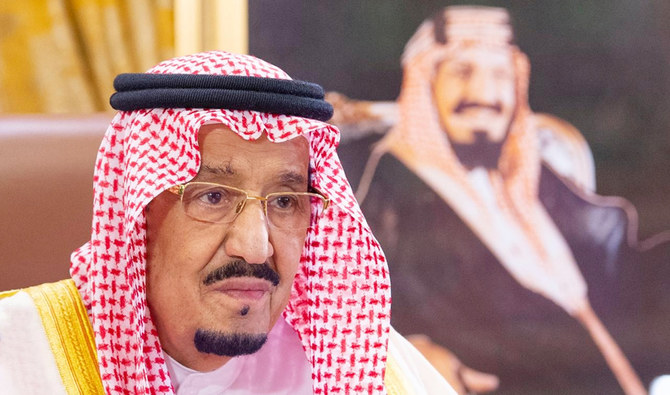
King Salman bin Abdulaziz. (REUTERS)
Short Url
Updated 26 April 2020
Follow

New regulations for finance companies in Saudi Arabia

  • Article 4 of the Finance Companies Control Law states that no finance activities, as specified under this law, may be engaged in without obtaining a license in accordance with the provisions of this law and other applicable laws

JEDDAH: King Salman on Saturday issued a royal order instructing the Ministry of Justice to put in place controls to limit the practice of financial activity by unauthorized persons, according to the Finance Companies Control Law. This seeks to accurately track down the offenders, promptly putting them on trial and inflicting penalties on them.
The minister of justice and the chairman of the Supreme Judicial Council, Dr. Walid bin Mohammed Al-Samaani, said that the new regulations will help to reduce the exploitation of debtors’ default through illegal means that do not take into account the debtors’ credit status and their ability to repay the debt.
Furthermore, he pointed out that the royal order will guarantee the ministry’s online links to the Saudi Arabian Monetary Authority (SAMA) so that it can put in place the necessary mechanisms and arrangements, in partnership between the two bodies.

HIGHLIGHT

According to the second clause of Article 35 any person violating any of the provisions of the law shall be subject, depending on the gravity of the violation, to a fine not exceeding SR500,000 ($133,000) and imprisonment for a term not exceeding two years, or either penalty.

Article 4 of the Finance Companies Control Law states that no finance activities, as specified under this law, may be engaged in without obtaining a license in accordance with the provisions of this law and other applicable laws.
It also states that an unlicensed person may not, by any means, indicate, explicitly or implicitly, the engagement in finance activities as specified under this law.
According to the second clause of Article 35 any person violating any of the provisions of the law shall be subject, depending on the gravity of the violation, to a fine not exceeding SR500,000 ($133,000) and imprisonment for a term not exceeding two years, or either penalty.


The founding economy: A blueprint for stability in the First Saudi State

Updated 23 February 2026
Follow

The founding economy: A blueprint for stability in the First Saudi State

  • The establishment of the First Saudi State created a secure environment that facilitated the arrival of caravans, secured vast trade routes, and revived commerce across the Arabian Peninsula

RIYADH: The economy during the founding stage of the First Saudi State served as a fundamental pillar in building the nation, consolidating its influence, and ensuring its stability. This early economic growth was inextricably linked to achieving security, unifying regions, and organizing society—factors that directly stimulated trade, stabilized markets, and enhanced the foundations of daily life in Diriyah and its surrounding areas.
According to Dr. Abdullah Al-Saleh Al-Othaimeen's "Diriyah: Origins and Development during the First Saudi State," published by the King Abdulaziz Foundation for Research and Archives (Darah), the founding economy stands as a historical model reflecting the reciprocal relationship between political stability and early economic prosperity.

Beyond its political and intellectual prominence, Diriyah emerged as a vibrant economic hub. (SPA)

The establishment of the First Saudi State created a secure environment that facilitated the arrival of caravans, secured vast trade routes, and revived commerce across the Arabian Peninsula.
Beyond its political and intellectual prominence, Diriyah emerged as a vibrant economic hub. Its active markets attracted merchants and students from across the region, all of whom benefited from the state-provided stability. The local society relied on diverse activities for its livelihood, including trade, agriculture, and livestock breeding, with horses and camels playing crucial roles in transportation, commerce, and securing roads.
The social and administrative organization upon which the state was founded ensured the continuous availability of goods and sustained market stability. Ultimately, the close relationship between public security and economic growth during this founding phase solidified Diriyah's position as a premier political and commercial center in the Arabian Peninsula.