WINTER PARK, FLORIDA: Seattle resident Maggie Mohamed was looking forward to spending the Islamic holy month of Ramadan in her native Egypt.
Now, with the spread of the new coronavirus, flying is off the table. So is having friends and relatives over for a potluck iftar, the breaking of the fast. Mohamed is older than 65 and says she cannot risk it.
“It’s very sad. We were very excited,” she said. But, “I don’t take it as a punishment. I take it as a wake-up (call).”
Ramadan, which starts later this month, unites Muslims the world over in fasting and worship. This year, it follows a string of religious holidays that have also unified the faithful from different religions in grappling with how to observe familiar rituals and celebrations in a time of unfamiliarity.
Mohamed is contemplating workarounds. She always looks forward to the special Ramadan prayers, known as “taraweeh,” at the mosque. She will now pray at home with her daughter. But what about the dua, or supplication? The imam moves her to tears. As he prays for dead loved ones or those suffering in faraway lands in his “miraculous” voice, sobs rise from the faithful and intermingle with chants of “Amen” recited in unison.
Mohamed wonders: Can he make dua over Zoom video conferencing?
“That would help us a lot,” she said, even as she noted it wouldn’t be the same. At her mosque, female worshippers hug and chat after the prayers as children scurry around and dates and chocolate are passed from hand to hand.
During Ramadan, the faithful abstain from food and drink from sunrise to sunset as they strive for self-purification and empathy. It’s a time for prayers, introspection and charity. Normally, it’s also a time for family, friends and festive feasting.
This year, there are indications the outbreak will cast a pall over many beloved rituals.
Many Muslims have been praying for the coronavirus cloud, which has already disrupted Islamic worship the world over, to lift before Ramadan. Mosque closures and modified calls for prayers urging the devout to pray at home have left many feeling emotional. They are relying on worship at home and online religious classes. This year, some are planning virtual interfaith iftars.
Texas-based imam Omar Suleiman said empty mosques are reason for reflection.
“How do we build ourselves to where we are more connected to Him?” asked Suleiman, who has been streaming virtual sermons and nightly reflections to more than 1.4 million Facebook followers.
“Now we have a chance to develop empathy with those that have not had access to their religious spaces due to oppressive circumstances.”
Malaysia, Brunei and Singapore have banned popular Ramadan bazaars where hawkers sell food and drinks in congested open-air markets or roadside stalls. In predominantly Muslim Malaysia, vendors are now planning to bring their businesses online through mobile apps or digital platforms provided by local authorities during the fasting month.
Mohamad Fadhil, a trader in Malaysia’s southern Johor state, said he was resigned to not being able to do business at the Ramadan bazaar or perform the taraweeh prayers at the mosque. “We just have to be patient and follow orders,” he said.
In Iran, which is suffering one of the world’s worst outbreaks, Supreme Leader Ayatollah Ali Khamenei suggested that mass gatherings may be barred through the holy month. “Remember to heed your prayers and devotions in your lonesomeness,” he said.
The Islamic Waqf, which administers the Al-Aqsa Mosque in Jerusalem, Islam’s third-holiest site, announced today that the mosque will continue to be closed to worshippers for Ramadan.
It’s difficult, Sheikh Azzam Khateeb, the director general of the Waqf, said before the latest announcement, but “the health of the worshippers comes before anything else.”
Zuher Dubie, a 71-year-old mosque preacher in the West Bank city of Nablus, has been observing Ramadan and praying in mosques since he was 10. For the first time since, Dubie said, he wouldn’t be able to practice some of the month’s rituals.
“There will be no social gatherings, no Ramadan aroma in the markets, no collective prayers … in mosques,” he lamented.
In Egypt, the Ministry of Religious Endowments decided to suspend communal Ramadan activities, including mass charity iftars around mosques. Mosques have already closed for prayers there and the country is under a night-time curfew.
Ramadan is normally lively in the country of more than 100 million — and steeped in tradition.
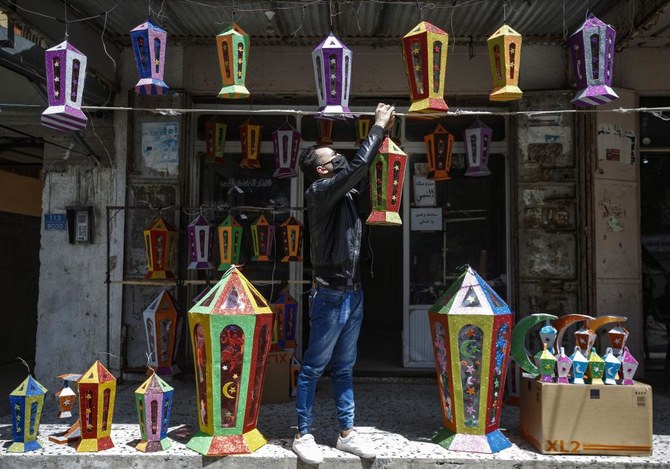
Ordinarily, worshippers fill mosques and shoppers swarm markets. Loved ones gather over scrumptious iftars. Strangers break bread together in street banquets that feed the needy. Cafes teem with patrons chatting over a cacophony of gurgling water pipes and blaring music. And Ramadan lanterns cast a colorful glow over bustling streets.
In some areas, a “mesaharati,” bangs on a drum as he wakes up residents for “suhoor,” the pre-dawn meal that will sustain them through another day of fasting.
Souad Selim, an Egyptian, has been wondering what all the changes this year would mean for a cherished Ramadan ritual.
Before, she would slip early to bed as many binge watch television shows produced for Ramadan entertainment. At around 3:00 a.m., she would wake up to have “suhoor” and cook up a storm. Using groceries that she and co-workers had pitched in to buy, she would prepare dozens of meals before she left for work. Before iftar, Selim and other volunteers would go outside to distribute boxes neatly packed with salad, rice, chicken or meatballs.
Now, she likely won’t be able to hand out meals on the street but she’s determined to send iftars to the homes of those she knows need them.
“It’s hard to describe how much goodness and blessings Ramadan brings,” she said.

Muslims grapple with Ramadan rituals in coronavirus era
Short Url
https://arab.news/68cr8
Muslims grapple with Ramadan rituals in coronavirus era
- Many Muslims have been praying for the coronavirus cloud to lift before Ramadan
Gaza’s Nasser Hospital condemns move by MSF to suspend most services
- On Saturday, MSF said the security breaches, arrests and intimidation put staff and patients at serious risk
- Nasser Hospital rejects the claims, and says civilian police are inside to protect patients and staff
CAIRO: One of Gaza’s last functioning large hospitals condemned the move by an international organization to pull out of operations over concerns about armed men, claiming on Sunday that the hospital had installed civil police for security. The move comes as at least 10 Palestinians were killed in clashes with the Israeli military in Gaza.
Doctors Without Borders, also known by its acronym MSF, said in a statement Saturday that all its noncritical medical operations at Nasser Hospital were suspended due to security breaches that posed “serious” threats to its teams and patients. MSF said there had been an increase in patients and staff seeing armed men in parts of the compound since the US-brokered October ceasefire was reached.
Nasser Hospital said Sunday that the increase in armed men was due to a civilian police presence aimed at protecting patients and staff and said MSF’s “allegations are factually incorrect, irresponsible, and pose a serious risk to a protected civilian medical facility.”
Nasser Hospital one of few functioning hospitals left in Gaza
Nasser Hospital in Khan Younis is one of the territory’s few functioning hospitals. Hundreds of patients and war-wounded have been treated there daily, and the facility was a hub for Palestinian prisoners released by Israel in exchange for Israeli hostages as part of the current ceasefire deal.
“MSF teams have reported a pattern of unacceptable acts including the presence of armed men, intimidation, arbitrary arrests of patients and a recent situation of suspicion of movement of weapons,” the organization said. The suspension occurred in January but was only recently announced.
Nasser Hospital staff say that in recent months it has been repeatedly attacked by masked, armed men and militias, which is why the presence of an armed civilian police force is crucial. Hamas remains the dominant force in areas not under Israeli control, including in the area where Nasser Hospital is located. But other armed groups have mushroomed across Gaza as a result of the war, including groups backed by Israel’s army in the Israeli-controlled part of the strip.
Throughout the war, which began with the Hamas-led attack on Israel on Oct. 7, 2023, Israel has repeatedly struck hospitals, including Nasser, accusing the militant group of operating in or around them. Hamas security men often have been seen inside hospitals, blocking access to some areas.
Some hostages released from Gaza have said they spent time during captivity in a hospital, including Nasser Hospital.
Ten Palestinians killed in strikes across Gaza
At least 10 Palestinians were killed Sunday by Israeli fire in the Gaza Strip, hospital authorities said.
The dead include five men, all in their 20s, who were killed in an Israeli strike in the eastern part of Khan Younis city, according to the Nasser Hospital, which received the bodies. The strike hit a group of people in an area close to the Yellow Line which separates Israeli-controlled areas from the rest of Gaza, it said.
The Israeli military did not comment on the strike but has said in the past it will attack militants if its troops are threatened, especially near the Yellow Line.
Rami Shaqra said his son, Al-Baraa, was among the militants who were securing the area from potential attacks by the Israeli forces or Israeli-backed armed groups, when they were hit by the Israeli military. He said that they were killed by an airstrike.
Associated Press footage from the morgue showed at least two of the men had headbands denoting membership in the Qassam Brigades, the militant arm of Hamas. In northern Gaza, a drone strike hit a group of people in the Falluja area of Jabaliya refugee camp, killing five people, according to the Shifa Hospital.
The Israeli military said it was striking northern Gaza in response to several ceasefire violations near the Yellow Line, including militants attempting to hide in debris and others who attempted to cross the line while armed.
The Oct. 10 US-brokered ceasefire deal attempted to halt a more than two-year war between Israel and Hamas. While the heaviest fighting has subsided, the ceasefire has seen almost daily Israeli fire.
Israeli forces have carried out repeated airstrikes and frequently fire on Palestinians near military-held zones, killing 601 Palestinians, according to Gaza health officials. The ministry, which is part of the Hamas-led government, maintains detailed casualty records that are seen as generally reliable by UN agencies and independent experts. But it does not give a breakdown of civilians and militants.
Militants have carried out shooting attacks on troops, and Israel says its strikes are in response to that and other violations. Four Israeli soldiers have been killed.
Doctors Without Borders, also known by its acronym MSF, said in a statement Saturday that all its noncritical medical operations at Nasser Hospital were suspended due to security breaches that posed “serious” threats to its teams and patients. MSF said there had been an increase in patients and staff seeing armed men in parts of the compound since the US-brokered October ceasefire was reached.
Nasser Hospital said Sunday that the increase in armed men was due to a civilian police presence aimed at protecting patients and staff and said MSF’s “allegations are factually incorrect, irresponsible, and pose a serious risk to a protected civilian medical facility.”
Nasser Hospital one of few functioning hospitals left in Gaza
Nasser Hospital in Khan Younis is one of the territory’s few functioning hospitals. Hundreds of patients and war-wounded have been treated there daily, and the facility was a hub for Palestinian prisoners released by Israel in exchange for Israeli hostages as part of the current ceasefire deal.
“MSF teams have reported a pattern of unacceptable acts including the presence of armed men, intimidation, arbitrary arrests of patients and a recent situation of suspicion of movement of weapons,” the organization said. The suspension occurred in January but was only recently announced.
Nasser Hospital staff say that in recent months it has been repeatedly attacked by masked, armed men and militias, which is why the presence of an armed civilian police force is crucial. Hamas remains the dominant force in areas not under Israeli control, including in the area where Nasser Hospital is located. But other armed groups have mushroomed across Gaza as a result of the war, including groups backed by Israel’s army in the Israeli-controlled part of the strip.
Throughout the war, which began with the Hamas-led attack on Israel on Oct. 7, 2023, Israel has repeatedly struck hospitals, including Nasser, accusing the militant group of operating in or around them. Hamas security men often have been seen inside hospitals, blocking access to some areas.
Some hostages released from Gaza have said they spent time during captivity in a hospital, including Nasser Hospital.
Ten Palestinians killed in strikes across Gaza
At least 10 Palestinians were killed Sunday by Israeli fire in the Gaza Strip, hospital authorities said.
The dead include five men, all in their 20s, who were killed in an Israeli strike in the eastern part of Khan Younis city, according to the Nasser Hospital, which received the bodies. The strike hit a group of people in an area close to the Yellow Line which separates Israeli-controlled areas from the rest of Gaza, it said.
The Israeli military did not comment on the strike but has said in the past it will attack militants if its troops are threatened, especially near the Yellow Line.
Rami Shaqra said his son, Al-Baraa, was among the militants who were securing the area from potential attacks by the Israeli forces or Israeli-backed armed groups, when they were hit by the Israeli military. He said that they were killed by an airstrike.
Associated Press footage from the morgue showed at least two of the men had headbands denoting membership in the Qassam Brigades, the militant arm of Hamas. In northern Gaza, a drone strike hit a group of people in the Falluja area of Jabaliya refugee camp, killing five people, according to the Shifa Hospital.
The Israeli military said it was striking northern Gaza in response to several ceasefire violations near the Yellow Line, including militants attempting to hide in debris and others who attempted to cross the line while armed.
The Oct. 10 US-brokered ceasefire deal attempted to halt a more than two-year war between Israel and Hamas. While the heaviest fighting has subsided, the ceasefire has seen almost daily Israeli fire.
Israeli forces have carried out repeated airstrikes and frequently fire on Palestinians near military-held zones, killing 601 Palestinians, according to Gaza health officials. The ministry, which is part of the Hamas-led government, maintains detailed casualty records that are seen as generally reliable by UN agencies and independent experts. But it does not give a breakdown of civilians and militants.
Militants have carried out shooting attacks on troops, and Israel says its strikes are in response to that and other violations. Four Israeli soldiers have been killed.
© 2026 SAUDI RESEARCH & PUBLISHING COMPANY, All Rights Reserved And subject to Terms of Use Agreement.