

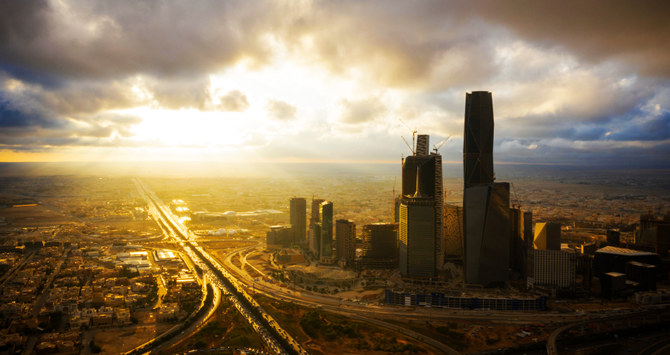
Agencies affirm Kingdom’s strong credit rating and predict stability despite global crisis

(Shutterstock)
Short Url
Updated 10 April 2020
Follow

Agencies affirm Kingdom’s strong credit rating and predict stability despite global crisis

RIYADH: Saudi Arabia’s latest credit ratings, announced by international agencies on Thursday, affirmed the continued strength and resilience of the Kingdom’s economy in the face of the coronavirus crisis.

Fitch Ratings set the long-term credit rating at “A,” with a stable outlook. The agency said that this reflects the country’s financial strength, including exceptionally high foreign reserves, and low public debt ratio.

The global agency added that Saudi Arabia boasts one of the largest sovereign assets among counterpart countries, and confirmed the long-term credit rating of foreign bonds in the Kingdom at “A” with a stable outlook.

Fitch raised its estimates of real GDP growth for the current year to 4.9 percent from its 2 percent estimate last October. It expects real GDP to grow by 4.7 percent in 2021.

Moody’s updated credit report for the Kingdom set its rating at A1 with a stable outlook. The agency noted that the Kingdom is the second-largest oil producer in the world (including natural and condensed gas), has significant reserves and is highly experienced at extracting oil at the lowest costs. These factors offer the Kingdom a high competitive advantage over other producers, it said.

The agency raised its estimate for the 2020 budget deficit from 7.9 percent to 8.7 percent of GDP.

In March, S&P Global set its sovereign debt rating for Saudi Arabia at 2/A/A with a stable outlook. The agency’s view of the strong position of the Kingdom’s net assets was a major support factor for its ratings.

The positive reports from the global agencies reflect their confidence in the strength of the Saudi economy, as well as the nation’s strong financial position and its ability to continue to grow and face challenges, despite the exceptional worldwide health crisis.


Saudi POS spending opens 2026 with a 31% surge: SAMA 

Updated 4 sec ago
Follow

Saudi POS spending opens 2026 with a 31% surge: SAMA 

RIYADH: Saudi Arabia’s total point-of-sale transactions reached SR17 billion ($4.5 billion) in the week ending Jan. 3, with all sectors recording positive weekly growth. 

According to the latest data from the Saudi Central Bank, the total POS value represented a 30.6 percent week-on-week increase, while the number of transactions rose 15.7 percent to 255.36 million. 

Spending on freight transport, postal and courier services recorded the sharpest increase, surging 110.9 percent to SR74.22 million, followed by education, which rose 66.4 percent to SR235.51 million. 

Expenditure on personal care increased by 31.7 percent, while spending on books and stationery rose 36 percent. Jewelry outlays climbed 48 percent to SR544.12 million. 

Further gains were recorded across other categories. Spending at pharmacies on medical supplies rose 42.1 percent to SR284.81 million, while expenditure on medical services increased 20.8 percent to SR556.27 million. 

The food and beverages sector saw outlays rise 41.4 percent to SR2.7 billion, accounting for the largest share of POS transactions.

Restaurants and cafes followed with a 20.9 percent increase to SR1.9 billion, while apparel and clothing spending rose 30 percent to SR1.6 billion, ranking third. 

Together, the top three categories accounted for approximately 36.53 percent of total POS spending, or SR6.22 billion. 

Saudi Arabia’s major urban centers mirrored the national surge.

Riyadh, which accounted for the largest share of POS spending, saw a 21 percent increase to SR5.61 billion, up from SR4.63 billion the previous week.

The number of transactions in the capital rose 12.2 percent to 79.6 million. 

In Jeddah, transaction values increased 25.6 percent to SR2.24 billion, while Dammam posted a 26.1 percent rise to SR831.93 million. 

POS data, tracked weekly by SAMA, provides an indicator of consumer spending trends and the ongoing growth of digital payments in Saudi Arabia. 

The data also highlights the expanding reach of POS infrastructure, extending beyond major retail hubs to smaller cities and service sectors, supporting broader digital inclusion initiatives. 

The growth of digital payment technologies aligns with Saudi Arabia’s Vision 2030 objectives, promoting electronic transactions and contributing to the Kingdom’s broader digital economy.