

Saudi Arabia, Russia and other OPEC+ countries agree on deal to cut oil output

1 / 2
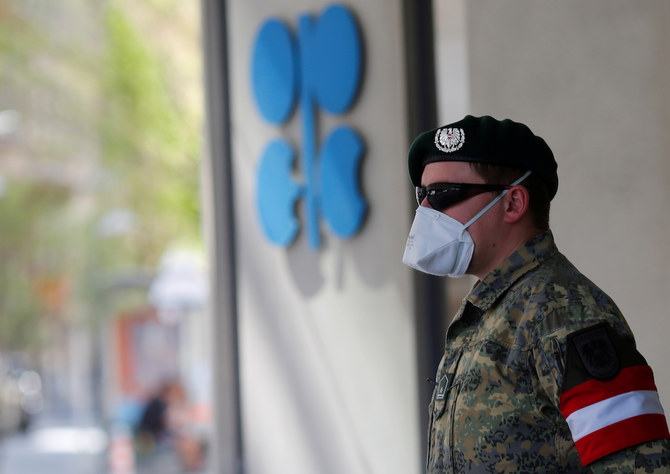
An Austrian army soldier stands in front of the Organization of the Petroleum Exporting Countries (OPEC) headquarters in Vienna, Austria, on April 9, 2020. (REUTERS/Leonhard Foeger) 
2 / 2
An Austrian soldier stands guard in front of OPEC's headquarters in Vienna on Thursday. (Reuters)
Short Url
Updated 10 April 2020
Follow

Saudi Arabia, Russia and other OPEC+ countries agree on deal to cut oil output

  • OPEC+ alliance reset with ‘historic’ deal
  • Deal meant to rebalance crude markets

DUBAI: Saudi Arabia and Russia have agreed to “historic” cuts in oil production in a bid to rebalance crude markets that are in crisis because of the dramatic decline in global energy demand.

The cuts, agreed on during a virtual meeting of oil producers hosted by the Vienna headquarters of the Organization of Petroleum Exporting Countries, will take more than 10 million barrels of oil out of production each day for the immediate future.

The final details of the “outline” deal are still being considered, and Saudi oil sources said a definitive remedy to the challenges facing the global oil industry might have to await a meeting of G20 energy ministers, under the Saudi presidency of the group, which is scheduled for today.

The timing, duration and scale of the cuts were being worked out by OPEC delegates last night. 

The deal — which resets the OPEC+ alliance — represents a rapprochement between Saudi Arabia and Russia, who fell out last month over production cut plans, and exchanged angry words last weekend about the oil price war.
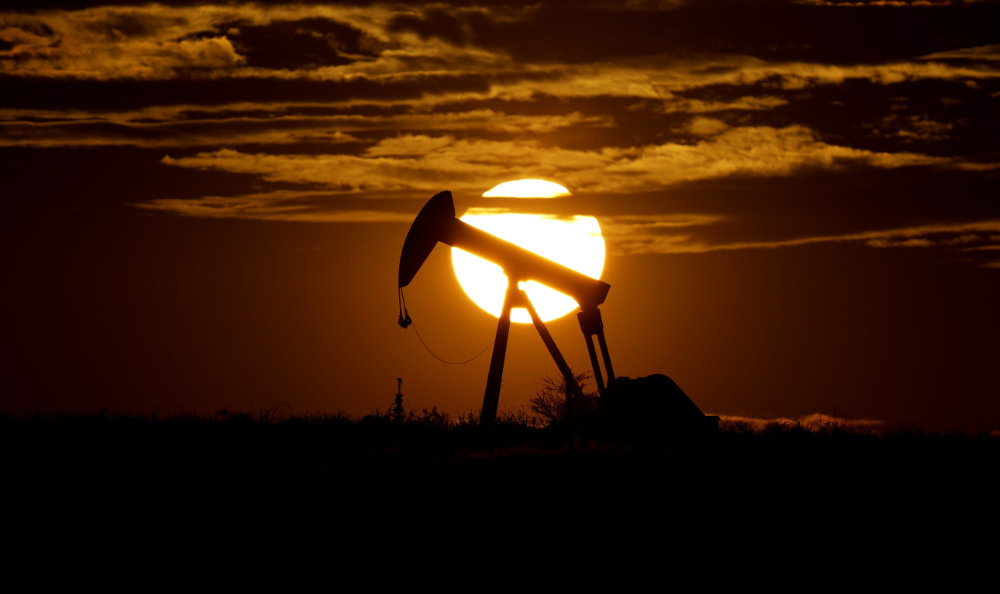


The sun sets behind an idle pump jack near Karnes City, Texas, on April 8, 2020. Demand for oil continues to fall due to the new coronavirus outbreak. (AP Photo/Eric Gay)

“Russia and Saudi Arabia, working closely together with the US, can bring stability back to global energy markets,” Kirill Dmitriev, chief executive of the Russian Direct Investment Fund and a member of the Russian negotiating team, told Arab News.

“It is an important and historic moment that, in the face of the pandemic, we have agreed to put aside differences and move toward a deal that will involve OPEC+ members and other oil-producing countries.”

The price of Brent crude, the Middle East benchmark, reflected the ongoing concern about the level of over-supply, regardless of the OPEC+ deal. It stood at $33.35, down almost 1 percent, in mid-afternoon US trading.

The online meeting began with a gloomy outlook as OPEC detailed the collapse of global oil demand. Analysts believe that more than 20 percent of worldwide consumption disappeared in March as economies ground to a halt because of measures to slow the spread of the coronavirus. With producers pumping crude at record rates, they are rapidly running out of global storage capacity.

Mohammed Barkindo, OPEC’s secretary general, told delegates that storage space will be full by next month if no cuts are agreed. He estimated that an average of 6.85 million barrels per day of demand would be lost this year. “The supply and demand fundamentals are horrifying,” he added.

Alexander Novak, the Russian energy minister, told the meeting that all oil producers should contribute to the cuts. His comment was aimed at the US, which was not represented at the Vienna gathering. Dan Brouillette, the US energy secretary, is expected to take part in the G20 conference today.


Global investors commit more than $3bn to King Salman Park as Saudi giga-project secures new deals

Updated 10 March 2026
Follow

Global investors commit more than $3bn to King Salman Park as Saudi giga-project secures new deals

RIYADH: The King Salman Park Foundation has secured more than $3.8 billion in new private-sector commitments at the MIPIM 2026 real estate conference, including a landmark $3 billion fund backed by international investors to develop a major mixed-use district in the heart of Riyadh.

According to a press release, the announcements bring total committed investment in the 17.2 sq. kilometers urban regeneration project to over $5.3 billion across five major packages.

Launched in 2019 under Saudi Vision 2030, the development is designed to be the world’s largest city park and aims to boost green space, improve quality of life, and feature over 1 million trees and extensive leisure facilities.

A $3 billion metro-connected district

The largest of the two packages, designated Package 5, will see a consortium led by Kolaghassi Development Co. deliver a residential-led district with a total built-up area exceeding 1 million sq. meters. 

It will provide approximately 3,700 residential units, a K–12 school, around 300 hospitality keys and more than 100,000 sq m of Grade A office space alongside a wide variety of retail and dining offerings.

The development is supported by a Saudi-domiciled, Capital Market Authority-regulated fund managed by Mulkia Investment Co. that has attracted leading investors from the Kingdom and across the world.

Kolaghassi Development Co. will lead the project alongside Al Othaim Investment, one of the Kingdom’s real estate players, and RXR, a New York-headquartered real estate investor and operator.

“Securing investment of this scale, supported by international capital and expertise, is an important milestone for King Salman Park,” said George Tanasijevich, CEO of King Salman Park Foundation. 

$850 million cultural district package

In a separate announcement, the Foundation confirmed the award of Package 4 to a consortium led by Retal Urban Development Co., with support from a fund managed by SAB Invest.

The project has a total value exceeding $850 million and will host more than 600 residential units, over 140 hotel keys, and almost 50,000 sq m of Grade A office space, alongside curated retail and food and beverage experiences.

“This opportunity reflects the maturity of Saudi Arabia’s real estate investment landscape and our confidence in culture-led, mixed-use urban destinations as a driver of sustainable returns,” said Abdullah Al-Braikan, CEO and founder of Retal Urban Development Co.

Ali Al-Mansour, CEO of SAB Invest, said the fund structure brings together “long-term capital, experienced development partners, and a shared commitment to place-making excellence” while contributing to Riyadh’s cultural vibrancy and the Kingdom’s quality-of-life ambitions under Vision 2030.