

Oil row rumbles on as crisis talks are postponed

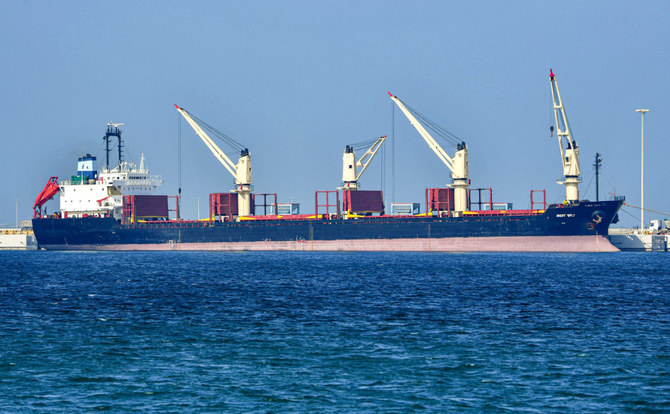
An oil tanker is seen at the port of Ras al-Khair, about 185 km north of Dammam in eastern Saudi Arabia. (AFP / GIUSEPPE CACACE)
Short Url
Updated 05 April 2020
Follow

Oil row rumbles on as crisis talks are postponed

  • The “virtual” meeting is between 11 OPEC members led by Saudi Arabia and 10 other oil producers led by Russia

DUBAI: A crucial meeting of  OPEC+ producers on Monday aimed at cutting output and stabilizing the global oil market has been postponed.

“Monday is too early,” a Saudi oil official told Arab News. “OPEC needed more time to work out facts and figures.”

The “virtual” meeting, which may now take place later this week, is between 11 OPEC members led by Saudi Arabia and 10 other oil producers led by Russia.

It follows an “urgent” call by Saudi Arabia last week, and an intense round of telephone diplomacy between Riyadh, Moscow and Washington.

One key issue is to determine the level at which any proposed oil production cuts would begin. Saudi Arabia has ramped up output to record levels in recent weeks.

After a meeting on Friday between President Vladimir Putin and Russian oil executives, Saudi Arabia was accused of having reneged on the previous OPEC+ agreement, and starting the price war that has destabilized global oil markets.

The accusation prompted a hard-hitting response from the Kingdom, with both Foreign Minister Prince Faisal bin Farhan and Energy Minister Prince Abdul Aziz bin Salman describing the Russian comments as “utterly devoid of truth.”

Behind the spat, there are serious challenges if OPEC+ is to make any progress toward the cuts of up to 15 million barrels per day “expected” by US President Donald Trump.

Despite their differences, both Saudi Arabia and Russia would be unlikely to take on the full burden of cuts without matching reductions by the US. That prospect receded after a meeting between oil industry executives in the White House at which Trump said he would leave the US oil industry to “the free market.”

Free market economics will be on show in the Kingdom on Sunday when Saudi Aramco discloses the price it will charge customers for oil in May. Last month it offered deep discounts to market prices. Demand has fallen substantially since then — down 30 percent according to some oil economists — so further discounts can be expected.


Saudization rates in marketing, sales professions announced

Updated 5 sec ago
Follow

Saudization rates in marketing, sales professions announced

RIYADH: Saudi Arabia’s Ministry of Human Resources and Social Development has announced the issuance of two decisions to increase Saudization rates in marketing and sales professions.

This comes as part of the ministry’s efforts to enhance the participation of national talent in the labor market, raise the level of Saudization in specialized professions, and provide stimulating and productive job opportunities for Saudi citizens across the Kingdom.

The first decision stipulates raising the Saudization rate to 60 percent in marketing professions in the private sector, effective Jan. 19, 2026. It applies to establishments with three or more employees in marketing professions, with a minimum wage of SR5,500 ($1,466). 

The targeted professions include: marketing manager, advertising agent, and advertising manager, as well as graphic designer, advertising designer, and public relations specialist. They also include advertising specialist and marketing specialist, as well as public relations manager and photographer.

The decision will be implemented three months after the announcement date to allow establishments sufficient time to prepare and implement it.

The second decision stipulates raising the Saudization rate to 60 percent in sales positions within the private sector, effective Jan. 19, 2026. This applies to establishments with three or more employees in sales roles, including: sales manager, retail sales representative, and wholesale sales representative as well as sales representative, IT and communications equipment sales specialist, and sales specialist. They also include a commercial specialist and a goods broker.

The decision will take effect three months after the announcement date to allow targeted establishments time to fulfill the requirements and achieve the Saudization target.

The entity clarified that private sector establishments will benefit from a package of incentives offered by the Ministry of Human Resources and Social Development, including support for recruitment, training and development, and employment, as well as job stability and priority access to Saudization support programs and programs of the Human Resources Development Fund.

The ministry also confirmed that its decision to raise Saudization rates in marketing and sales professions was based on analytical studies of labor market needs, in line with the number of job seekers in related specializations and the current and future requirements of the sales and marketing sectors.

It noted that implementing these decisions would enhance the attractiveness of the labor market, contribute to increasing quality job opportunities, and promote job stability for Saudi nationals.

The ministry further published the procedural guide for the two decisions on its website, which includes details of the targeted professions, the mechanisms for calculating Saudization rates, and the required compliance steps.

It urged all covered establishments to comply with the implementation to avoid penalties and to take advantage of the grace period provided for preparation and fulfillment of the requirements.