

WEEKLY ENERGY RECAP: All eyes on OPEC+ virtual talks

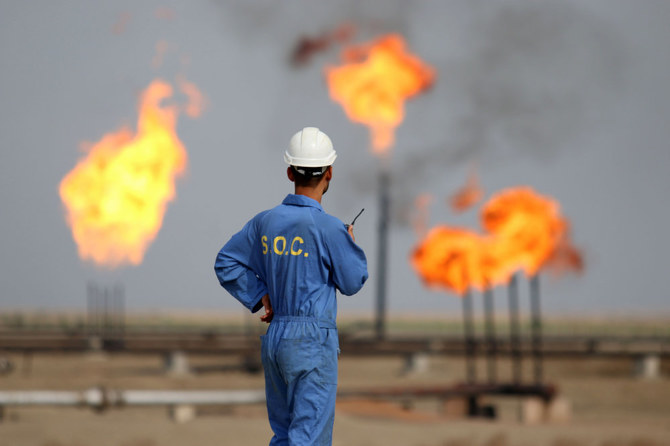
As crude prices plunge, Iraq's oil sector is facing a triple threat that has slashed revenues, risks denting production and may spell trouble for future exports. (AFP file photo)
Short Url
Updated 05 April 2020
Follow

WEEKLY ENERGY RECAP: All eyes on OPEC+ virtual talks

  • With the coronavirus pandemic cutting oil consumption across the world, the boom in demand for storing oil has been key in absorbing excess barrels from the market in recent weeks

Oil prices jump by more than a quarter on expectations that OPEC+ will hold a virtual meeting to reinstate efforts to support the collapsing market.

Brent crude price rose to $34.11 per barrel and WTI increased to $28.34 per barrel.

Only a week earlier, a $2 trillion stimulus package from the US government was not enough to stabilize the market which had dropped to levels not seen since the early 2000s.

The slump follows global isolation measures that have decimated oil demand all over the world. That is because almost two thirds of the world’s daily oil consumption goes as fuel for transportation.

Global oil demand is about 100 million barrels of oil per day. Some forecasters predict as much as a quarter of that has disappeared in the past few weeks. 

It means that global energy demand is in free fall and consumption may decline by as much as 25 to 30 million barrels a day.

That will force many producers of high cost barrels worldwide to slash output.

The loss of so many barrels represents a structural shift in oil market dynamics and the supply- and-demand balance. 

This is reflected by the sudden drop in the miles traveled by cars and buses and the closure of borders, paralyzing travel both within and between countries.

Global refiners have slashed their crude oil runs while the coronavirus outbreak has sent refinery margins crashing as transport fuel demand evaporates.

With the coronavirus pandemic cutting oil consumption across the world, the boom in demand for storing oil has been key in absorbing excess barrels from the market in recent weeks.


Global investors commit more than $3bn to King Salman Park as Saudi giga-project secures new deals

Updated 10 March 2026
Follow

Global investors commit more than $3bn to King Salman Park as Saudi giga-project secures new deals

RIYADH: The King Salman Park Foundation has secured more than $3.8 billion in new private-sector commitments at the MIPIM 2026 real estate conference, including a landmark $3 billion fund backed by international investors to develop a major mixed-use district in the heart of Riyadh.

According to a press release, the announcements bring total committed investment in the 17.2 sq. kilometers urban regeneration project to over $5.3 billion across five major packages.

Launched in 2019 under Saudi Vision 2030, the development is designed to be the world’s largest city park and aims to boost green space, improve quality of life, and feature over 1 million trees and extensive leisure facilities.

A $3 billion metro-connected district

The largest of the two packages, designated Package 5, will see a consortium led by Kolaghassi Development Co. deliver a residential-led district with a total built-up area exceeding 1 million sq. meters. 

It will provide approximately 3,700 residential units, a K–12 school, around 300 hospitality keys and more than 100,000 sq m of Grade A office space alongside a wide variety of retail and dining offerings.

The development is supported by a Saudi-domiciled, Capital Market Authority-regulated fund managed by Mulkia Investment Co. that has attracted leading investors from the Kingdom and across the world.

Kolaghassi Development Co. will lead the project alongside Al Othaim Investment, one of the Kingdom’s real estate players, and RXR, a New York-headquartered real estate investor and operator.

“Securing investment of this scale, supported by international capital and expertise, is an important milestone for King Salman Park,” said George Tanasijevich, CEO of King Salman Park Foundation. 

$850 million cultural district package

In a separate announcement, the Foundation confirmed the award of Package 4 to a consortium led by Retal Urban Development Co., with support from a fund managed by SAB Invest.

The project has a total value exceeding $850 million and will host more than 600 residential units, over 140 hotel keys, and almost 50,000 sq m of Grade A office space, alongside curated retail and food and beverage experiences.

“This opportunity reflects the maturity of Saudi Arabia’s real estate investment landscape and our confidence in culture-led, mixed-use urban destinations as a driver of sustainable returns,” said Abdullah Al-Braikan, CEO and founder of Retal Urban Development Co.

Ali Al-Mansour, CEO of SAB Invest, said the fund structure brings together “long-term capital, experienced development partners, and a shared commitment to place-making excellence” while contributing to Riyadh’s cultural vibrancy and the Kingdom’s quality-of-life ambitions under Vision 2030.