

Saudi Hajj minister tells Muslims to wait for coronavirus clarity on pilgrimage

Saudi Arabia has asked Muslims to wait for more clarity on the coronavirus pandemic before planning any travel for pilgrimage, minister for Hajj and Umrah has said. (SPA)
Short Url
Updated 01 April 2020
Follow

Saudi Hajj minister tells Muslims to wait for coronavirus clarity on pilgrimage

  • The largest annual gathering of Muslims is scheduled to begin in late July
  • The Kingdom has already suspended Umrah pilgrimage until further notice

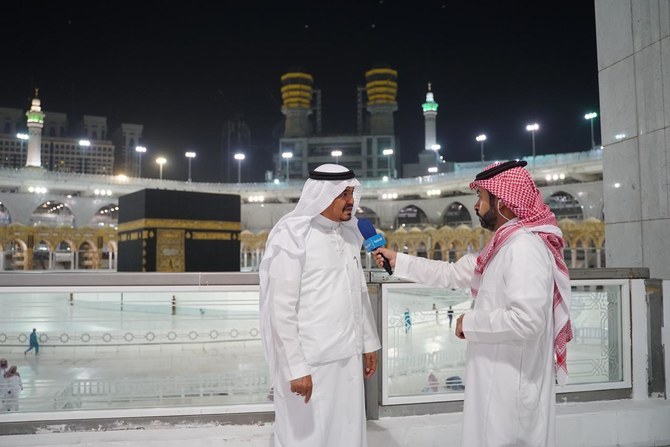
RIYADH: Saudi Arabia has asked Muslims to wait for more clarity on the coronavirus pandemic before planning any travel for pilgrimage, the minister for Hajj and Umrah told Al-Ekhbariya TV on Tuesday.

"We've asked the world not to rush with regards to Hajj groups until the path of the epidemic becomes clear, keeping in mind the safety of pilgrims and public health as a priority,"Dr. Muhammad Salih bin Taher Banten said.

"We have coordinated with the Ministry of Health an inspection tour of hotels that were used for health isolation to ensure that all services and care are provided to pilgrims," he added.

The largest annual gathering of Muslims is scheduled to begin in late July, but the coronavirus outbreak and Saudi Arabia’s lockdown to prevent the spread of the virus has raised questions about whether it can go ahead.

The Kingdom has already suspended Umrah pilgrimage until further notice, halted all international passenger flights indefinitely and last week blocked entry and exit to several cities, including Makkah and Madinah.

There have been 10 deaths reported among 1,563 cases of coronavirus in Saudi Arabia, which has infected some 800,000 people globally and killed more than 40,000.


Saudi chef wins culinary competition

Updated 18 December 2025
Follow

Saudi chef wins culinary competition

  • Event aimed to empower chefs’ ability to showcase talent on global scale 
  • Bayan Abdullah Al-Sudani: It (has) encouraged me to participate in more challenging spaces

RIYADH: A Saudi has won the Saudi Elite Chefs competition at Horeca Riyadh.

The event, which was organized by the Culinary Arts Commission of the Ministry of Culture, in alignment with the ministry’s long-term goals, aimed to empower Saudi chefs’ ability to showcase their talent and creativity on a global scale.

Speaking to Arab News, the winner, Bayan Abdullah Al-Sudani, shed light on how the competition equipped her with confidence for the future, saying: “It was a big challenge, and I faced off against strong chefs. It (has) encouraged me to participate in more challenging spaces.”

On her future plans, Al-Sudani wants to give back to the industry, and added: “I look forward to opening the Bayan Academy soon so that I can support chefs and help them with the pastry sector specifically.”

Celebration and achievement were echoed throughout, and it was evident at the event that the culinary industry in the Kingdom is hungry for growth, recognition, and global competition.

Seba Zarea, general manager of strategy and program delivery at the Culinary Arts Commission, told Arab News of the many facets of the industry that the ministry was prioritizing.

Zarea said: “This competition is just one of the initiatives that the Culinary Arts Commission is working on. There are also local scholarships (and) vocational training. We are also working on attracting the best culinary schools to Saudi. For example, Le Cordon Bleu is opening next year in Misk City.”

Zarea stressed the rewards of events like the Saudi Elite Chefs competition, adding that the winner had a fast track to Bocuse d’Or and the World Pastry Cup — representing global opportunities to place both competitors and Saudi cuisine on the map.

Zarea added: “Food is a soft power and, in terms of tourism, food is a universal language so we codified the Saudi cuisine, an initiative started four years ago, and we came up with more than 1,300 codified recipes, items, and local produce from the Kingdom.”

Zarea went into depth on some of the behind-the-scenes efforts that have helped create the food that the Kingdom is able to showcase.

She shared the example of the Wild Plant Initiative, a program designed to explore plants of various regions in the Kingdom to discover new ingredients that can be integrated into Saudi cuisine.

These efforts go into helping to build an industry that is rooted in culture, creativity, and passion. 

In the same way that the Saudi Elite Chefs competition provides its winners and participants with the tools to bring their success to global attention, the Culinary Arts Commission works to elevate the Kingdom’s cuisine through tourism and hospitality.

Zarea said: “This sector is the easiest way to showcase the culture.”