


Global financial markets have gyrated widely over the past two weeks, with the most savage drops in stock market history turning into one of the best rallies ever recorded.
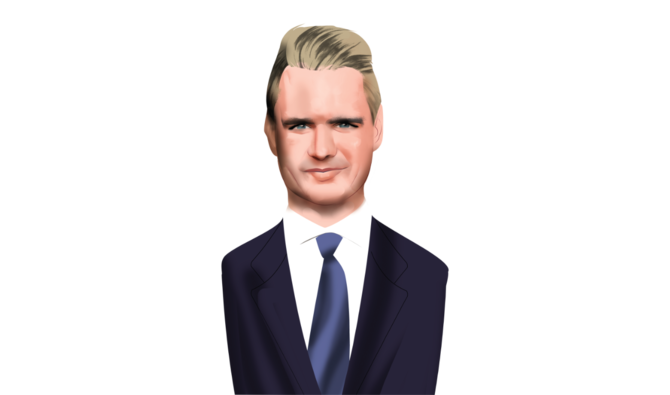
In these mercurial circumstances, Steven Rees has some simple advice to investors: “Now is the wrong time to be selling,” he told Arab News.
Rees speaks with some authority. He spent many years as head of global equity strategy for JP Morgan, the most profitable bank in the US.
His view is also especially relevant for Saudi Arabia and the Middle East. Rees is part of the JP Morgan private banking team that runs the Middle East business from bases in London and Geneva, and the bank has a long relationship with the Kingdom, going back to the 1930s when it helped fund the embryonic oil industry.
“Now more than ever we’re committed to working with the country and with businesses there,” Rees said.
But Saudi Arabia, and the rest of the world, is living through extraordinary times. The global economy has been thrown into reverse as the spread of the coronavirus disease (COVID-19) effectively closes off huge chunks of economic activity, and governments around the world have had to step in with unprecedented aid packages to mitigate the effects of what is now an inescapable recession.
Rees paints a stark picture of the economic state of the world. “Right now, the economy is in an unprecedented state. In a literal sense, economic time has stopped — due to government-imposed social distancing — but in a capitalist economy, financial time never stops — bills still need to be paid and markets to keep trading,” he said.
“Consumption is just grinding to a halt. We’ve never seen anything like this. The impact on the second quarter of the year is going to be far greater than anything we’ve ever seen,” Rees added.
In JP Morgan’s American homeland, which is adding virus cases at an alarming rate, the economic effect will be devastating. The bank is forecasting a 14 percent contraction in GDP in the second quarter. In Europe — where some experts say virus cases are approaching a peak — the hit will be a 22 percent fall in the economy.
The bank does not quantify the effect on Middle East economies, but Rees said the region had “done a relatively good job” in reacting to the crisis by shutting down big parts of their economies and getting citizens and expatriate workers to adjust to the “new normality.”
He warned, however: “No country will be spared by the downturn.”
Against this depressing backdrop, he sees some hope from the ability of governments to use radical intervention to mitigate the economic effects and prevent recession turning into a prolonged depression. One aim of policymakers is to help get people over the extreme standstill that will take place in the second quarter.
“The swift monetary and fiscal policy response should help bridge this gap, facilitate smooth transacting in the financial markets, and ensure that corporate and household costs are still covered while economic time is frozen,” he said.
The US Congress last week approved a $2 trillion economic aid package, on top of hundreds of billions of dollars of monetary stimulus injected into the financial system by the Federal Reserve. “The Fed has been acting decisively for the last several weeks. Now, Congress has done its part,” Rees said.
While American workers are to get a sizable lump sum to help them through, as well as extended and enhanced unemployment insurance, small businesses — “the epicenter of the crisis” in America, Rees said — will get some $350 billion in loans to help meet essential overheads.
“Overall, the firepower from the Fed to help stabilize financial markets and preserve liquidity, combined with the fiscal ‘bazooka’ in the $2 trillion legislation are powerful forces that will help the economy avoid the worst-case scenarios some have feared. Moreover, these measures should help the economy to be in a position to recover when things begin to normalize,” he added.
The reaction of financial markets in the weeks ahead will be crucial. “For investors, the $2 trillion stimulus package should be supportive for US equities and other risk assets, as it helps fill the negative income gap created by social distancing. In other words, the bill reduces the risks of a ‘worst-case scenario’ for markets.”
He added: “While the markets will want to see confirmation that containment measures are causing infection rates to crest before waving the ‘all clear’ flag, reduced tail risk is clearly helping markets see light at the end of the tunnel.”
There might even be buying opportunities in the current situation, but he warned investors to be cautious and selective in their choices. “There are some high quality assets that are undervalued. Some businesses will not only survive the downturn, but will come out of it stronger. Everything we liked before this happened, we still like, and investors have a chance to buy things at a discount,” Rees said.
He singled out technology, health care and high dividend payers like utilities as offering appreciable investment upside. Transport, aviation, retail, energy and some industrials, on the other hand, probably do not have long-term value.
“Stay calm and have a shopping list. This is not a market where you want to take on extreme risk. There is a lot of talk about market capitulation and some panic out there. But our recommendation is not to wait until everything is perfect and we have complete clarity,” he said.
With a wave of oil about to hit global markets in the next few weeks as the restraints of the production pact between Saudi Arabia and Russia fall away, the energy outlook is depressing, he said. “The timing of the production surge has been made much worse by what’s happened with the global economy. It’s a worse case scenario for the price of oil, and it is tough to see how it will pan out.
“There are countries with low cost structures or who can cut costs the fastest, but the ultimate winner will be the consumer. If energy prices are low it can boost the economic recovery we see in the second half of the year,” Rees said.
He expects a “broad-based support package” for US energy once policymakers stabilize the economic situation, and some American “interaction” with global energy markets.
JP Morgan has been involved at the heart of the Vision 2030 strategy in Saudi Arabia, intended to diversify the Kingdom’s economy away from oil dependency and boost the private sector, still heavily reliant on oil-driven government revenues for growth. Rees said the current global economic and financial crisis might have some effect on the implementation of some aspects of that strategy.
“Vision 2030 is still the right plan, but this temporary downturn will probably delay some aspects of it. The Kingdom will probably have to reduce some expenditure. They (Saudi policymakers) will have to juggle, investing for the long-term transformation but also trying to stabilize the economy and protect their citizens.
“The big mega-projects are still on track but the transformation may be delayed somewhat in terms of the diversification of the economy. But we see this as a temporary slowdown, rather than a long-term disruption of the potential of Saudi Arabia and the rest of the world,” Rees said.
The next few months will be critical, he believes. “This is a largely consumer-driven shutdown, so the question is when people can travel again, when can they leave their home and start spending again. The question is whether that happens in May, June, or later in the year.”
Whatever happens, the relationship between the Kingdom and JP Morgan will continue. “We have an 85-year relationship with Saudi Arabia and nothing has changed in our view of the long-term ‘invesaibility’ of the Kingdom. You have to take a longer term view than you took three months ago, but we’re still convinced of the long-term attractions of Saudi Arabia.
“Our view of the opportunities there has not changed. In times of stress, Saudi Arabia can continue to look to the strengths of JP Morgan. We’ve been through a lot together,” Rees said.


