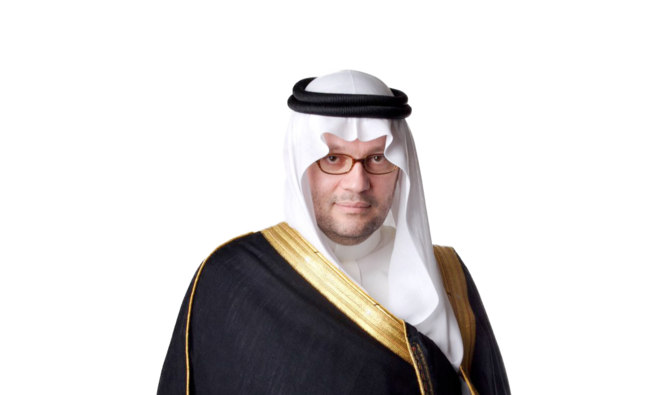
Ali Shihabi, Saudi author and member of the Neom advisory board

Ali Shihabi
Short Url
Updated 20 March 2020
Follow

Ali Shihabi, Saudi author and member of the Neom advisory board

Ali Shihabi has been a member of the Neom advisory board since January 2020. He is an author and commenter on Middle Eastern politics with a focus on Saudi Arabia.

Shihabi attained his bachelor’s degree in political science in 1981 from Princeton University in the US. He obtained his master’s in finance from Harvard Business School in 1985.

Before joining the Neom advisory board, Shihabi was the founder of The Arabia Foundation — a think tank focused on the geopolitics of the Arabian Peninsula, based in Washington.

From January 2016 to December 2017, he was a member of the board of trustees for the International Crisis Group, a nonprofit nongovernmental organization committed to preventing resolving deadly conflicts.

He was also a board member of the Center for Contemporary Arab Studies at George Washington University, in Washington, from January 2013 to December 2014.

Shihabi started his career in banking, with his first stint was at JP Morgan’s management program from 1981 to 1982. He later moved to the Gulf International Bank as a banking officer, before heading the team that supervised the institutional fund managers at the Saudi Arabian Monetary Agency.

For 14 years, Shihabi worked for Saudi Holland Bank (renamed Al-Awal Bank in 2016) from 1990-2004 as chairman of the board management committee. He later moved to the National Bank of Ras Al-Khaimah, serving as a board member from 2006 until 2009.

Shihabi founded Rasmala in 1999, a Gulf Cooperation Council-focused private equity fund, with Deutsche Bank as the key investor. He was also a board and audit committee member for MBC, from January 2008 until December 2015.

His Twitter handle is @alishihabi.


Saudi researchers develop AI system for camel herders

Updated 14 November 2025
Follow

Saudi researchers develop AI system for camel herders

  • AI-powered drone system can recognize and track camels from the air 
  • Prof. Basem Shihada and his team at KAUST developed the low-cost system

RIYADH: A research team at King Abdullah University of Science and Technology has created a low-cost, AI-powered drone system that can recognize and track camels from the air.

The system promises an affordable option for camel herders to continue one of Saudi Arabia’s oldest labors and for scientists to learn more about camel migration patterns and habits, according to a KAUST press release.

Created by Professor Basem Shihada and his labmates, the system uses inexpensive commercial drones and cameras to enable camel herders to track their camels in real time without relying on expensive GPS collars or satellite connections.

The team used a single drone-mounted camera to capture aerial footage of small camel herds in Saudi Arabia, then trained their AI model using machine learning. The model revealed new insights into the animals’ behaviors.

“We found their migration patterns were not random but showed identifiable patterns,” said KAUST scientist Chun Pong Lau, who was also involved in the project.

The release added that camels, especially elders, showed coordinated grazing migration, covering long distances throughout the day, but always returned to their herder by sunset. They also showed high sensitivity to the drone’s sound, which is why the KAUST scientists kept the drone at least 120 meters above the ground.

For centuries, camels have been central to Arabian life by providing transport, food and a cultural link to the desert. Today, they contribute more than SR2 billion ($534 million) annually to the Saudi economy through industries such as food, textiles and tourism.

However, herding remains a challenge, with camels roaming up to 50 km a day across isolated terrain. This mobility often leads to road accidents, overgrazing and loss of livestock.

As a next step, Shihada and his colleagues plan to collect video of larger camel herds of more heterogeneous sizes and colors to train their AI system for higher performance.