
RIYADH: As part of its ongoing restructuring, Saudi Electricity Co. (SEC) will “soon” launch its new subsidiary focusing on power generation, according to SEC CEO Fahad Al-Sudairi.
He also provided updates on the progress of a number of other previously announced projects, including the company’s rollout of smart meters, its plans to increase the use of renewable energy, and a joint initiative with Egypt that he described as “one of the region’s most vital power interconnectivity projects.”
As part of a restructuring in line with the policies of the Ministry of Energy and national regulator the Electricity and Cogeneration Regulatory Authority (ECRA), plans to establish a new generation company were announced in Nov. 2018. It will operate as a standalone subsidiary, Al-Sudairi said, just like the existing transmission and energy-buying subsidiaries, National Grid SA and Principal Buyer respectively. It will be operating independently across the Kingdom from day one, he added.
The SEC’s smart meters being used were carefully selected based on detailed specifications set by ECRA to ensure the highest level of accuracy in consumption-metering and billing, taking into account the fact that must operate reliably in a variety of harsh conditions, including extreme heat, humidity and dust, Al-Sudairi added.
They also have all the features and capabilities specified by ECRA to cope with current and future requirements, and their selection was ratified by the regulator and the Saudi Standards, Metrology and Quality Organization.
SEC is committed to completing the installation of 10 million smart meters within 15 months, the CEO said, which means installing 33,000 meters a day — a “record rate compared with other countries that have undertaken similar projects.”
He praised the efforts of the government agencies that are collaborating on and supporting the project, including the Ministry of Energy, the Ministry of Communications and Information Technology, ECRA, the Communications and Information Technology Commission, and the Local Content and Government Procurement Authority.
The introduction of the new, smart technology reduces the need for meter readers but that does not mean that SEC will abandon its workers.
“No meter reading field personnel will be laid off or made redundant,” Al-Sudairi said. “Meter reading personnel are a vital part of SEC’s human capital, which is why we’ve set up retraining programs for them so they can continue to be important after we finish the (smart metering project). They will most likely end up with even better jobs within the company, especially ones that have to do with remotely maintaining and servicing the new smart meters.”
One of the features of the smart meters, he added, is a prepaid option that allows customers to buy “power credits” using a variety of electronic online payment methods. The feature is awaiting the approval of regulators and government agencies.
Al-Sudairi also reiterated SEC’s commitment to supporting megaprojects in the Kingdom that “go hand in hand with the government’s plans to cut dependency on fossil fuel for power generation and use more renewable energy instead.”
He said: “The company is working with the Ministry of Energy’s Renewable Energy Project Development Bureau to tie renewable energy stations into the grid according to a set schedule.
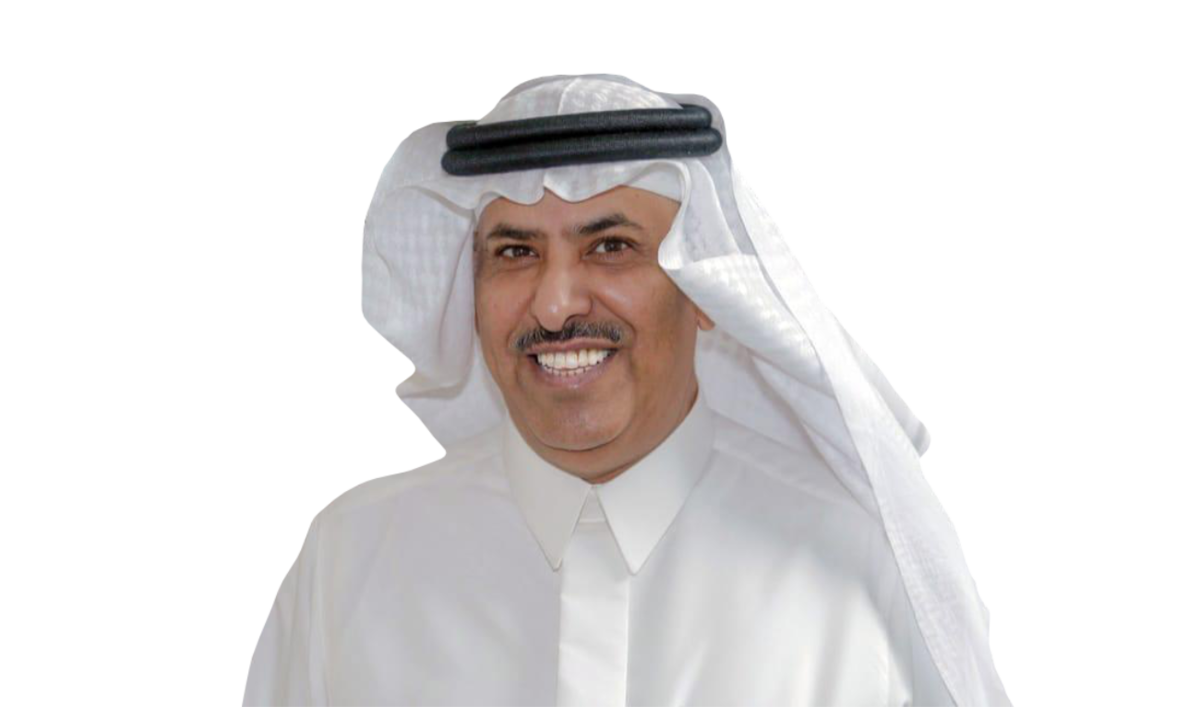
Saudi Electricity Co. CEO Fahad Al-Sudairi
“In 2018, SEC signed an agreement to buy energy from the 300-megawatt Sakaka IPP photovoltaic solar project and the 400-megawatt Dumat Al-Jandal Wind Farm.
“All of the gas-powered units at Waad Al-Shamal Power Plant were operational according to schedule (in 2018), and the steam and solar units are set to come online this December.”
Waad Al-Shamal is a new city, with an associated mining complex, in the Kingdom’s Northern Borders region, 15 kilometers east of Turaif and 180 km northeast of Al-Qurayyat.
Al-Sudairi is confident that the capacity of that the power grid has been properly developed to cope with the target of 9.5 gigawatts of renewable energy by 2023, an objective that is part of the Kingdom’s Vision 2030, will be achieved.
“SEC and its subsidiaries work diligently to enhance the entire electric system, while the planned renewable-energy projects are being developed in collaboration with the Ministry of Energy, so as to ensure that the system continues to handle the renewable-energy capabilities foreseen in Vision 2030,” he said.
“We’ve prepared the system and ensured that the required measures are in place to tie renewable power plants into the grid as and when they are ready to come on line, all in coordination with the Renewable Energy Project Development Bureau.
“The company is working on a study to (prepare the grid) to handle even more. We’re now determining the requirements for that.”
On a regional level, Al-Sudairi said that the technical documents and paperwork needed for a power interconnectivity project between Saudi Arabia and Egypt have been completed. Issues with the routing of power lines that might be affected by development projects in the northwest of the Kingdom have also been rectified.
This initiative, which he described as “one of the region’s most vital power-interconnectivity projects” includes agreements for the exchange of up to 3 gigawatts of power.
Al-Sudairi said the project is based on “joint technical and business case studies that proved the viability of the project in both normal and extraordinary circumstances, in terms of sharing generation reserves, utilizing renewable energy capacities, and efficient grid operation — all of which will ultimately reduce costs for both countries and utilize generation capacities outside of peak times.”
Egypt, he added, is SEC’s gateway to the Maghreb and North Africa.
“Other (Gulf Cooperation Council) countries may also benefit from interconnectivity through National Grid SA’s national grid,” he said. “There are ongoing investigations into interconnecting with neighboring countries, such as Jordan, and eventually taking our energy all the way to Europe. That will be part of the Arabian power-interconnectivity project, the agreements for which are being written.”
Al-Sudairi views the Saudi-Egyptian project as an extension of GCC Interconnection Authority agreements.
“More and more efforts are being made to bolster commercial exchange among GCC countries,” he said. “Interconnectivity’s original purpose was to share constant and variable power reserves and provide emergency power support.”