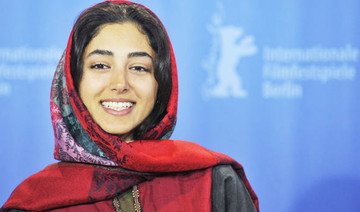
MARRAKESH, Morocco: Exiled Iranian actress Golshifteh Farahani has condemned what she called a “massacre” in her homeland, which has been rocked by a wave of deadly protests.
Farahani, Iran’s first actress to star in a Hollywood film since the 1979 revolution, told AFP in an interview that the Iranian people were “suffering economically, politically and democratically.”
The United States said Thursday that Iranian authorities may have killed more than 1,000 people in a crackdown on demonstrations, after the government abruptly hiked fuel prices.
According to London-based human rights group Amnesty International, at least 208 people died in the protests that erupted on November 15.
“It’s a massacre, with hundreds of people dead,” Farahani said on the sidelines of the Marrakesh International Film Festival.
“I’ve learned not to dream when it comes to Iran. We cannot guess what will happen tomorrow.
“I didn’t expect the price of petrol to triple overnight. At the same time, I know that the people are suffering economically, politically and democratically. And when people suffer, it can explode quickly,” she said.
Iran has dismissed the high death tolls reported by foreign sources as “utter lies” and has so far confirmed only five dead — four security force personnel killed by “rioters” and one civilian.
Farahani — daughter of the acclaimed director Behzad Farahani — upset the Iranian authorities when she appeared in Ridley Scott’s spy thriller “Body of Lies” in 2008 alongside Leonardo DiCaprio.
She went into exile, first in the United States and then in France where she now lives.
“I realized that I preferred being in Europe, in the middle of the world,” she said.
“Being in exile is like being in an ocean. Your only choice is to swim or you’ll die.”
Farahani said she cannot return to Iran.
“Because of my films, because I’m a woman, for not wearing the veil,” she said.
“Everything I did when I left Iran became like a political act, when it was not the case,” she added.
“I wasn’t a politician or an activist. I was just an actress. A female actress. If I were a man I would have taken a different path.”


![]()

Exiled actress Farahani decries ‘massacre’ in Iran

Exiled actress Farahani decries ‘massacre’ in Iran
- Golshifteh Farahani: ‘It’s a massacre, with hundreds of people dead’
- Farahani upset the Iranian authorities when she appeared in Ridley Scott’s spy thriller ‘Body of Lies’

Latest updates


© 2026 SAUDI RESEARCH & PUBLISHING COMPANY, All Rights Reserved And subject to Terms of Use Agreement.