ANKARA: NATO leaders forced Turkish President Recep Tayyip Erdogan into a humiliating climbdown on Wednesday over his demand that the alliance designate Kurdish YPG fighters in Syria terrorists.
Erdogan had earlier been accused of political blackmail after he threatened to veto NATO’s defense plan for the Baltics and Poland unless he got his way on the YPG.
But at the conclusion of the alliance’s 70th anniversary summit in London on Wednesday, NATO Secretary-General Jens Stoltenberg said Turkey had agreed to approve the plan.
Whether to designate the YPG “a threat” or “a terror group” had not even been discussed at the leaders’ meeting, and disagreements over the issue should not undermine the gains made in the global fight against terrorism, Stoltenberg said. “Despite differences, the allies keep uniting around their core mission, which is protecting each other.”
Many in Turkey wondered what Erdogan had obtained in return for withdrawing his veto, but Lithuanian President Gitanas Nauseda denied any quid pro quo, and welcomed the plan as “a huge achievement for the whole region.”
Burak Bilgehan Ozpek, a political scientist from TOBB University in Ankara, told Arab News: “Removing the blockage is a good decision, but just before the summit Erdogan seemed to be trying to use the NATO forum to solve Turkey’s own foreign policy challenges, which was totally wrong.”
If such tactics ever influenced NATO’s decision-making processes, the alliance could no longer be considered purely a military defense project, instead becoming a mechanism for political wrangling between member countries, Ozpek said.
In the summit’s final declaration, NATO said: “Terrorism in all its forms and manifestations remains a persistent threat to us all. State and non-state actors challenge the rules-based international order.”
That will interest Turkish decision-makers, said Karol Wasilewski, an analyst at the Polish Institute of International Affairs in Warsaw. The aim of Erdogan’s veto gambit was “probably to break Turkey’s isolation over the Syrian issue,” he told Arab News.
“If Turkey … gets at least an assurance that the allies will tone down their criticism of the Syrian operation, or maybe even consider minor financial support for the safe zone, Turkey could argue that the bargain paid off,” he said.


![]()

Erdogan in NATO climbdown over Kurds
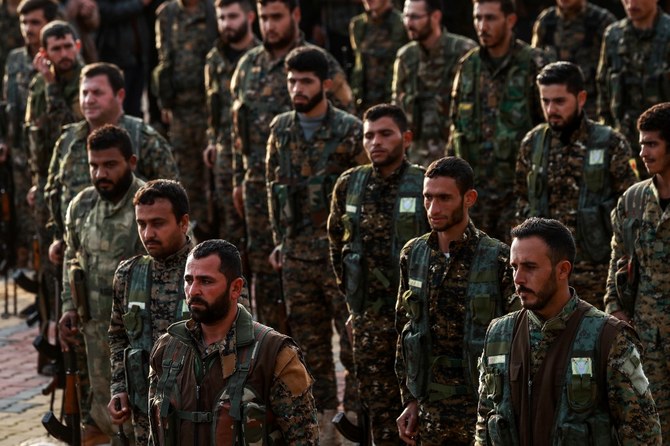
Erdogan in NATO climbdown over Kurds
- Erdogan withdrew his demand that the alliance designate Kurdish YPG fighters in Syria terrorists
- Turkish president had threatened to veto NATO’s defense plan for the Baltics and Poland unless


Latest updates


Recommended


© 2026 SAUDI RESEARCH & PUBLISHING COMPANY, All Rights Reserved And subject to Terms of Use Agreement.