LONDON: British police shot a man on London Bridge in the heart of Britain’s capital on Friday after a stabbing that left two people dead and several people wounded, according to government sources.
Scotland Yard on Friday said armed officers on London Bridge had shot dead a man wearing a "hoax explosive device" after several people were stabbed in the city.
"I'm now in a position to confirm that it has been declared a terrorist incident," Assistant Commissioner Neil Basu, of the Metropolitan Police, said in a statement.
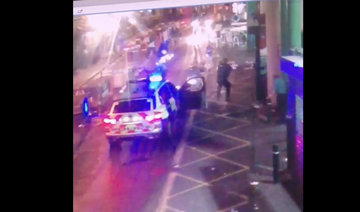
Scores of police, some armed with submachine guns, rushed to the scene, ushering bemused office workers and tourists out of an area packed with office buildings, banks, restaurants and bars. Workers in office blocks in the area were told to stay inside.
The police force said officers were called just before 2 p.m. “to a stabbing at premises near to London Bridge,” which links the city’s business district with the south bank of the River Thames.
They said a man was detained and “a number of people have been injured.”
We are in the early stages of dealing with an incident at London Bridge. Please follow @metpoliceuk for updates. If you are near the scene, please follow the directions of any officer on the ground.
— MPS Events (@MetPoliceEvents) November 29, 2019
Witnesses reported seeing what appeared to be fighting on the bridge and hearing several gunshots. Sky News reported that the man shot was the apparent attacker.
One video posted on social media showed two men struggling on the bridge before police pulled a man in civilian clothes off a black-clad man on the ground. Shots then rang out.
Other images showed police, guns drawn, pointing at a figure on the ground in the distance.
Amanda Hunter said she was on a bus crossing the bridge when she heard shots.
"(The bus) all of a sudden stopped and there was commotion and I looked out the window and I just saw these three police officers going over to a man,” she told the BBC.
"It seemed like there was something in his hand, I'm not 100% sure, but then one of the police officers shot him.”
BBC reporter John McManus was in the area and said he saw figures grappling on the bridge. He said: “I thought it was initially a fight,” but then shots rang out.
"I’m being kept updated on the incident at London Bridge and want to thank the police and all emergency services for their immediate response." — Prime Minister Boris Johnson
— UK Prime Minister (@10DowningStreet) November 29, 2019
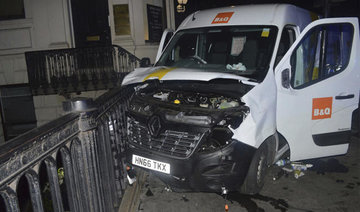
Cars and buses on the busy bride were at a standstill, with a white truck stopped diagonally across the lanes. Video footage showed police pointing guns at the truck before moving to check its container.
British Transport Police said London Bridge station, one of the city’s busiest rail hubs, was closed and trains were not stopping there.
City of London Police, the force responsible for the business district, urged people to stay away from the area.
The attack was condemned by several organizations and countries, including Saudi Arabia.
The incident revived memories of the June 2017 London Bridge attack, when three Islamic State-inspired attackers ran down people on the bridge, killing two, before stabbing several people to death in nearby Borough Market.
That incident took place days before a general election. Britons are due to go to the polls again on Dec. 12.
Prime Minister Boris Johnson’s office said he was receiving updates on the incident and was returning to his 10 Downing St. office from the campaign trail.
In March 2017, an attacker fatally struck four people with a car on nearby Westminster Bridge then fatally stabbed a police officer before security forces shot and killed him in a courtyard outside Parliament.