


WASHINGTON: Two White House officials described tensions and frustrations among some of the nation’s top diplomats as President Donald Trump, backed by his personal lawyer Rudy Giuliani, pressured Ukraine to investigate Democrats.
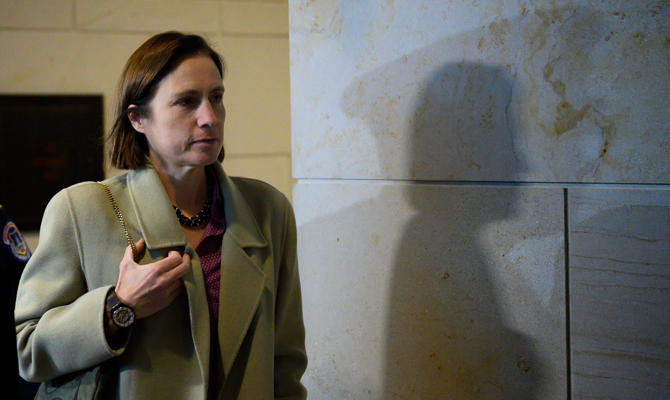
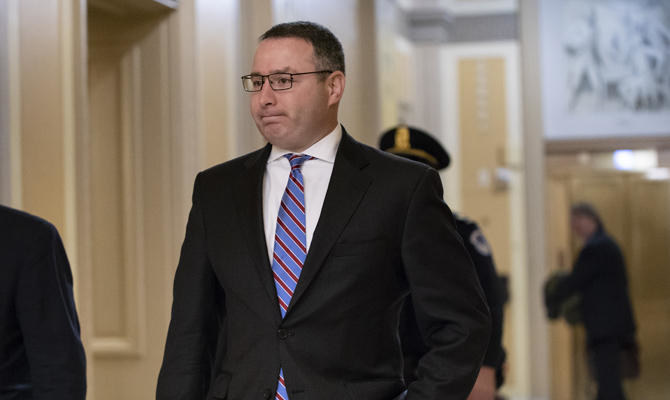
In closed-door transcripts released by House impeachment investigators on Friday, Fiona Hill, a former White House Russia adviser, and Lt. Col. Alexander Vindman, an Army officer assigned to the National Security Council, detailed an extraordinary series of meetings and interactions before and after a July phone call in which Trump asked new Ukraine President Volodymyr Zelenskiy to investigate political rival Joe Biden and Ukraine’s role in the 2016 US election. At the same time, the US was withholding military aid to the country.
Like previous witnesses, the two describe their concerns about the call and a gradual understanding that the aid and the investigations were linked. That connection is at the center of the Democrats’ impeachment probe.
Takeaways from the Hill and Vindman transcripts:
DRAMA UNFOLDS IN THE WHITE HOUSE
Both Hill and Vindman describe a July meeting in the White House, before the call, in which Trump’s EU ambassador, Gordon Sondland, told Ukrainian officials that Trump would hold a meeting with Zelenskiy if they launch the investigations.
Hill said Sondland essentially “blurted out” that he had an agreement with acting chief of staff Mick Mulvaney. Trump’s National Security Adviser, John Bolton, “stiffened” and abruptly ended the meeting.
Sondland then convened a second meeting downstairs with the Ukrainians, to which Bolton sent Hill “to find out what they’re talking about.”
As she walked in, Sondland was trying again to set up the meeting and mentioned Rudy Giuliani, Trump’s personal lawyer. Hill cut him off.
Vindman said that Sondland discussed an investigation into the Bidens in the second meeting, which he also attended.
“My visceral reaction to what was being called for suggested that it was explicit,” Vindman said. “There was no ambiguity.”
___
BOLTON’S ALARM
Hill reported back to Bolton about Sondland’s attempts. Bolton told her to tell a National Security Council lawyer what she had heard, and to make it clear that that “I am not part of whatever drug deal Sondland and Mulvaney are cooking up on this.”
She said she had also discussed with Bolton the May dismissal of Marie Yovanovitch, the US ambassador to Ukraine, which came at Trump’s direction. He said his reaction was “pained.”
Bolton told her that “Rudy Giuliani is a hand grenade that is going to blow everybody up.”
____
MULVANEY’S ROLE
According to both Vindman and Hill, Sondland linked the trade for a White House meeting to Mulvaney.
“He just said that he had had a conversation with Mr. Mulvaney, and this is what was required in order to get a meeting,” Vindman said of the July discussion with the Ukrainians.
Vindman added that Sondland “was talking about the 2016 elections and an investigation into the Bidens and Burisma,” a gas company linked to Biden’s son, Hunter Biden.
He said Sondland had a tendency to “just go directly over the NSC folks” and rather than working with National Security Council staff, would “go over the directorate and either reach directly to Ambassador Bolton or go to the chief of staff’s office. He had a pipeline.”
____
IMPRESSIONS OF THE CALL
Vindman, who listened into the July conversation between Trump and Zelenskiy, said the call was “dour” and there was no doubt in his mind that Trump was asking for a probe of the Bidens in exchange for a meeting.
Hill did not listen in on the call but said she was “shocked” when she read the rough transcript that was released in September. She said it was “blatant.”
“I was also very shocked, to be frank, that we ended up with a telephone conversation like this ... I sat in an awful lot of calls, and I have not seen anything like this,” Hill told the lawmakers. “And I was there for two and a half years. So I was just shocked.”
___
TRANSCRIPT WAS EDITED
Vindman filled in lawmakers about what was left out of the rough transcript of the July call when it was released by the White House in September.
Among other changes, he said it was edited to remove a reference to Burisma, the energy company with ties to Joe Biden’s son. Vindman said that Zelenskiy specifically referenced looking into the situation with Burisma, the company linked to Hunter Biden. He said the rough transcript was edited to read: “the company.”
He said, though, that he didn’t think there was any “malicious intent” in leaving the words out.
Vindman also said the editing process for the rough transcript of the call went through a different, more secure system. And he had a difficult time logging into the system and had to get a hard copy and make edits on paper.
He said “it could be justified” to put it in the more secure system because “if it went out, it could harm our relationship” with Ukraine.
___
VINDMAN OUT OF THE LOOP
Vindman testified that he began to be excluded from Ukraine-related issues after he had taken his concerns to a lawyer for the National Security Council.
He said he was given conflicting reasons for why he was not included on a trip to Ukraine by then national security adviser John Bolton and then had difficulty in obtaining readouts from various meetings.
“I would ask for readouts, and I wasn’t able to successfully obtain readouts of those trips,” he said, adding that he eventually received the information needed to do his job from contacts at other agencies. “There was that period of time where, I guess, you know, where I felt I wasn’t having access to all the information and not attending the things that I would typically be participating in.”
___
UKRAINE’S ROLE IN THE 2016 ELECTION
Both Hill and Vindman said there was no evidence to suggest Ukraine meddled in the 2016 US presidential election — a theory that both Trump and Giuliani have espoused.
Hill described the idea that Ukrainians were looking to mess with democratic systems in the United States as “fiction.”
She said that other national security officials had tried to explain to Trump that it wasn’t plausible. She said officials were disheartened to see the president suggest it to Ukraine’s new president when they spoke.
Vindman said he was unaware of any “authoritative basis” for the theory.
___
FRICTION AMONG ADVISERS
Hill said she had a good relationship with Sondland until a “blow-up” with him in June when he told her he was in charge of Ukraine. “You’re not,” she replied.
And then Sondland got “testy” with her, she told lawmakers.
When she asked Sondland who said he was in charge of Ukraine, he said the president. “Well, that shut me up, because you can’t really argue with that,” she said.
She described Sondland as someone who was frequently around the White House under unclear circumstances.
“Ambassador Bolton complained about him all the time but I don’t know whether he tried to rein him in” because Sondland wasn’t in Bolton’s chain of command, she said.
She said he felt Sondland has “just gone off the road. No guardrails, no GPS.” At one point she told him he was in over his head.
___
HILL IS NOT “ANONYMOUS“
Though she was not asked about it, she told lawmakers that she is not the author of a forthcoming book by an anonymous author identified only as “a senior official in the Trump administration.” The person is highly critical of the president.
“I did not leak, and I was not anonymous,” she said. “I am not the whistleblower.”
The whistleblower, another person whose name is not publicly known, triggered the impeachment probe with a complaint about the July call.


