

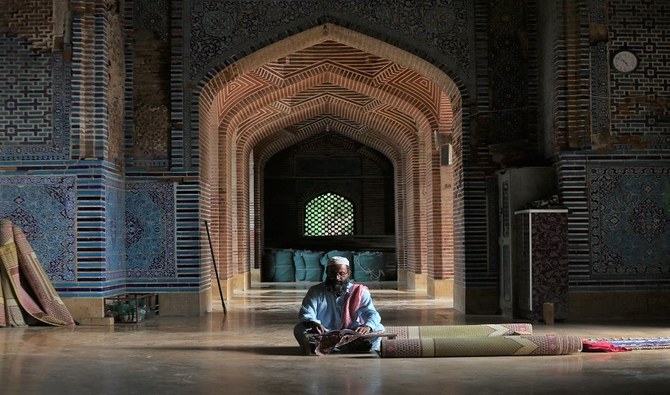
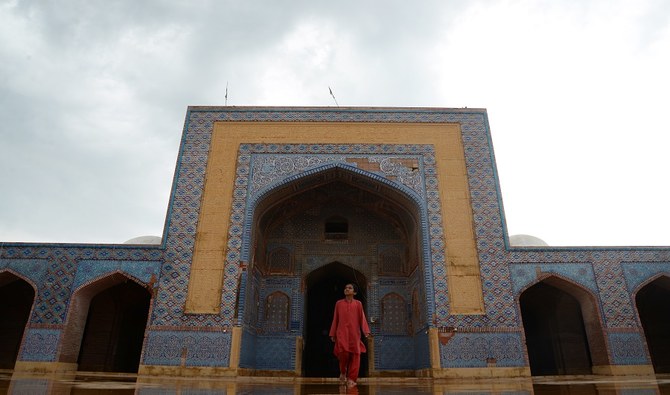

THATTA, Sindh: The 17th century Muslim emperor Shah Jahan is known around the world as the Mughal king who built the Taj Mahal as a tomb for his beloved wife Mumtaz Mahal, and ruled over much of what is present day India, Pakistan, Afghanistan and Iran. But few know about another marvel of architecture that the king commissioned: the Shah Jahan Mosque in the dusty Pakistani town of Thatta.
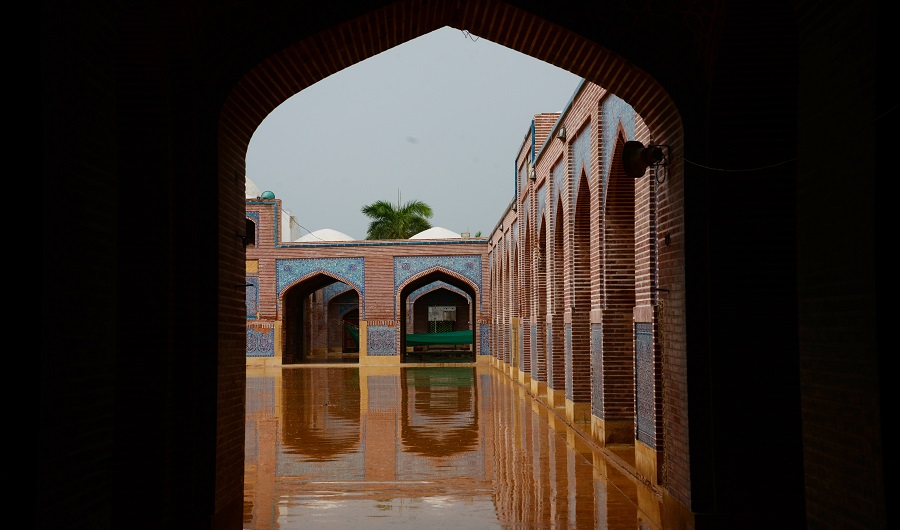
A view of the Shah Jahan Mosque in Pakistan’s Thatta city on September 25, 2019 (AN Photo by SA Babar)
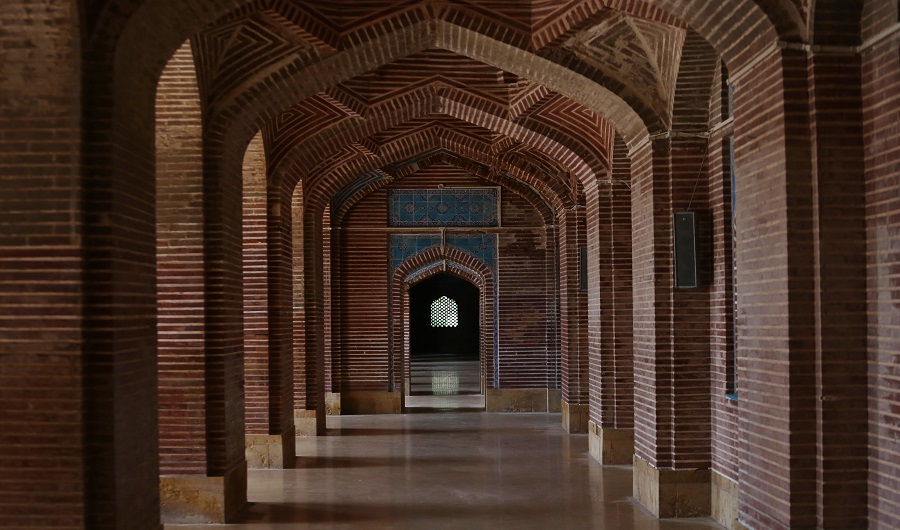
Arcades around the central courtyard of Pakistan’s Shah Jahan Mosque feature bricks laid in geometric patterns. Photograph taken on September 25, 2019 (AN Photo by SA Babar)
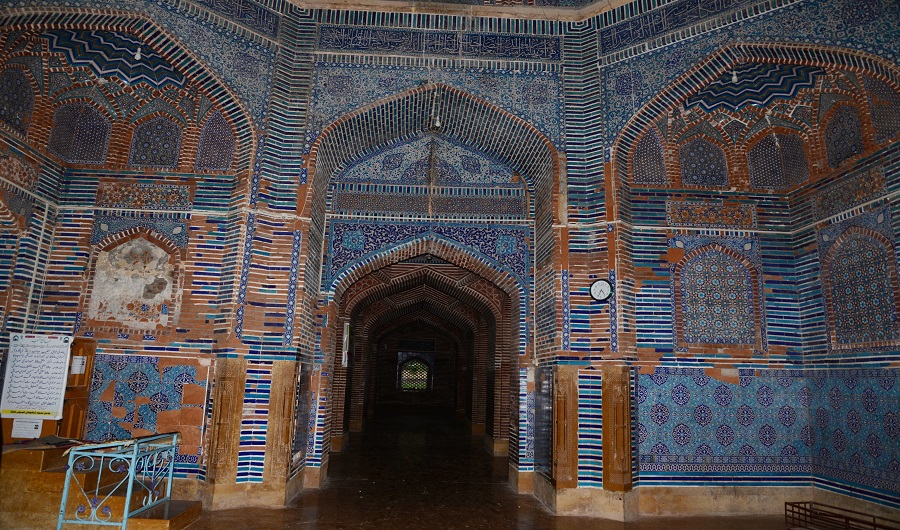
With its large courtyard and elaborate corridor of ninety-three domed chambers, the Shah Jahan Mosque has the most elaborate display of tile work in the Indian subcontinent. Its domes, arches, gateways, and vaulted interiors are inlaid with mosaics of radiating turquoise and white tiles in floral patterns that recall the kashi work of the Timurid Central Asia and Safavid Iran. Photograph taken in Thatta, Pakistan, on September 25, 2019 (AN Photo by SA Babar)
The mosque was ordered constructed by Shah Jahan as a token of gratitude to the people of Thatta where the emperor sought refuge after he rebelled against his father Jahangir. The foundation of the building was laid in 1644 and construction was completed in three years. The mosque has been on a tentative UNESCO World Heritage list since 1993.
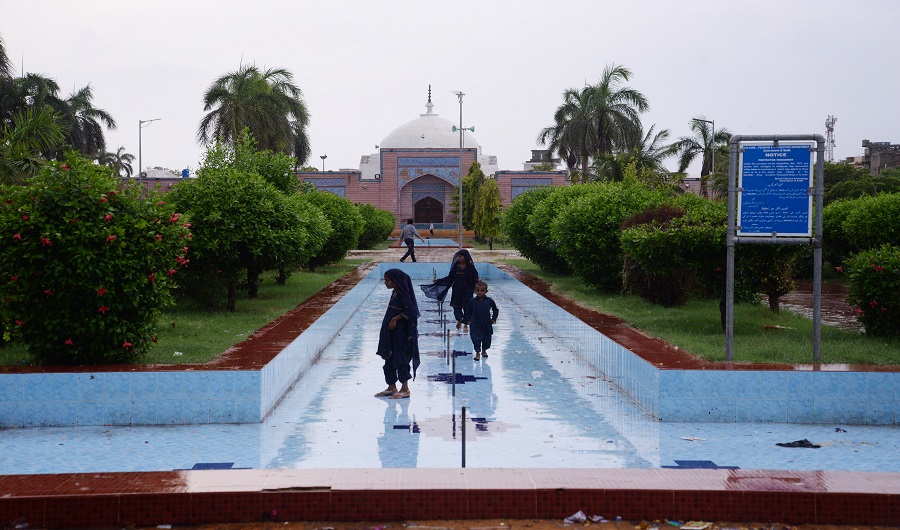
A view of the main entrance of the Shah Jahan Mosque in Pakistan’s Thatta on September 25, 2019 (AN Photo by SA Babar)
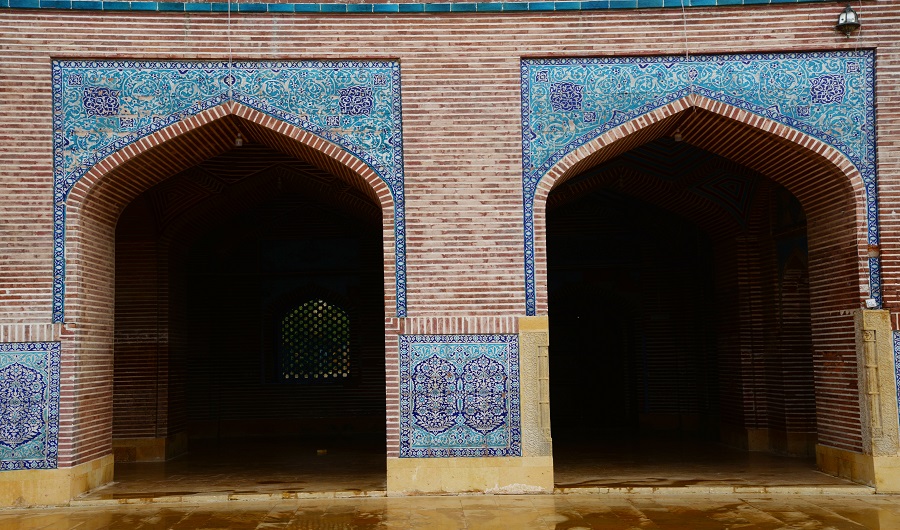
A small niches at the Shah Jahan Mosque helps let the light and fresh air into the chamber of the building. Photograph taken in Thatta, Pakistan, on September 25, 2019 (AN Photo by SA Babar)
While the Shah Jahan Mosque is best known for being home to some of the most intricate tile work in South Asia and for its geometric brick design, the mosque’s caretaker Syed Masoom Ali Shah said it was also special for having acoustic, lighting and ventilation systems well ahead of its time.
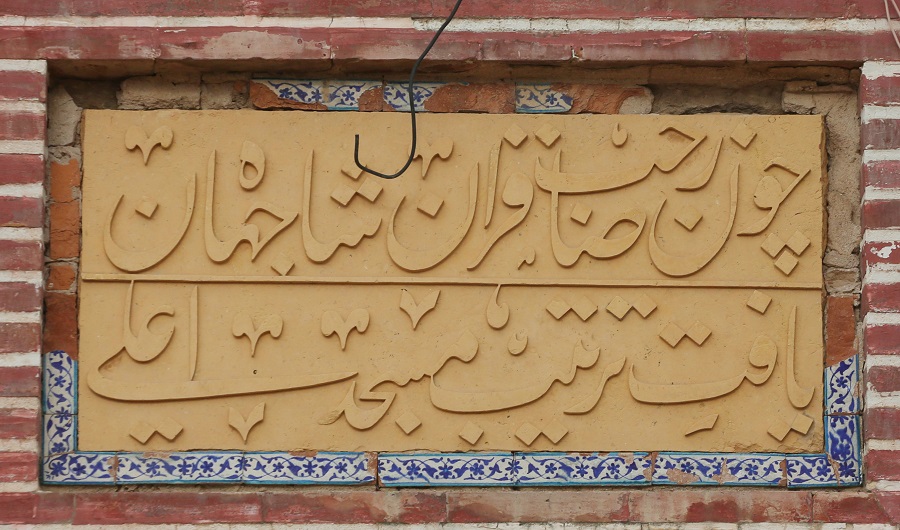
A Persian couplet is seen inscribed on the eastern dome of the Shah Jahan Mosque, in Pakistan’s Thatta city on September 25, 2019 (AN Photo by SA Babar)
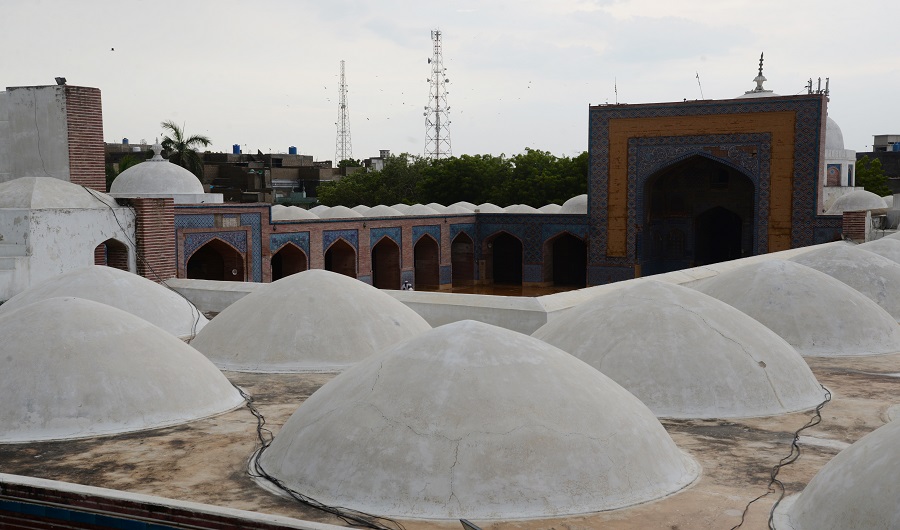
A view of the Shah Jahan Mosque from its rooftop. Photograph taken in Thatta, Pakistan, on September 25, 2019 (AN Photo by SA Babar)
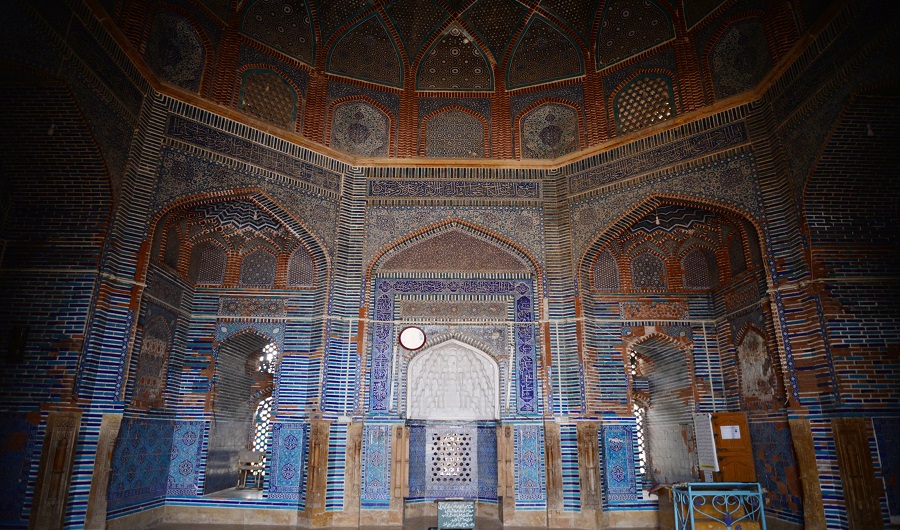
A view of the main prayer chamber of the Shah Jahan Mosque covered in mosaic tile decoration typical of Turko-Persian architecture. Photograph taken in Thatta, Pakistan, on September 25, 2019 (AN Photo by SA Babar)
The mosque was built such that around 20,000 worshipers could clearly hear the prayer leader and worship in a very well ventilated space, Shah said. A person speaking at one end of the mosque could be heard at the other end when the amplitude topped 100 decibels.
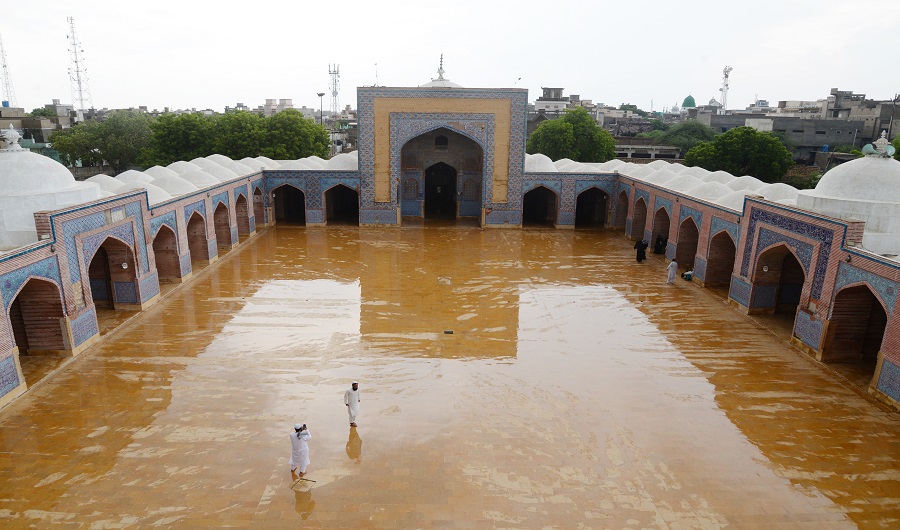
A view of the Shah Jahan Mosque from its rooftop. Photograph taken in Thatta, Pakistan, on September 25, 2019 (AN Photo by SA Babar)
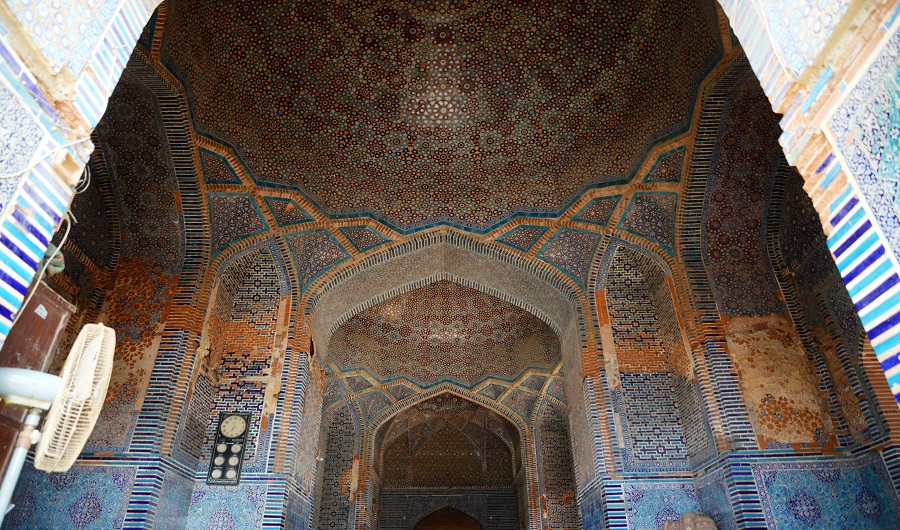
In Pakistan’s Thatta city, the Shah Jahan Mosque is know to have the most elaborate display of tile work in South Asia and is famed for its geometric brick design. Photograph taken on September 25, 2019 (AN Photo by SA Babar)
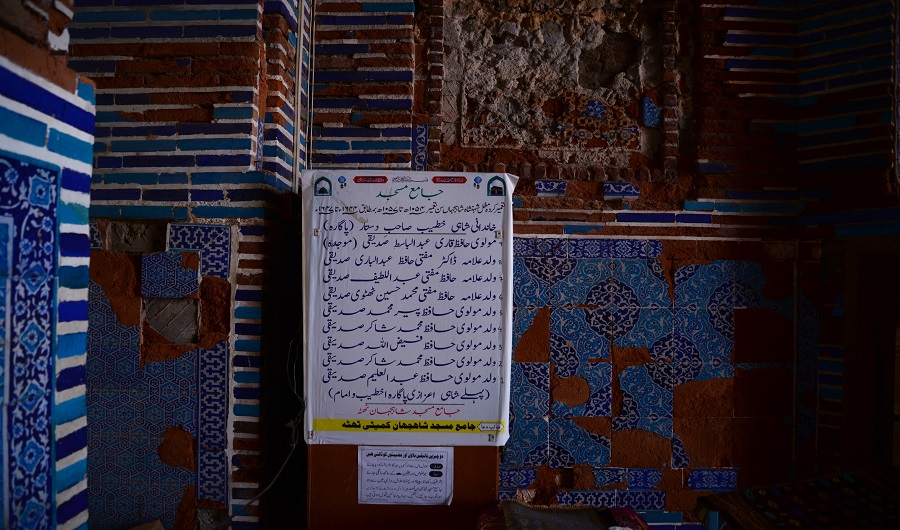
A view of the main prayer chamber of the Shah Jahan Mosque where the names of clerics who have been leading prayers since the building’s construction in 1647 are listed. Photograph taken in Thatta, Pakistan, on September 25, 2019 (AN Photo by SA Babar)
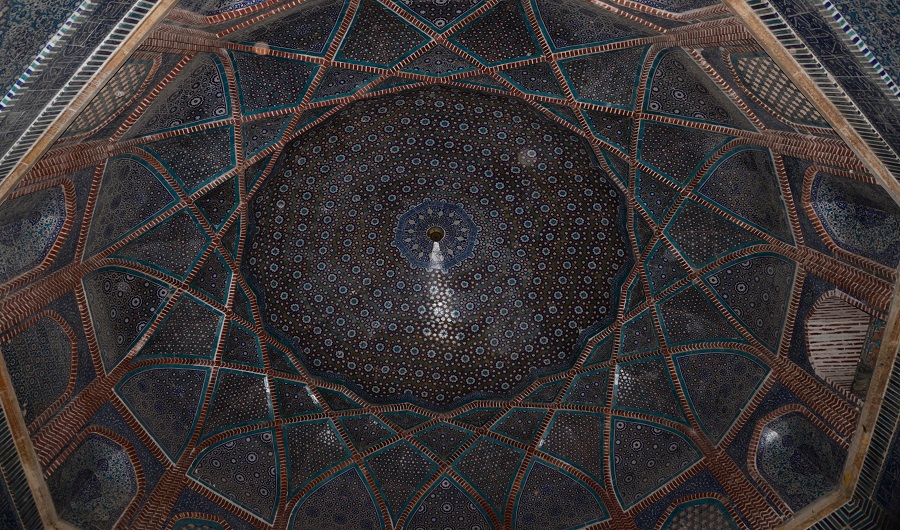
The Shah Jahan Mosque's main dome has tiles arranged in a stellate pattern to represent the night sky. Photograph taken in Thatta, Pakistan, on September 25, 2019 (AN Photo by SA Babar)
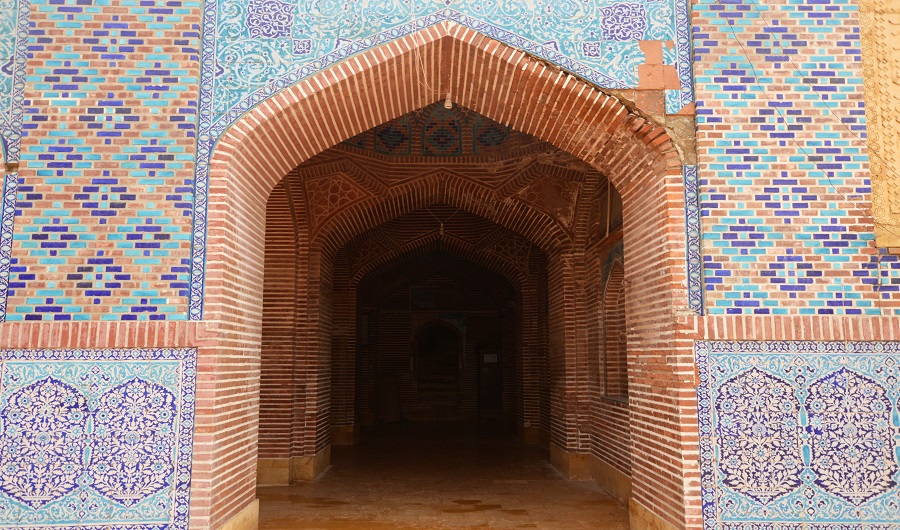
The Shah Jahan Mosque's main dome has tiles arranged in a stellate pattern to represent the night sky. Photograph taken in Thatta, Pakistan, on September 25, 2019 (AN Photo by SA Babar)
“The Mosque’s architectural style is visibly influenced by Turkic and Persian styles,” Shah said, explaining that the mosque’s wide-ranging brickwork and use of blue tiles were Timurid architectural styles from Central Asia.


