

London-based high-tech company tackling online extremism

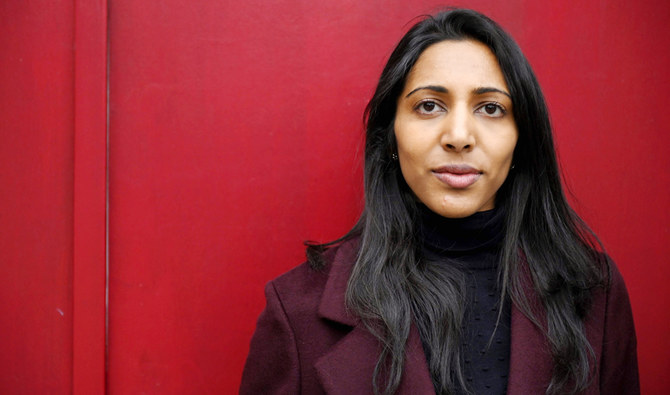
Vidhya Ramalingam, co-founder of Moonshot CVE. (AFP)
Updated 13 October 2019
Follow

London-based high-tech company tackling online extremism

  • Moonshot CVE employs 40 people working in 15 languages, including English, French and Arabic, on 76 projects in 28 countries, with clients ranging from governments to technology firms

LONDON: Vidhya Ramalingam believes it’s always possible to change, even for people deeply involved in the murky online world of extremism.

Her company Moonshot CVE has the ambitious aim of trying to get anyone tempted by violence back on the straight and narrow.

Over the last four years, the London-based startup has grown quietly but not anonymously, if a recent partnership deal with Facebook is anything to go by.

US national Ramalingam and the firm’s co-founder Ross Frenett previously worked as researchers into extremism and believe radical groups are often one step ahead when it comes to technology.

“There was a lot of recognition that terrorists were using the internet in creative ways, that they were reaching young audiences, that they were able to innovate,” she told AFP in an interview.

“Yet those of us that were trying to counter them simply were moving too slowly and had too many constraints to actually replicate those methods for counter-terrorism purposes.”

That led to the idea of a technology startup able to keep up with and fight against all forms of violent extremism to nationalists and even “incels.” But greater visibility has forced the company to take more security measures because of the sensitive nature of its work — and the potential for violence from the people it tracks.

The address of Moonshot CVE’s London offices is kept secret and most of its staff have no visible online presence.

Just to get into its premises in a nondescript building in the British capital, visitors have to pass through heavy armor-plated doors and a security check.

“We take precautions,” said Ramalingam. “We work on high-risk issues and we try and put as much into the public domain as possible.”

The startup’s name refers to the act of launching a rocket to the moon — and gives an indication of its stellar ambition. The CVE stands for countering violent extremism.

It employs 40 people working in 15 languages, including English, French and Arabic, on 76 projects in 28 countries, with clients ranging from governments to technology firms.

One project is a collaboration with the Canadian government against the far-right. Another works with the UN on online extremist content in Asia.

The company has also had a partnership for several years with Google, using online advertising to target people looking up violent extremism on the net.

The Facebook contract involves Moonshot analizing how effective the social network could be to “deradicalize” users looking up extremist content.


Saudi Arabia’s cultural sector is a new economic engine between Riyadh and Paris, says ambassador

Updated 25 January 2026
Follow

Saudi Arabia’s cultural sector is a new economic engine between Riyadh and Paris, says ambassador

RIYADH: Culture has become a fundamental pillar in bilateral relations between France and Saudi Arabia, according to the French Ambassador to the Kingdom, Patrick Maisonnave.

Maisonnave noted its connection to the entertainment and tourism sectors, which makes it a new engine for economic cooperation between Riyadh and Paris.

He told Al-Eqtisadiah during the opening ceremony of La Fabrique in the Jax district of Diriyah that cultural cooperation with Saudi Arabia is an important element for its attractiveness in the coming decades.

La Fabrique is a space dedicated to artistic creativity and cultural exchange, launched as part of a partnership between the Riyadh Art program and the French Institute in Riyadh. 

Running from Jan. 22 until Feb 14, the initiative will provide an open workspace that allows artists to develop and work on their ideas within a collaborative framework.

Launching La Fabrique as a space dedicated to artistic creativity

The ambassador highlighted that the transformation journey in the Kingdom under Vision 2030 has contributed to the emergence of a new generation of young artists and creators, alongside a growing desire in Saudi society to connect with culture and to embrace what is happening globally. 

He affirmed that the relationship between the two countries is “profound, even cultural par excellence,” with interest from the Saudi side in French culture, matched by increasing interest from the French public and cultural institutions unfolding in the Kingdom.

Latest estimates indicate that the culture-based economy represents about 2.3 percent of France’s gross domestic product, equivalent to more than 90 billion euros ($106.4 billion) in annual revenues, according to government data. The sector directly employs more than 600,000 people, making it one of the largest job-creating sectors in the fields of creativity, publishing, cinema, and visual arts.

Saudi Arabia benefiting from French experience in the cultural field

Maisonnave explained that France possesses established cultural institutions, while Saudi Arabia is building a strong cultural sector, which opens the door for cooperation opportunities.

This comes as an extension of the signing of 10 major cultural agreements a year ago between French and Saudi institutions, aiming to enhance cooperation and transfer French expertise and knowledge to contribute to the development of the cultural system in the Kingdom.

He added that experiences like La Fabrique provide an opportunity to meet the new generation of Saudi creators, who have expressed interest in connecting with French institutions and artists in Paris and France.

La Fabrique encompasses a space for multiple contemporary artistic practices, including performance arts, digital and interactive arts, photography, music, and cinema, while providing the public with an opportunity to witness the stages of producing artistic works and interact with the creative process.