ABU DHABI: Iraq will struggle to generate enough electricity unless it continues to use Iranian gas for three to four more years, the electricity minister said on Tuesday, resisting US pressure to stop the imports from its Middle East neighbor.
Iranian oil exports have tumbled since the United States imposed new sanctions on Iran this year, seeking to isolate the Islamic Republic in a row over its nuclear ambitions.
Iraq has a US waiver to import Iranian gas, but Washington has been pressing Baghdad to phase them out.
“At the end of the day it is an open market,” Electricity Minister Luay al Khateeb told reporters on the sidelines of the World Energy Congress in Abu Dhabi. “The issue of electricity is regularly becoming a political affair in Iraq.”
Power cuts in Iraq have often prompted protests against the authorities. Iran supplies enough gas to power 2,500 megawatts (MW), as well as providing Iraq with 1,200 MW in direct power supplies.
The minister said Iraq now had capacity for 18,000 MW, up from 12,000-15,000 MW last year but still below peak demand that could reach about 25,000 MW and was rising every year.
Exports of gas to Iraq and exports of refined products to global markets remain an important source of revenues for Iran.
“We have balanced relations with everyone and people should respect it,” al Khateeb when asked about rising US pressure over its Iranian energy supplies.
The minister said the power sector needed investment worth at least $30 billion to upgrade the grid, which was 50 years old and had lost 25% of its capacity due to Islamic State attacks.
Al Khateeb said Iraq was paying for Iranian gas based on a formula averaging around 11% of the price of benchmark Brent crude oil or about $6 per million British thermal unit (MBTU). This compares to $2-$3 per MBTU in the oversupplied US market.
Iranian gas imports could be reduced if Iraq used more of its gas reserves rather than flaring it, or burning off the associated gas that is produced during oil extraction.
Oil Minister Thamer Ghadhban said four projects were underway to help convert 1.2 billion cubic feet of associated gas into liquids and significantly reduce flaring.


Iraq resists US pressure to reduce Iranian gas imports
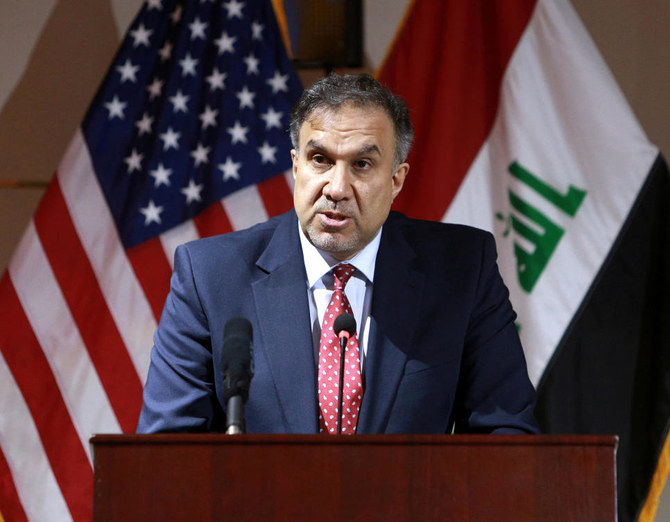
Iraq resists US pressure to reduce Iranian gas imports

- Iranian oil exports have tumbled since the United States imposed new sanctions on Iran this year
- Iraq has a US waiver to import Iranian gas, but Washington has been pressing Baghdad to phase them out


Saudi ports brace for cargo surge as shipping lines reroute
RIYADH: Preliminary estimates suggest that several global shipping lines could reroute part of their operations to Saudi Arabia’s Red Sea ports, potentially adding 250,000 containers and 70,000 vehicles per month, according to Rayan Qutub, head of the Logistics Council at the Jeddah Chamber of Commerce, in an interview with Al-Eqtisadiah.
“Any disruption in the Strait of Hormuz not only affects maritime traffic in the Arabian Gulf but could also reshape global trade routes,” Qutub said, highlighting the strait’s status as one of the world’s most critical maritime chokepoints for energy and goods transport.
With rising regional tensions, international shipping companies are reassessing their routes, adjusting shipping lines, or exploring alternative sea lanes. This signals that the current challenges extend beyond the Arabian Gulf, impacting the global supply chain as a whole.
Limited impact on US, European shipments
The effects of these developments will not be uniform across trade routes. Qutub noted that goods from China and India, which rely heavily on routes through the Arabian Gulf, are most vulnerable to disruption. In contrast, shipments from Europe and the US typically traverse western maritime routes via the Suez Canal and the Red Sea, making them less susceptible to regional disturbances.
Saudi Arabia’s strategic location, he emphasized, strengthens the resilience of regional trade. The Kingdom operates an integrated network of Red Sea ports — including Jeddah, Rabigh, Yanbu, and Neom — that have benefited from substantial infrastructure upgrades and technological enhancements in recent years, boosting their capacity to absorb increased cargo volumes.
Red Sea bookings
Several major carriers, including MSC, CMA CGM, and Maersk, have already opened bookings to Saudi Red Sea ports, signaling a shift in operational focus to these strategically positioned hubs.
However, Qutub warned that rerouted shipments could increase sailing times. Cargo from Asia, which normally takes 30-45 days, might now require longer voyages via the Cape of Good Hope and the Mediterranean, potentially extending transit to 60-75 days in some cases.
These changes are also reflected in rising shipping costs, driven by longer routes, higher fuel consumption, and increased insurance premiums — a typical response when global trade patterns shift due to geopolitical pressures.
Qutub emphasized that Saudi Arabia’s transport and logistics sector is managing these developments through coordinated government oversight. The Ministry of Transport and Logistics, the Logistics National Committee, and the Logistics Partnership Council recently convened to evaluate the impact on trade and supply chains. Regular weekly meetings have been established to monitor developments and implement solutions to safeguard the stability of supplies and continuity of trade.
He noted that the Kingdom’s logistical readiness is the result of long-term strategic investments, encompassing ports, airports, road networks, rail systems, and logistics zones. Today, Saudi logistics integrates maritime, land, rail, and air transport, enabling a resilient response to global disruptions.
Qutub also highlighted the need for the private sector to continuously review logistics and crisis management strategies, develop alternative plans, and manage strategic stockpiles. Such measures are essential to mitigate temporary fluctuations in global trade and ensure smooth supply chain operations.


