KARACHI: As Pakistan moves to declare its deep-sea port of Gwadar a duty-free zone along the lines of the Dubai and Singapore models, officials and shipping gurus rule out any direct competition with regional free ports, but say those setting up industries will have most to gain from the tax exemption.
For well over a decade, Pakistan’s government has dreamed of transforming the small, strategically located fishing port of Gwadar in southwestern Balochistan province into Pakistan’s Dubai, with a duty-free port and free economic zone.
“The exemption will be exactly on the paradigm of Dubai free port or Singapore,” Mahmood Moulvi, adviser to the maritime affairs ministry, told Arab News.
Finally, on Wednesday, the government body responsible for finalizing executive economic decisions, the Economic Coordination Committee (ECC), approved a proposal for amendments to various laws that would provide exemptions from income tax, sales tax and custom duties to the Gwadar port for 20 years- until 2039.
The proposal was submitted by Pakistan’s Ministry of Maritime Affairs and sought changes in the country’s tax laws in line with the concession agreement between the Gwadar Port Authority and China Overseas Ports Holding Company Pakistan.
“Those who will set up industries in Gwadar will have the major advantage,” he said.
The ECC now seeks legal cover for the amendments, and has asked Pakistan’s law ministry for a legal way out.
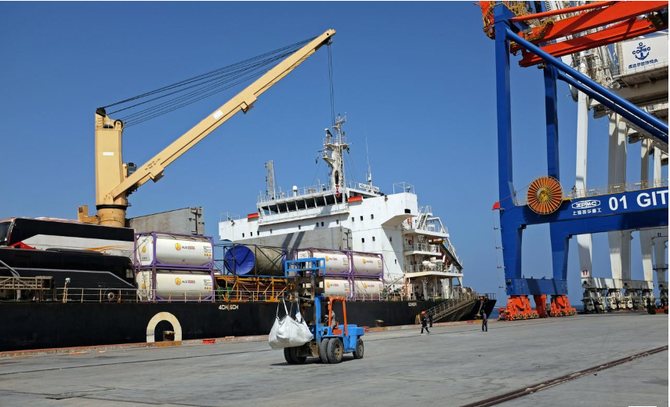
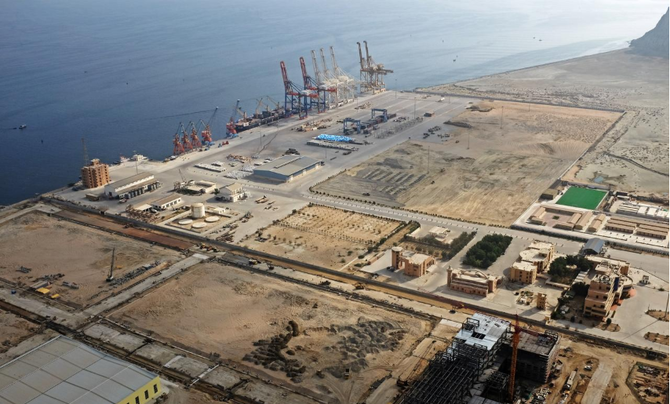
The aim is for Gwadar – located on the Arabian Sea near Iran and the mouth of the Arabian Gulf – to become a regional commercial, industrial and shipping hub, as part of the ambitious $61 billion China Pakistan Economic Corridor (CPEC) project.
Officials now hope that business activities in Gwadar will pick up from next year.
“The extent of growth will be gauged when operations start,” Moulvi said, and added, “Growth momentum will pick up after the current economic slowdown, which is a global phenomena.”
As it currently stands, a one-time import of duty-free machinery is allowed into the port, but after the newly approved tax exemptions, raw material can also be imported free of tax.
“As long as they are not selling in Pakistan, it is a good idea,” Aasim Siddiqui, Chairman of the All Pakistan Shipping Association told Arab News.
“The intention of the current government is to allow raw material free of duty...on the style of Dubai’s free port. In the Gwadar Free Zone, there will be no tax on processing,” he said.
Siddiqui, who is also a member of Pakistan’s Board of Investment, said the move would lure investment and create jobs in Pakistan’s Special Economic Zones (SEZ’s) which currently suffer from low investment.
On Saturday, Pakistan and China agreed to fast-track the pace of their industrial cooperation under the CPEC by utilising Chinese experience to ensure the speedy development of SEZs in the country.
“If duty and taxes (in SEZs) are the same as everywhere else in Pakistan, then why would someone invest in the SEZs?” he said.
So far however, the Dubai-Gwadar comparison was far too premature, Siddiqui said, with Gwadar’s current infrastructure barely supportive of “a single factory.”
But if the Pakistani port was developed as a manufacturing base, he added, Gwadar would have an important advantage over other regional free ports: cheap and available labor.
“If you want to set up manufacturing industry in Pakistan, you will have labor availability here because Pakistani labor goes to Dubai, Oman and other gulf countries” Siddiqui said.
“They (other countries) have stringent labor laws and higher costs. The manufacturing cost would be lowest in Pakistan, that is for sure,” he said.
The Gwadar port touches key shipping routes in and outside of the Arabian Gulf, with recent high-profile spats in and around the Strait of Hormuz, the world’s most important oil artery, further highlighting the port’s importance.
“Pakistan must develop the port as an alternative to the Strait of Hormuz by constructing oil storage and fueling facilities,” Captain Anwar Shah, a former Chairman of the Gawadar Port Authority, Port Qasim and Karachi Port Trust, told Arab News.
“In case of any untoward incident, Gwadar being a safe zone, can be used as a supply oil route,” Shah said.
Though almost all stakeholders have welcomed the exemption of taxes as a positive development, some believe the concessions should have come sooner.
“This... should have been done much earlier. There should have been straight orders from the government,” said Shaukat Populzai, President of the Balochistan Economic Forum.
“I have doubts about the intentions of the concerned departments... their delay tactics have almost eliminated the importance of the free zone,” he said.
Fishing was Gwadar’s main economic activity before it became the CPEC linchpin, and according to some media reports, locals say they so far see little benefit for themselves in the government’s grand plans for the duty-free port.


![]()
![]()

Tax holiday brings Pakistan Gwadar Port at par with Dubai, Singapore
Tax holiday brings Pakistan Gwadar Port at par with Dubai, Singapore
- After new tax exemptions, raw materials can be imported into Gwadar duty-free
- Experts say Gwadar will have an edge over other regional free ports due to lower labour costs
Latest updates


© 2026 SAUDI RESEARCH & PUBLISHING COMPANY, All Rights Reserved And subject to Terms of Use Agreement.