

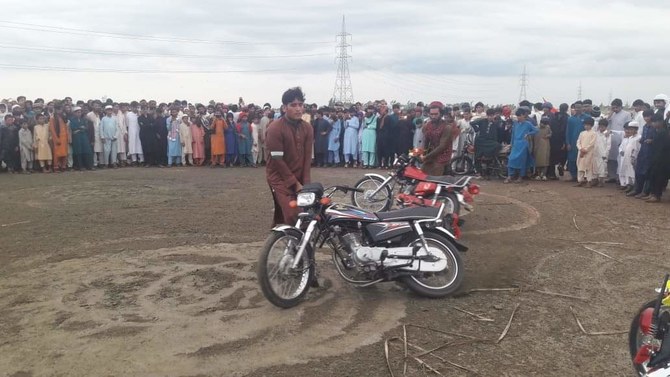
In Pakistani desert town, racers’ adrenaline-fueled bravado is the highlight of Eid festivities 

Riders on their cars and bikes in Domail, a town on the edge of North Waziristan tribal district on August 13, 2019, at a racing event that has become the yearly crown jewel of Eid Al-Adha celebrations in the Koshi Bridge Desert. (AN Photo)
Updated 14 August 2019
Follow

In Pakistani desert town, racers’ adrenaline-fueled bravado is the highlight of Eid festivities 

  • Around 15,000 people arrive each year for car and bike races in Domail on the edge of North Waziristan tribal district
  • Koshi Bridge Desert is home to area’s largest sand dunes, attracted 50 local and out-of-town riders this year

DOMAIL, Pakistan: On Monday evening, Rafi Wazir arrived in Koshi Bridge Desert with around 15,000 other Pakistanis for an annual motorbike and car racing event that has become the crown jewel of Eid-al-Adha celebrations in Domail, a town on the edge of Pakistan’s northwestern North Waziristan tribal district. 
Eid-al-Adha, the second of Islam’s two major religious festivals, also called the “festival of sacrifice,” is celebrated each year on the 10th day of the 12th and last month of the lunar Islamic calendar. 
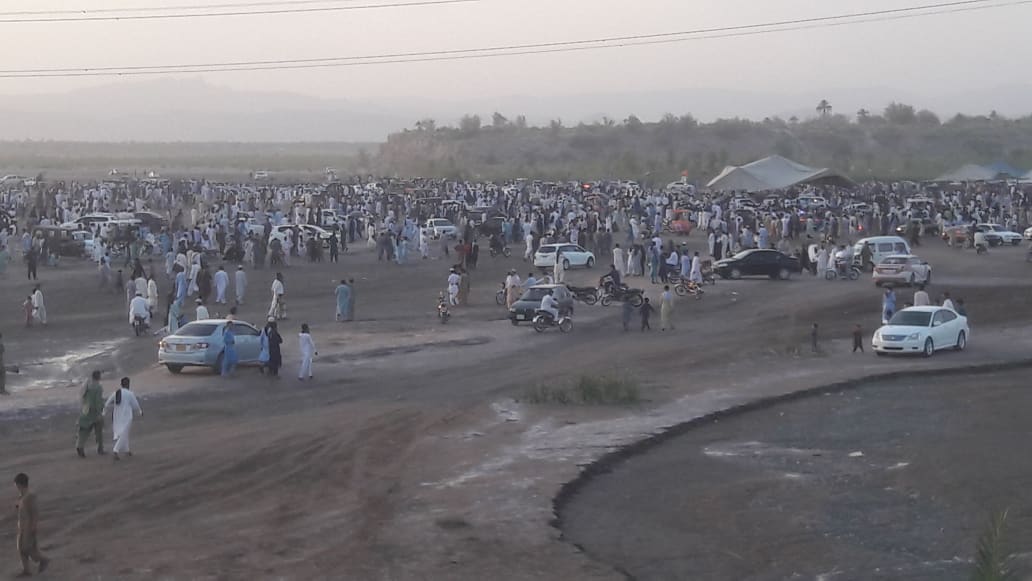


Car and bike riders and spectators seen in Domail, a town on the edge of North Waziristan tribal district on August 13, 2019. The racing event has become the yearly crown jewel of Eid Al-Adha celebrations  in the Koshi Bridge Desert. (AN Photo)

The Pakistan government has called for the festival to be observed in a “simple manner” this year, to express solidarity with Kashmiris living on the Indian side of the divided region.
But in Koshi Bridge Desert, which boasts one of the area’s largest sand dunes, celebrations commenced as they do each year — with firework displays, barbecue feasts and over 50 local and out-of-town riders trying out a five-mile-long circular track, going over and around the dunes and showing off their adrenaline-fueled bravado. 
“Racers and bikers compete with their most powerful four-wheelers and bikes on the dunes and sand,” Wazir, 43, said, as a line of motorcyclists whizzed past him, leaving behind a cloud of smoke and cheering spectators. “An interesting aspect of the celebrations is that there is no winner or loser.” 
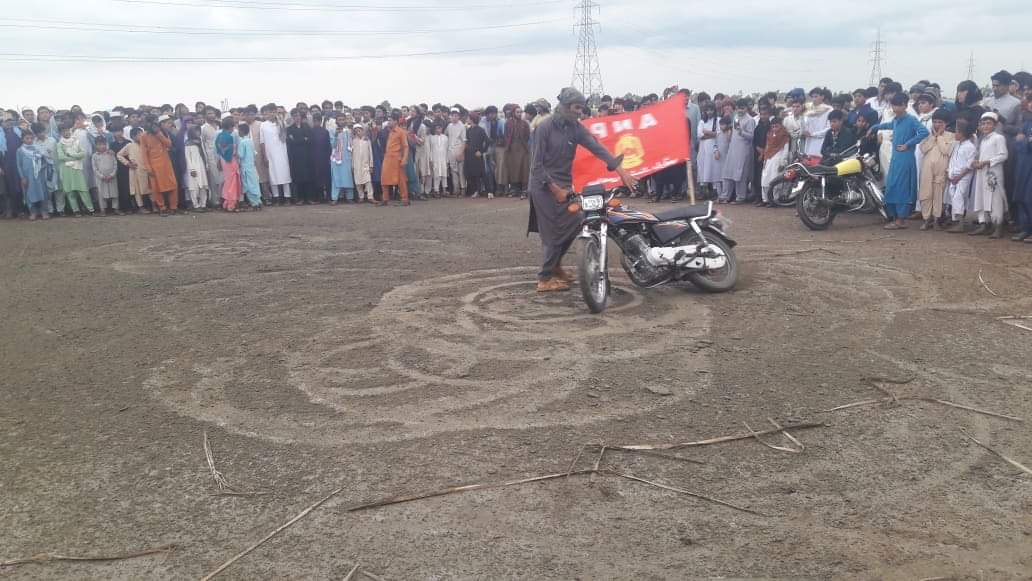


A biker manoeuvres sand dunes in Domail, a town on the edge of North Waziristan tribal district on August 13, 2019 at a racing event that has become the yearly crown jewel of Eid Al-Adha celebrations  in the Koshi Bridge Desert. (AN Photo)

North Waziristan and its adjacent regions along the porous border with Afghanistan have long been racked by militancy, serving as safe havens for insurgents and becoming the epicenter of military operations to drive them out. 
But even in the heyday of a decades-old Taliban insurgency, Wazir said, the races had gone on as usual. The Taliban, as opposed to most forms of entertainment and sport, did not interfere in the event, which Wazir said he had been attending since he was a school-going boy. 
Wazir said his brother Attaullah, who works in Dammam, a main town in the United Arab Emirates (UAE), had arrived home three days before Eid especially to attend the races. Attaullah is among thousands of people from the area who have left to seek employment in Gulf countries, primarily in the UAE, Saudi Arabia, and Kuwait.
“My brother [Attaullah Wazir] has come on a two-week holiday only to attend the race,” Wazir said.
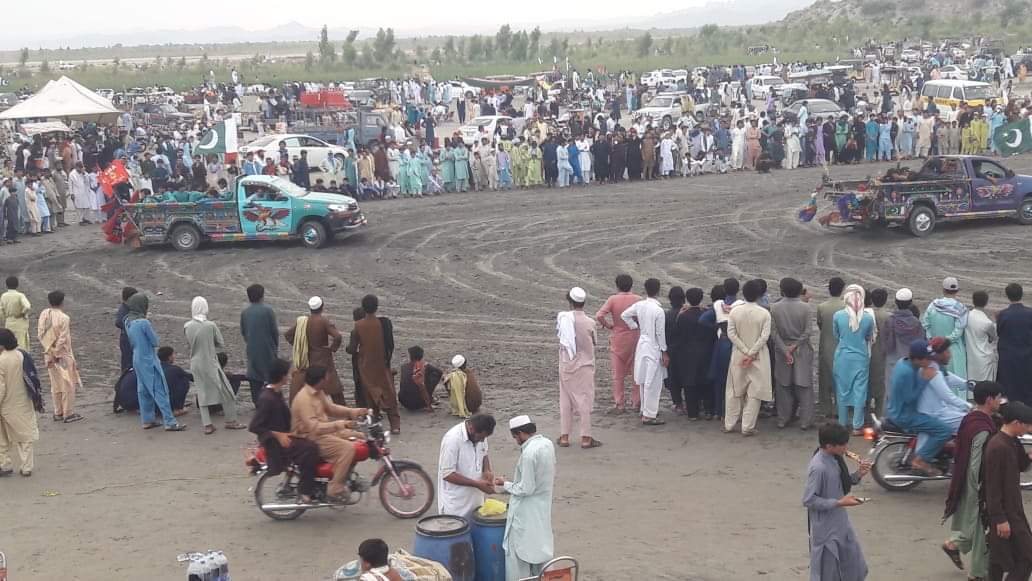


Vehicles move to the track to take part in a car and bike race in Domail, a town on the edge of North Waziristan tribal district, on August 13, 2019. The event has become the yearly crown jewel of Eid Al-Adha celebrations  in the Koshi Bridge Desert. (AN Photo)

Jamal Shah, a bike racer, said the villagers had been waiting for weeks to watch the race. 
On Monday evening, as the sunset, fireworks erupted in the background and participants and visitors alike rested in their tents, ate barbecued lamb, listening to traditional songs played by local musicians and prepared their vehicles for Tuesday’s adventure.
“Eid does not even hold as much importance for our youngsters as this car and bike race does,” Shah said, smiling. “Every Eid, this event brings economic opportunities for locals as roadside stalls turn the desert into a brimming market.”


Pakistan alleges India behind Balochistan attacks that killed 18 civilians, 15 troops

Updated 6 sec ago
Follow

Pakistan alleges India behind Balochistan attacks that killed 18 civilians, 15 troops

  • Interior Minister Mohsin Naqvi accuses India of planning coordinated attacks across Balochistan this week 
  • Military says it killed 133 militants on Friday and Saturday in separate operations across various areas in Balochistan

ISLAMABAD: Pakistan’s Interior Minister Mohsin Naqvi this week alleged that India was behind the recent coordinated attacks in the southwestern Balochistan province that the military says killed 18 civilians and 15 troops, vowing to go after those responsible for the violence. 

Pakistan’s military said on Saturday that it had killed 133 militants in the past two days in separate operations in Balochistan. The Inter-Services Public Relations (ISPR) said 41 militants were killed in operations in Panjgur and Harnai areas on Friday while 92 militants, including three suicide bombers, were killed on Saturday as security forces repelled coordinated attacks on civilians and law enforcement personnel in Quetta, Gwadar, Mastung, Nushki, Dalbandin, Kharan, Panjgur, Tump and Pasni areas. 

It added that 18 civilians, including women, children, elderly people and laborers, were killed in the attacks in Gwadar and Kharan, while 15 security personnel were also killed during clearance operations and armed standoffs.

“India is behind these attacks,” Naqvi said during a joint press conference in Quetta late Saturday night with Balochistan Chief Minister Sarfraz Bugti. “I can tell you for sure that India planned these attacks along with these terrorists.”

He vowed that Islamabad would go after the militants who carried out these attacks and their “masters.”

“At this time it is very necessary that the world knows that the main country that is behind terrorism is India, who not only financially supports terrorists but also supports them in their planning and strategy as well,” the minister said. 

In its statement on Saturday, the ISPR said the attacks were launched by “Indian sponsored Fitna al Hindustan,” a reference the military frequently uses for the separatist Balochistan Liberation Army (BLA) militant group. 

The BLA also issued a statement on Saturday, saying it had launched what it called “Operation Herof 2.0,” claiming responsibility for attacks in multiple locations across Balochistan. 

The military had said intelligence reports have confirmed the attacks were orchestrated and directed by militant leaders operating from outside Pakistan who were in direct communication with attackers during the assaults.

Pakistan has frequently blamed India for supporting militant attacks in Balochistan and its northwestern Khyber Pakhtunkhwa (KP) provinces, charges that New Delhi has vehemently denied. 

Balochistan, which borders Iran and Afghanistan, has faced a decades-long insurgency by separatist militant groups, with Pakistani authorities frequently accusing foreign actors of backing the violence. India has repeatedly denied such allegations.