

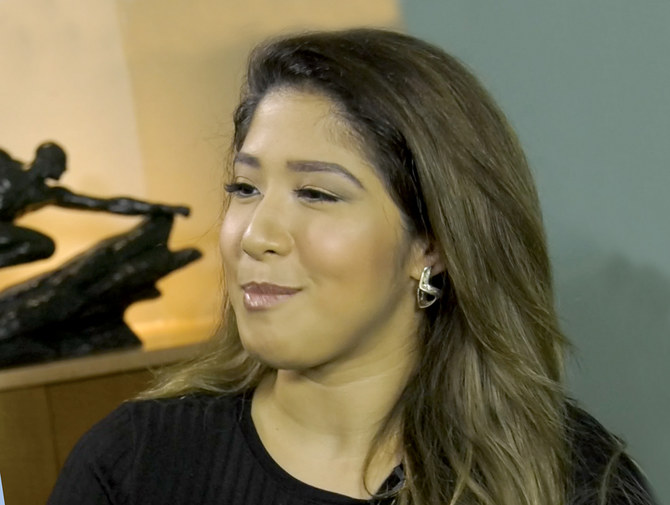
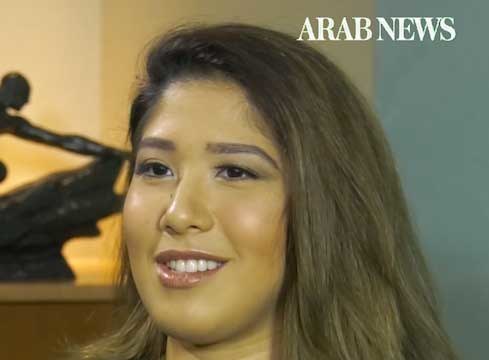
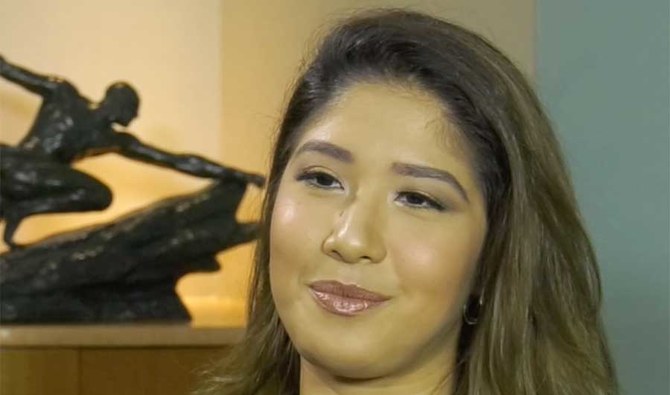

MANILA: On the first day of Eid-Al-Adha every year, Zahra Bianca Saldua savors the best of Palestinian culture and tradition in the Philippines.
The beauty queen, who is half-Palestinian and half-Filipino, said the occasion helps her celebrate her Middle Eastern heritage.
"Eid in the Philippines isn't really celebrated unless you are living in Mindanao," Saldua, who was crowned Miss Earth Philippines Air in 2018, said in an exclusive interview with Arab News.
"But my mom cooks Palestinian dishes such as mansaf or muskhan. Then there's magloubeh, too. It's different every year."
When the twains do meet – that is her Palestinian side of the family and her relatives from the Phillippines – Saldua says Eid is like a riot.
"They really enjoy each other's company because both sides are so friendly. My mom's side is extra friendly and extra expressive, so they really share the love. And my Filipino side is not used to it, so they enjoy it more," Saldua said.
Saldua began modeling at the age of 14 and gained prominence when she beat several other contestants to win the title last year.
Her new-found celebrity status has helped Saldua draw attention to a lot of important issues in the Philippines – most importantly, clearing the misconceptions about Arabs and Islam.
"It allows people to ask me more about Arab culture because here they have a different type of stigma or an idea of what an Arab is. Being a Muslim, they also ask me about Islam. Some of them even converted because they were inspired by my words," she said.
Saldua's parents met in Kuwait. While her father hails from the Philippines, her mother is from Tulkarm, a Palestinian city in the West Bank. Together, they lived in Kuwait for a few years before moving to Jordan where Saldua was born.
After the 2003 invasion of Iraq, the Saldua family packed their bags once again to settle in the Philippines for good.
Saldua said the values instilled in her in those formative years continue to find voice even today, thanks to her mother, who urges her to rise above cultural differences.
"The values that I learned in Jordan have helped me a lot here in the Philippines because there are cultural differences here, too. My mother made sure that I did not lose that because it is a part of who I am."
"Now, I want to go back to Palestine," Saldua said, adding that part of her immediate plan is "to make sure that I go back to my homeland by next year."
"I want to build mosques in the Philippines because there are very few. The ones that are already open or functioning are not well maintained due to lack of funds."
Zahra Bianca Saldua
One way to do that, she said, is to work toward bridging the gap between Muslim and Christian communities in the Philippines.
"I want to build mosques in the Philippines because there are very few. The ones that are already open or functioning are not well maintained due to lack of funds. This brings the community together. We have a lot of events where we have Christians and Muslims ... where we feed the poor or malnourished. It's not just Muslims, but Muslims and Christians together," she said.
A short distance away in Manila, there's another half-Palestinian, half-Filipino beauty queen who is winning the heart of the nation one pageant at a time.
Born in Dapitan City, in the Philippines’ Zamboanga del Norte province, 24-year-old Gazini Christiana Jordi Ganados is the Philippines’ contestant for Miss Universe this year. (Arab News profiled. her last week.)
Unlike Saldua, who was born to a Palestinian mother, it's Ganados’ father who is from Palestine.
And while they both share a half-Arab heritage, there's another thing that is common to Saldua and Ganados: their love for Palestine and a longing to visit the country some day.
"I have always felt connected to Palestine. ... It seems this is not my only home in Philippines. There is a part of me that is really pushing me to go back to Palestine. I think it is a love that I have not known yet. Insha'Allah, I will get to have that opportunity soon," she said.
For Ganados, the reason is a bit more personal than Saldua. In a bid to learn more about her father, whom she's never met but shares a name with, Ganados said visiting Palestine could probably help her understand that part of her culture better.
"I’ve heard a lot of good stories about the Middle East: They have a lot of good food. I’ve researched about Palestine on Google. There’s a lot of architecture which is beautiful. I love exploring new cultures and I’m hoping that, maybe some day, I’ll visit,” she said.
It's a sentiment echoed by Saldua, who had these parting words for Ganados: "Good luck to my fellow half-Filipina and half-Palestinian sister. I hope we can bond and learn more about our Palestinian heritage together. But for now, go get the crown!"


