ISLAMABAD: Pakistani Hajj pilgrims can enjoy fifth-generation Internet service in Makkah after Prince Khaled Al-Faisal inaugurated the facility this week as part of the Smart Hajj initiative, which aims to provide innovative services to pilgrims through different digital platforms.
According to a report published by the Saudi Press Agency, the Kingdom’s Minister of Communications and Information Technology Abdullah Al-Sawaha also highlighted his ministry’s preparations and the new programs for this year’s Hajj season at the occasion.
The launch of the Smart Hajj initiative’s second stage is an extension of the ministry’s innovative efforts made during last year’s season.
“The efforts included quality services such as a training platform to instruct those who wish to assist pilgrims, a virtual reality platform to help foreign pilgrims perform their rituals, and a smartphone platform to allow pilgrims to download applications,” read the SPA report.


Pakistani Hajj pilgrims to experience 5G network service in Makkah
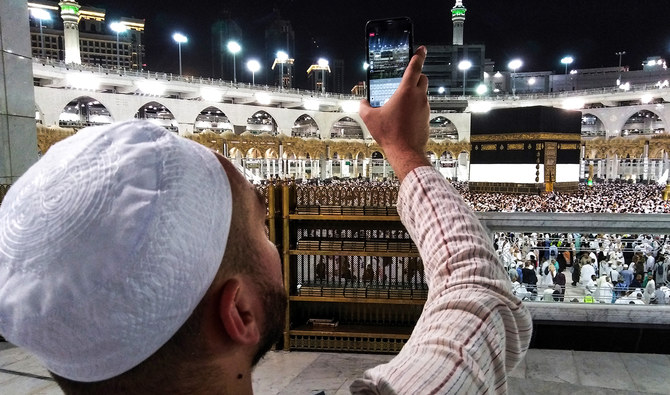
Pakistani Hajj pilgrims to experience 5G network service in Makkah

- The facility was recently inaugurated by Prince Khaled Al-Faisal
- The new 5G network is part of the Kingdom’s Smart Hajj initiative that seeks to provide better services to pilgrims

TV reporter dies after falling from rooftop during Pakistan kite-flying festival
- Pakistan's Lahore marked the Basant festival on Feb. 6-8 after the Punjab government lifted an 18-year-old ban on kite flying
- Malik Zain, a reporter affiliated with GNN news channel, fell from a four-storey building while flying a kite, Lahore police say
ISLAMABAD: A television reporter died after falling from a rooftop while flying a kite during the Basant spring festival in the eastern Pakistani city of Lahore, police and hospital authorities confirmed on Sunday.
Pakistan's Lahore marked the Basant festival on Feb. 6-8 after the Punjab provincial government this year lifted a ban on kite flying after 18 years, with extensive safety measures in place.
The festival, which marks the onset of spring, was banned in 2008 after deaths and injuries to motorcyclists and pedestrians from stray kite strings, sometimes coated with metal to make them more formidable in mid-air battles.
Malik Zain, a reporter affiliated with private news channel GNN, fell from the rooftop of a building during the final day of Basant celebrations in the eastern Pakistani city, according to police.
"Lahore journalist Malik Zain died after falling from the fourth floor while flying a kite in Gulshan-e-Ravi during Basant," the Lahore police said in a statement.
The reporter was shifted to the government-run Mian Munshi District Headquarters Hospital where he was pronounced dead, with cardiopulmonary arrest mentioned as the cause of death.
"Head injury due to fall from height," hospital authorities diagnosed in their report into Zain’s death.
The development came hours after Punjab Chief Minister Maryam Nawaz extended timings for Basant till early Monday morning.
“I am pleased to announce that Basant celebrations timings are being extended till 5:00 AM tomorrow morning,” CM Nawaz said in an X post on Sunday, highlighting the festivity, unity and joy across Lahore.
“This extension is a reward for the people of Lahore for celebrating Basant with great discipline and for responsibly following all safety SOPs (standard operating procedures).”
The Punjab government banned the use of metallic or chemical-coated strings during the festival. Kites and strings had to bear individual QR codes so they could be traced, and motorcyclists had to attach safety rods to their bikes to fend off stray thread.
Some 4,600 producers had registered with the authorities to sell kites and strings ahead of the festival. Authorities had made it mandatory for owners to register rooftops with 30 or more revelers, while dozens of roofs had been declared off-limits after inspections.


