

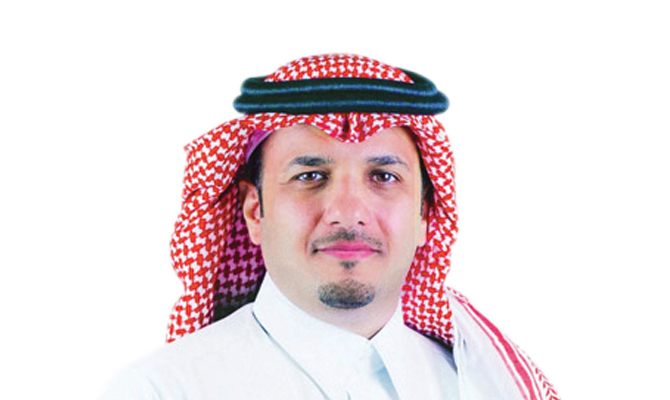
Dr. Abdulmajeed bin Abdullah Al-Banyan, president of Naif Arab University for Security Sciences

Dr. Abdulmajeed bin Abdullah Al-Banyan
Updated 18 July 2019
Follow

Dr. Abdulmajeed bin Abdullah Al-Banyan, president of Naif Arab University for Security Sciences

Dr. Abdulmajeed bin Abdullah Al-Banyan has been the president of Naif Arab University for Security Sciences (NAUSS) since March 2018.

He recently addressed a Beirut conference, organized by NAUSS in cooperation with the Lebanese Internal Security Forces Directorate, on the role of civil protection bodies in securing tourist facilities.

The director general of the Lebanese Internal Security Forces, Maj. Gen. Imad Osman, the Saudi ambassador to Lebanon, Walid Al-Bukhari, and envoys and delegations from several Arab countries were present at the meeting.

Al-Banyan spoke about the necessity of security and safety for tourists and stressed the importance of providing security services in tourist establishments to protect staff, property and facilities.

He gained a bachelor’s degree in clinical laboratory sciences from King Saud University (KSU) in 2001, and three years later obtained a master’s degree in blood transfusion and organ transplant from the University of Bristol, in the UK. In 2009, he completed a Ph.D. in blood transfusion in clinical medicine from the University of Oxford, also in the UK.

From 2009 to 2016 Al-Banyan worked as an assistant professor in hematology at KSU. He was then promoted to associate professor until his appointment as the president of NAUSS.

He sat on the board of KSU from 2011 to 2013 and was a supervisor of the academic quality and the accreditation unit for the faculty of applied medical sciences between 2009 and 2010. He was also a member of the board at Prince Sultan University, in Riyadh.


Japanese researchers hope to restore coral from Saudi-made structures

Updated 05 January 2026
Follow

Japanese researchers hope to restore coral from Saudi-made structures

  • Coral skeletons made for Saudi Pavilion at Japan expo last year
  • Results of Japanese study to be revealed at Riyadh Expo 2030

TOKYO: Japanese universities are seeking to restore coral reefs and marine ecosystems after receiving artificial structures that Saudi Arabia made and showcased at last year’s Osaka-Kansai Expo.

The coral skeletons were donated to the University of the Ryukyus in Okinawa and Kansai University in Osaka Prefecture, Kyodo News reported at the weekend.

The structures are made from calcium carbonate, a material on which corals are believed to grow more easily compared to artificial alternatives such as concrete or metal.

The skeletal structures were created using 3-D printers, with one piece produced a day during the expo, and displayed across an entire wall in the Saudi Arabia Pavilion, which had an area focusing on sustainable marine environments.

Coral reefs serve as habitats for much marine life, but over 40 percent of the world’s 892 species face possible extinction, according to the International Union for Conservation of Nature.

The University of the Ryukyus, which received about 150 of the artificial coral skeletons, will place them in waters off the eastern coast of Okinawa’s main island and then examine their impact on the ecosystem.

Kansai University has placed theirs in the sea around Kagoshima Prefecture’s Yoron Island to observe their growth after transplanting coral polyps onto the structures.

The results of the research are expected to be revealed at the Riyadh Expo in 2030.

“I had never imagined that Japan and Saudi Arabia would cooperate on coral research,” said Masato Ueda, a professor specializing in regenerative medicine at Kansai University.

Ueda said he wants to demonstrate to children that “humanity is attempting to restore the environment.”