

Kabul to impose fine on second-time Hajj pilgrims

1 / 4
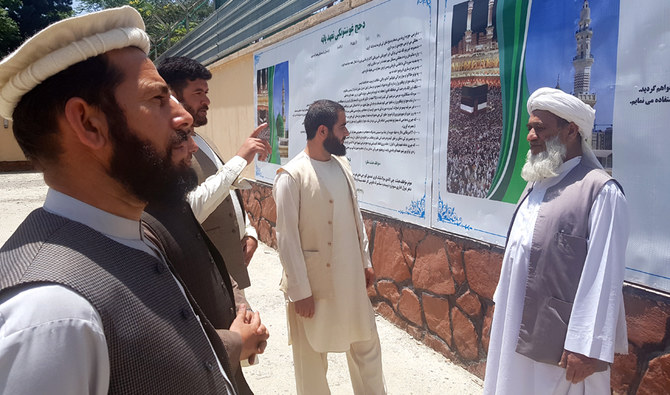
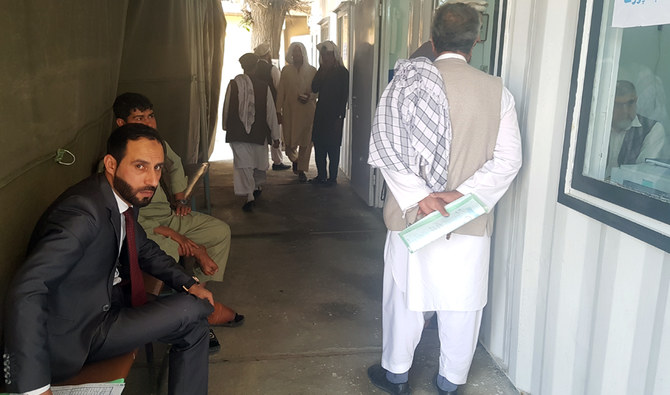
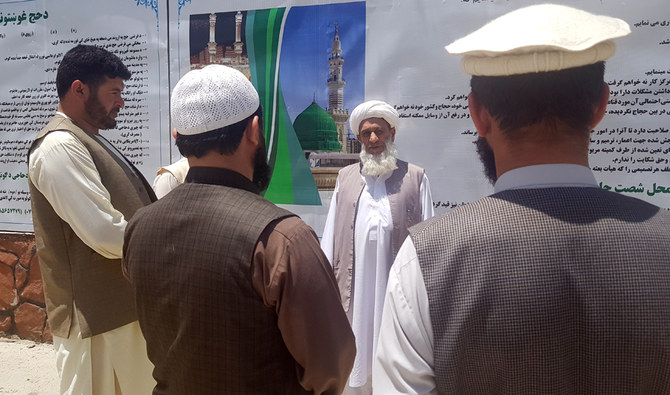
Afghan government officials discuss Hajj preparations at the yard of a center for Hajjis in Kabul on Sunday. This year 30,000 Afghan are set to perform Hajj. (AN photo)
2 / 4
Afghan government officials discuss Hajj preparations at the yard of a center for Hajjis in Kabul on Sunday. This year 30,000 Afghan are set to perform Hajj. (AN photo)
3 / 4
Afghan government officials discuss Hajj preparations at the yard of a center for Hajjis in Kabul on Sunday. This year 30,000 Afghan are set to perform Hajj. (AN photo)
4 / 4
Afghan government officials discuss Hajj preparations at the yard of a center for Hajjis in Kabul on Sunday. This year 30,000 Afghan are set to perform Hajj. (AN photo)
Updated 03 July 2019
Follow

Kabul to impose fine on second-time Hajj pilgrims

  • Move to ensure all pilgrims get an opportunity to apply in limited Afghan quota
  • Tens of thousands wait for years to get the chance to visit, but for various reasons, many of them cannot go

KABUL: Faced with a huge backlog of applicants, with some waiting for years to perform Hajj, the Afghan government has introduced a $500 fine for those visiting Saudi Arabia for the second time, officials said on Tuesday.

The country’s Ministry of Religious Trust and Hajj has also launched a campaign to encourage pilgrims to avoid frequent visits and instead help poor countrymen as the humanitarian crisis and poverty grinds on, the head of publication for the ministry said.

“We have set up a database showing names and details of visitors and those making a second or third trip without a reason will be fined $500,” Nader Darez told Arab News.

Afghanistan’s annual quota for visitors to Islam’s holiest site, Makkah, stands at 30,000 people. Tens of thousands of people wait for years to get the chance to visit, but for various reasons, one being corruption, many of them cannot go.

Darez said as part of a move to cut graft and embezzlement several government organs this year will oversee the Hajj arrangement.

The first flights carrying pilgrims to Saudi Arabia will depart in two weeks’ time and government has yet to complete training guides and teachers for the Hajjis, he said.

The cost of one visit stands at $2,750 while tens of thousands perform Umrah during other times of the year. After the visit some pilgrims, as part of tradition, throw lavish food parties and give expensive gifts back home.

However, some have put an end to this practice.

Mir Agha, a resident from Kabul who has been to Hajj, welcomed the government move for trying to deter frequent visitors through the imposition of a fine and its campaign for encouraging them to help the poorer people in Afghanistan.

“If you are rich and capable physically, you are required to visit Makkah once in your entire life. Repeated visits are a waste of money and have no remuneration. Instead, God wants us to help our poor relatives and neighbors with that money,” he told Arab News.

Taj Mohammad Ahmadzada, who has been to Hajj said patronage, nepotism and graft still existed in Hajj visits, but added that the government had succeeded in putting forward some measures to make sure that visitors have better accommodation, transport and food.

“We have a saying that you can mock with anything, but not with the beard of your grandfather. People pay bribes for many things here and to pay a bribe for going to Hajj is a biggest sin both for the taker and giver,” he said.


Locals in Niger say ‘terrorists’ killed 25 near Mali

Updated 4 sec ago
Follow

Locals in Niger say ‘terrorists’ killed 25 near Mali

  • “Twenty-five self-defense militia fell on Thursday in terrorist ambushes,” a former mayor said
  • The surrounding Tillaberi region is an area of operations of the Sahel branch of the Daesh militant group

ABIDJAN: Local sources in western Niger said “terrorists” killed 25 members of a militia in several villages near the Mali border.
“Twenty-five self-defense militia fell on Thursday in terrorist ambushes,” a former mayor in the commune of Anzourou told AFP — a toll confirmed by a leader from a local civil association.
“There were 25 young self-defense fighters who lost their lives and three others who were wounded and evacuated” to hospitals in Tillaberi town and Niamey, the latter source said.
The surrounding Tillaberi region is an area of operations of the Sahel branch of the Daesh militant group.
Conflict-monitoring NGO ACLED said that in 2025 Tillaberi became the deadliest region in the central Sahel, with more than 1,200 deaths recorded.
It blamed the violence mainly on the Daesh in the Sahel group, followed by the Nigerien army and the Al-Qaeda-linked Group to Support Islam and Muslims (JNIM).
The association source said the victims came from four neighboring villages — Doukou Makani, Doukou Djinde, Doukou Saraou and Doukou Koirategui.
The Anzourou district is made up of around 50 villages and hamlets in Tillaberi, which borders near the area between Niger, Burkina Faso and Mali, long the scene of deadly militant attacks.
Niger has been run by a military junta since a coup in July 2023.
For the last decade, the country has been blighted by deadly militant attacks. Since the beginning of the year, there have been nearly 2,000 deaths, according to ACLED.
With the Nigerien army struggling to contain the attacks, it has tolerated the creation of self-defense militias by villagers, leading to bloody clashes with militants.
In December last year, the military regime in Niamey announced a “general mobilization” and the “requisition” of people and property to better fight the Islamists.
Niger has created a 6,000-strong joint force with Mali and Burkina Faso, countries also run by the military and facing militant violence.