Joss Stones says Saudi women are ‘strong’ after performing in the country

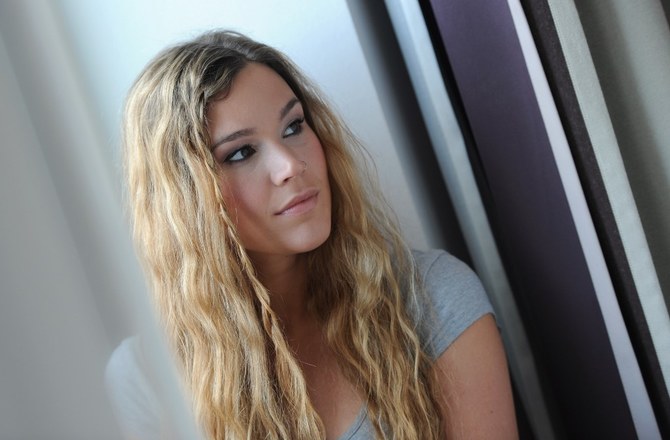
The concert is part of the performer’s ‘Total World Tour.’ (File/AFP)
Updated 03 July 2019
Follow

Joss Stones says Saudi women are ‘strong’ after performing in the country

  • The singer performed on June 23
  • She said Saudi men are helping the women with the change in the country

DUBAI: English singer and songwriter Joss Stone said she loved Saudi Arabia and that she hopes to visit again, through her personal social media accounts.

According to her Twitter account, the singer performed on June 23 with the help of a Saudi-based travel and event company.

Stone said she had the “sweetest gig” in Saudi Arabia.

The songwriter posted an image of herself wearing a pink niqab on her Instagram account, recounting her experience of the country in detail.

She decided to keep the headcover on even though she didn’t have to because she fell in love with it, Stone said.


View this post on Instagram


Oh #saudiarabia how we love you so ! I cannot wait to tell everyone I meet to go visit this beautiful place filled with beautiful people yet again, pleasantly surprised. Took me a while to figure out how to keep this wrap from falling off and then when I finally got it I realised that I didn’t even have to wear it. What a shame ! So I wore it anyway because I love it. I love the different cultures we get a chance to come across and become part of, even if it’s for just one small tiny moment. It means so much. The women here are strong and exercising their choice to be free, wear what they want and do what they want, their want may be different to what we experience at home but there ain’t nothing wrong in that. To each her own. I spoke to female doctors , managers, directors, vocal specialists, hearing specialists, carers, a singer/performer/artist and they all tell the same tale. The horses mouth has spoken. Yes there are horrible things going on all over the world in many different corners and crevasses but these women individually felt they were not oppressed , they were highly educated and free to choose how they lived their lives. I can only ever speak of those that I have met, I will not comment on what I have not seen with my own eyes because I have no right to. Assumption really is not something I wish to entertain. if you don't know , go have a look for yourself have a look for your self. I have come away from this inspired. Not just by the women but the men too, with how they are celebrating the changes that are happening in Saudi Arabia they are not fighting against it as so many might assume . It seems to me that they are all walking forward together trying to make there world a better place. This is the feeling I got from my personal experience. I would really like to go back one day and explore this place further . Thanks for having me #saudiarabia

A post shared by Joss Stone (@jossstone) on

She praised Saudi women, saying they are strong and exercise their own will. She spoke to a number of women from different professions in Saudi Arabia before coming to that conclusion.

“The women here are strong and exercising their choice to be free, wear what they want and do what they want, their want may be different to what we experience at home but there ain’t nothing wrong in that,” the singer said.

Stone also praised Saudi men, saying, “it seems to me that they are all walking forward together trying to make [their] world a better place.”

The concert was part of the singer’s ‘Total World Tour,’ where she tries to perform in every country.

She has already visited Jordan, Oman, Syria and North Korea, among numerous other destinations.


Decoding villains at an Emirates LitFest panel in Dubai

Updated 25 January 2026
Follow

Decoding villains at an Emirates LitFest panel in Dubai

DUBAI: At this year’s Emirates Airline Festival of Literature in Dubai, a panel on Saturday titled “The Monster Next Door,” moderated by Shane McGinley, posed a question for the ages: Are villains born or made?

Novelists Annabel Kantaria, Louise Candlish and Ruth Ware, joined by a packed audience, dissected the craft of creating morally ambiguous characters alongside the social science that informs them. “A pure villain,” said Ware, “is chilling to construct … The remorselessness unsettles you — How do you build someone who cannot imagine another’s pain?”

Candlish described character-building as a gradual process of “layering over several edits” until a figure feels human. “You have to build the flesh on the bone or they will remain caricatures,” she added.

The debate moved quickly to the nature-versus-nurture debate. “Do you believe that people are born evil?” asked McGinley, prompting both laughter and loud sighs.

Candlish confessed a failed attempt to write a Tom Ripley–style antihero: “I spent the whole time coming up with reasons why my characters do this … It wasn’t really their fault,” she said, explaining that even when she tried to excise conscience, her character kept expressing “moral scruples” and second thoughts.

“You inevitably fold parts of yourself into your creations,” said Ware. “The spark that makes it come alive is often the little bit of you in there.”

Panelists likened character creation to Frankenstein work. “You take the irritating habit of that co‑worker, the weird couple you saw in a restaurant, bits of friends and enemies, and stitch them together,” said Ware.

But real-world perspective reframed the literary exercise in stark terms. Kantaria recounted teaching a prison writing class and quoting the facility director, who told her, “It’s not full of monsters. It’s normal people who made a bad decision.” She recalled being struck that many inmates were “one silly decision” away from the crimes that put them behind bars. “Any one of us could be one decision away from jail time,” she said.

The panelists also turned to scientific findings through the discussion. Ware cited infant studies showing babies prefer helpers to hinderers in puppet shows, suggesting “we are born with a natural propensity to be attracted to good.”

Candlish referenced twin studies and research on narrative: People who can form a coherent story about trauma often “have much better outcomes,” she explained.

“Both things will end up being super, super neat,” she said of genes and upbringing, before turning to the redemptive power of storytelling: “When we can make sense of what happened to us, we cope better.”

As the session closed, McGinley steered the panel away from tidy answers. Villainy, the authors agreed, is rarely the product of an immutable core; more often, it is assembled from ordinary impulses, missteps and circumstances. For writers like Kantaria, Candlish and Ware, the task is not to excuse cruelty but “to understand the fragile architecture that holds it together,” and to ask readers to inhabit uncomfortable but necessary perspectives.