Lebanese PM: new budget start of “a long road” to economic safety

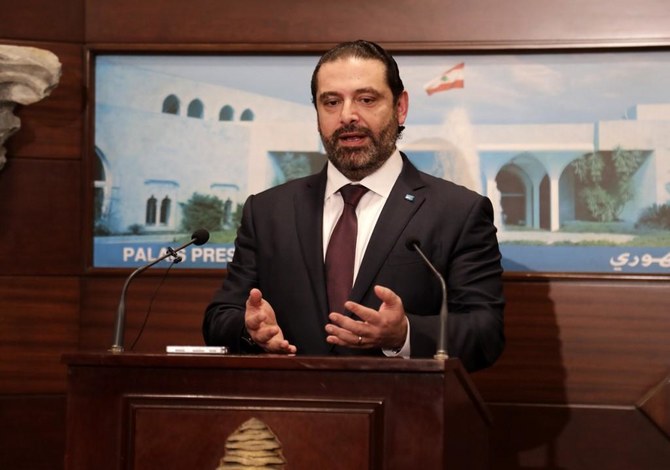
Saad Al-Hariri said the 2020 budget would not take as much time to create as the 2019 budget. (AFP/File)
Updated 26 May 2019
Follow

Lebanese PM: new budget start of “a long road” to economic safety

  • Lebanese PM said the new budget is only the start of the changes for the country
  • Lebanon has one of the biggest debts in the world

BEIRUT: The Lebanese draft state budget for 2019 is the start of a “long road” and shows Lebanon is determined to tackle public sector waste, Prime Minister Saad Al-Hariri said, after his unity cabinet wrapped up marathon talks on the plan.
The budget finalized by the government on Friday cuts the deficit to 7.5% of GDP from 11.5% in 2018. It is seen as a critical test of Lebanon’s will to launch reforms that have been put off for years by a state riddled with corruption and waste.
“The 2019 budget is not the end. This budget is the beginning of a long road that we decided to take in order to lead the Lebanese economy to safety,” Hariri said in a speech at a Ramadan iftar meal on Saturday.
Lebanon’s bloated public sector is its biggest expense, followed by the cost of servicing a public debt equal to some 150% of GDP, one of the world’s heaviest debt burdens.
The government, which groups nearly all of Lebanon’s main political parties, met 19 times to agree on the budget. Hariri said the budget for 2020 would not take that much time “because now we know what we want to do.”
“The 2019 budget is the beginning of the process of what we want to do in 2020, 2021, 2022 and 2023,” he said, according to a transcript of his remarks sent by his office.
The cabinet is due to meet on Monday at the presidential palace to formally seal the process before the budget is referred to parliament.
The budget could help unlock some $11 billion in financing pledged at a Paris donors’ conference last year for infrastructure investment, if it wins the approval of donor countries and institutions.
Hariri said the budget was a message to the Lebanese, financial markets and friendly foreign states that Lebanon was determined to “address the weakness, imbalance and squander in the public sector.”
Measures to rein in the public sector wage bill include a three-year freeze in all types of state hiring and a cap on extra-salary bonuses. State pensions will also be taxed.
A big chunk of the deficit cut stems from tax increases including a 2% import tax and a hike in tax on interest payments.
The government also plans to cut some $660 million from the debt servicing bill by issuing treasury bonds at a 1% interest rate to the Lebanese banking sector.
Fears the budget would lead to cuts to state salaries, pensions or benefits triggered weeks of strikes and protests by public sector workers and military veterans.


Lebanese social entrepreneur Omar Itani recognized by Schwab Foundation

Updated 23 January 2026
Follow

Lebanese social entrepreneur Omar Itani recognized by Schwab Foundation

  • FabricAID co-founder among 21 global recipients recognized for social innovation

DAVOS: Lebanon’s Omar Itani is one of 21 recipients of the Social Entrepreneurs and Innovators of the Year Award by the Schwab Foundation for Social Entrepreneurship.

Itani is the co-founder of social enterprise FabricAID, which aims to “eradicate symptoms of poverty” by collecting and sanitizing secondhand clothing before placing items in stores in “extremely marginalized areas,” he told Arab News on the sidelines of the World Economic Forum in Davos, Switzerland.

With prices ranging from $0.25 to $4, the goal is for people to have a “dignified shopping experience” at affordable prices, he added.

FabricAID operates a network of clothing collection bins across key locations in Lebanon and Jordan, allowing people to donate pre-loved items. The garments are cleaned and sorted before being sold through the organization’s stores, while items that cannot be resold due to damage or heavy wear are repurposed for other uses, including corporate merchandise.

Since its launch, FabricAID has sold more than 1 million items, reached 200,000 beneficiaries and is preparing to expand into the Egyptian market.

Amid uncertainty in the Middle East, Itani advised young entrepreneurs to reframe challenges as opportunities.

“In Lebanon and the Arab world, we complain a lot,” he said. Understandably so, as “there are a lot of issues” in the region, resulting in people feeling frustrated and wanting to move away. But, he added, “a good portion of the challenges” facing the Middle East are “great economic and commercial opportunities.”

Over the past year, social innovators raised a combined $970 million in funding and secured a further $89 million in non-cash contributions, according to the Schwab Foundation’s recent report, “Built to Last: Social Innovation in Transition.”

This is particularly significant in an environment of geopolitical uncertainty and at a time when 82 percent report being affected by shrinking resources, triggering delays in program rollout (70 percent) and disruptions to scaling plans (72 percent).

Francois Bonnici, director of the Schwab Foundation for Social Entrepreneurship and a member of the World Economic Forum’s Executive Committee, said: “The next decade must move the models of social innovation decisively from the margins to the mainstream, transforming not only markets but mindsets.”

Award recipients take part in a structured three-year engagement with the Schwab Foundation, after which they join its global network as lifelong members. The program connects social entrepreneurs with international peers, collaborative initiatives, and capacity-building support aimed at strengthening and scaling their work.