KARACHI: Pakistani Prime Minister Imran Khan appointed a new finance secretary on Thursday, one in a series of changes he has made to his economic team in the past month to steer the country through worsening economic turmoil.
Last month, Khan made a sweeping cabinet reshuffle after only seven months in power and replaced Finance Minister Asad Umar with Abdul Hafeez Shaikh. He has also since changed the governor of the central bank and the head of the Federal Board of Revenue, the country’s main tax collection body.
Younus Dagha, who assumed charge as finance secretary in March 2019, had been actively involved in bailout negotiations with the International Monetary Fund led by former finance minister Umar. According to a government notification, Dagha has now been replaced by Naveed Kamran Baloch, previously the top bureaucrat at the Cabinet Division.
Dagha’s removal comes a day after Haroon Sharif resigned from his post as Chairman of the Board of Investment, citing personal reasons. Sharif was part of the prime minister’s entourage during talks in the last year with Saudi Arabia, United Arab Emirates and China to secure loans and investments in Pakistan.
Local media reported on Friday that Dagha was removed from his post following differences with Shaikh, the new de facto finance minister, over conditions attached to the IMF program. He was reportedly sidelined in the last round of talks with the Fund before an agreement for a $6 billion package was reached on May 12.
The package comes with strict reform conditions, including measures to maintain a free-floating exchange rate. Under the IMF’s terms, the government is expected to let the rupee fall to help correct an unsustainable current account deficit and cut its debt while trying to expand the tax base in a country where only one percent of people file returns.
Shaikh also has to present a 2019/20 budget next month, having been told by the IMF that the primary budget deficit should be cut to 0.6 percent of GDP, implying a $5 billion reduction from the current projection for a deficit of 2.2 percent.
The IMF forecasts Pakistan’s economic growth slowing to 2.9 percent this fiscal year from 5.2 percent in 2018, while the central bank has cut its estimate to between 3.5 and 4 percent.
Since the announcement of the IMF accord, the rupee currency has dropped 5 percent against the dollar, after losing a third of its value in the past year.


![]()

Secretary finance removed amid shakeup in Pakistan’s economic division
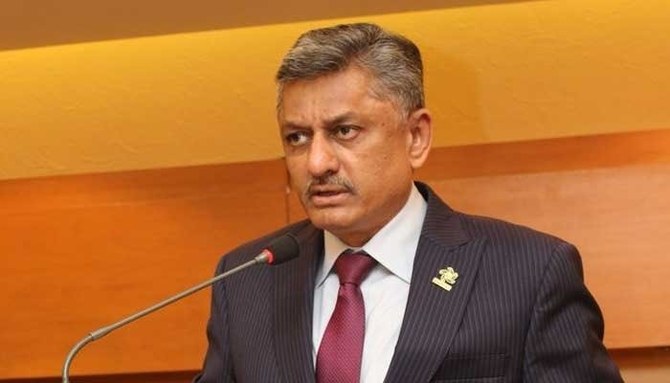
Secretary finance removed amid shakeup in Pakistan’s economic division
- Younus Dagha replaced by Naveed Kamran Baloch, previously the top bureaucrat at the Cabinet Division
- PM Khan has made a series of changes in his economic team in the past month to steer the country through economic turmoil
Latest updates




© 2026 SAUDI RESEARCH & PUBLISHING COMPANY, All Rights Reserved And subject to Terms of Use Agreement.