

Farah Nabulsi: Palestinian investment banker turned activist filmmaker shines light on Nakba

1 / 3
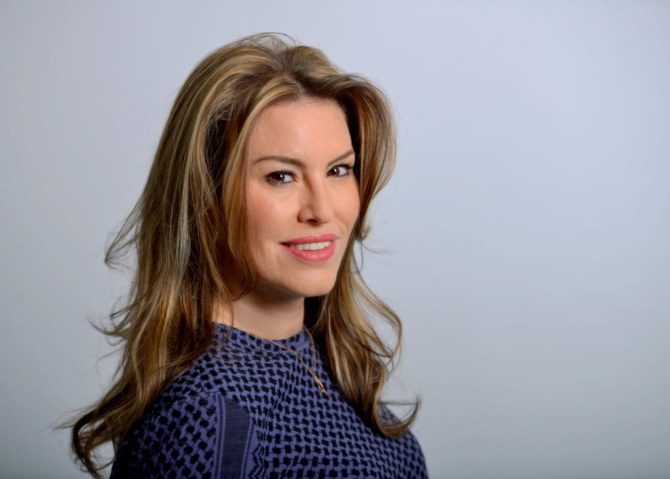
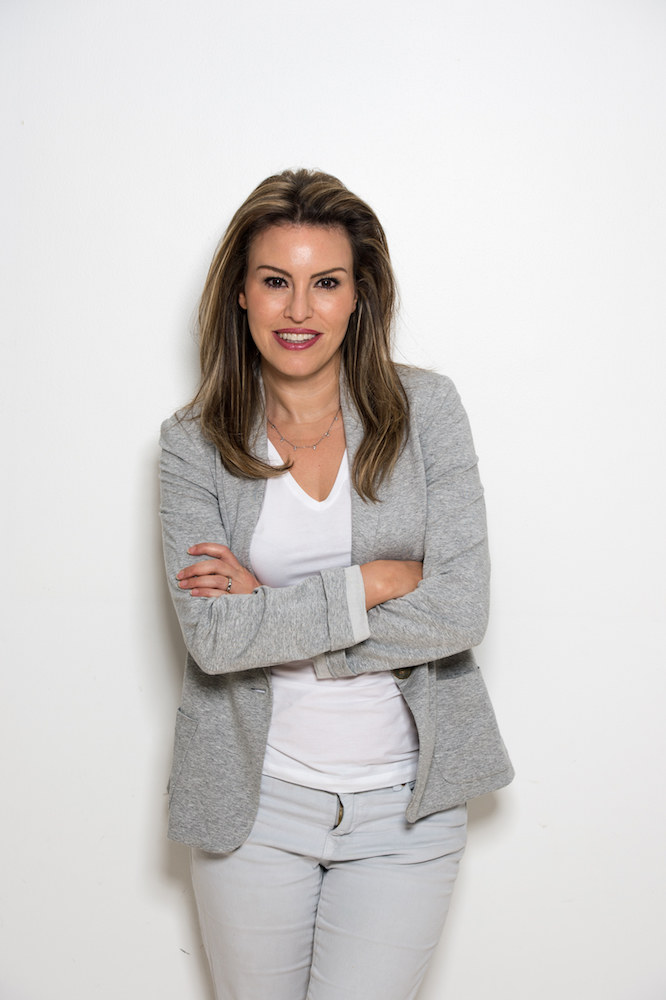
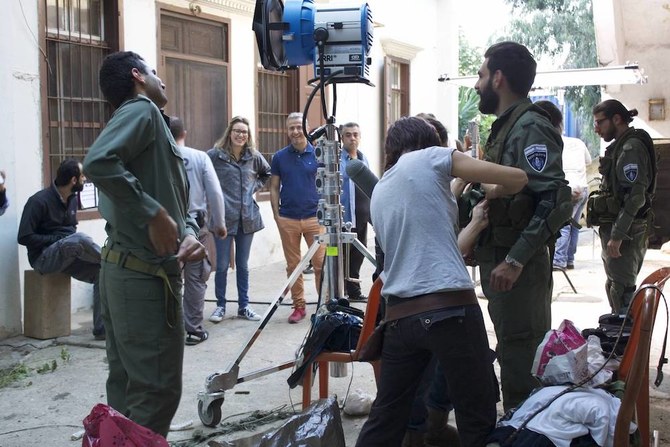
Born and raised in the UK to Palestinian parents, Farah Nabulsi studied business in London and became an institutional equity stock broker at JP Morgan Chase before turning to film. (Supplied)
2 / 3
Born and raised in the UK to Palestinian parents, Farah Nabulsi studied business in London and became an institutional equity stock broker at JP Morgan Chase before turning to film. (Supplied)
3 / 3
Born and raised in the UK to Palestinian parents, Farah Nabulsi studied business in London and became an institutional equity stock broker at JP Morgan Chase before turning to film. (Supplied)
Updated 15 May 2019
Follow

Farah Nabulsi: Palestinian investment banker turned activist filmmaker shines light on Nakba

  • British-Palestinian filmmaker has not looked back since swapping her business suits and briefcases for cameras and film scripts

DUBAI: Farah Nabulsi had started out on a clear career path. Born and raised in the UK to Palestinian parents, she studied business in London and became an institutional equity stock broker at JP Morgan Chase.
But life changed totally, she said, after she visited Palestine and witnessed the everyday indignities that Palestinians endure.
“It hit me like a ton of bricks how colossal this injustice is, and how 1948 is happening right now in the present day,” Nabulsi told Arab News, referring to the exodus of several hundred thousand Palestinians when Israel was established on their homeland.
“That experience and first-hand knowledge changed me. I knew that charity and sympathy were certainly not enough.”

Nabulsi swapped her business suits and briefcases for cameras and film scripts. She took it upon herself to shed light on the injustices meted out to Palestinians since their mass displacement in 1948, known to Palestinians as the Nakba (Arabic for catastrophe).
“With one foot in the West — having been born, raised and educated in London — and the other — my heritage, the blood running through my veins — in Palestine, I recognized the unique and rather powerful position I was in, so I changed the trajectory of my life,” she said.
The change was a big one, but the British-Palestinian filmmaker has not looked back ever since, saying the shift has been “absolutely liberating.”

So far, Nabulsi has made three short films on Palestine. One of them, “Today They Took My Son,” follows a mother as she copes with the trauma of her young son being taken away by the Israeli military.
It was named an Official Selection at the Edinburgh Short Film Festival in 2016, and was a finalist at the International Short Film Competition at the USA Film Festival in 2017.
The other films, “Oceans of Injustice” and “Nightmare of Gaza,” have similar themes of Israeli prejudices against, and abuses of, Palestinians.


“What I do is painful, raw and exhausting. But the satisfaction that I’m doing something with meaning — giving voice to the silenced, playing my part in informing and educating with the aim of ending injustice, and being able to use my creativity and my emotional IQ while doing that — has been a blessing I’m truly grateful for,” Nabulsi said.
“I have children of my own, and the very idea of a child being taken — usually in the middle of the night by armed soldiers, with no parent or adult with them, processed through a military system and subjected to all sorts of abuses — is just insane,” she added. “That (‘Today They Took My Son’) was a film I didn’t choose to make. I had to make it.”

Nabulsi is working on her fourth short film, “The Present,” which features Israeli-Palestinian actor Saleh Bakri.
“It’s a beautiful story of a Palestinian father and his young daughter dealing with the indignities of checkpoints,” she said. “I’m looking forward to completing it and sharing it with the world.”


Sale of Saudi artist Safeya Binzagr’s work sets record at Sotheby’s auction in Riyadh

Updated 8 min 23 sec ago
Follow

Sale of Saudi artist Safeya Binzagr’s work sets record at Sotheby’s auction in Riyadh

RIYADH: A painting by Saudi artist Safeya Binzagr sold for $2.1 million at Sotheby’s “Origins II” auction in Riyadh on Saturday, emerging as the top lot of the evening and setting a new auction record for a Saudi artist.

The work, “Coffee Shop in Madina Road” (1968), sold for $1.65 million before the buyer’s premium, the additional fee paid by the purchaser to the auction house on top of the hammer price.

The result nearly doubled the previous auction record for a Saudi artist and became the most valuable artwork ever sold at auction in the Kingdom. It also ranks as the third-highest price achieved for an Arab artist at auction.

It was presented as part of “Origins II,” Sotheby’s second auction staged in Saudi Arabia, comprising 62 modern and contemporary lots and bringing together Saudi artists alongside regional and international names.

Collectors from more than 40 countries participated in the auction, with around one-third of the lots sold to buyers within Saudi Arabia.

The sale totaled $19.6 million, exceeding its pre-sale estimate and bringing the combined value of works offered across “Origins” and “Origins II” to over $32 million.

Saudi artists were central to the evening’s results. All nine Saudi works offered found buyers, achieving a combined total of $4.3 million, well above pre‑sale expectations.

Ashkan Baghestani, Sotheby’s head of contemporary art for the Middle East, told Arab News at the auction that “Safeya made more than any other artist tonight, which is incredible.”

He said the results demonstrated Sotheby’s broader objective in the Kingdom.

“The results tonight show exactly what we’re trying to do here. Bring international collectors to Saudi Arabia and give them exposure to Saudi artists, especially the pioneers.”

All nine works by Saudi artists offered in the sale found buyers, generating a combined $4.3 million. Additional auction records were set for Egyptian artist Ahmed Morsi and Sudanese artist Abdel Badie Abdel Hay.

An untitled work from 1989 by Mohammed Al-Saleem sold for a triple estimate of $756,000, while a second work by the artist, “Flow” from 1987, achieved $630,000.

The sale opened with the auction debut of Mohamed Siam, whose “Untitled (Camel Race)” sold for $94,500. Also making his first auction appearance, Dia Aziz Dia’s prize-winning “La Palma (The Palma)” achieved $226,800.

The sale coincided with the opening week of the Contemporary Art Biennale in Riyadh, reinforcing the city’s growing role as a focal point for both cultural institutions and the art market.

Baghestani added that Saudi modern artists are now receiving long‑overdue recognition in the market.

“There’s so much interest and so much demand, and the price is where it should be,” he said.

International highlights included works by Pablo Picasso, Roy Lichtenstein, Andy Warhol and Anish Kapoor, underscoring Saudi Arabia’s growing role as a destination for major global art events and collectors.

Picasso’s “Paysage,” painted during the final decade of the artist’s life, sold for $1,600,000, becoming the second most valuable artwork sold at auction in Saudi Arabia.

Seven works by Lichtenstein from the personal collection of the artist and his wife, including collages, prints, works on paper and sculptures, all found buyers. Warhol was represented in the sale with two works: “Disquieting Muses (After de Chirico),” which sold for $1,033,200, and a complete set of four screenprints of “Muhammad Ali,” which achieved $352,000.

Baghestani said the strength of the results was closely tied to the material’s freshness. “These were not works from the trade. Some of them had not been seen since the 1970s,” he said.