LONDON: US Secretary of State Mike Pompeo visited Britain on Wednesday to pitch a post-Brexit ‘special relationship’ as Iran said it may stop complying with some parts of the big-power nuclear deal that the United States withdrew from a year ago.
Pompeo arrived in London after an unannounced visit to Iraq where he set out US security concerns amid rising tension with Iran.
The US military said on Tuesday that B-52 bombers would be among the additional forces being sent to the Middle East to counter what President Donald Trump’s administration says are “clear indications” of threats from Iran to US forces there.
“The message that we’ve sent to the Iranians, I hope, puts us in a position where we can deter, and the Iranians will think twice about attacking American interests,” Pompeo said. US intelligence was “very specific” about “imminent” attacks, he said.
Iran announced on Wednesday it was relaxing curbs on its nuclear program under the 2015 deal with world powers, and threatened to do more — including enriching uranium to a higher level — if other countries did not shield it from US sanctions.
In London, Pompeo was due to meet Prime Minister Theresa May, who has been grappling for three years with a political crisis over Britain’s planned exit from the European Union.
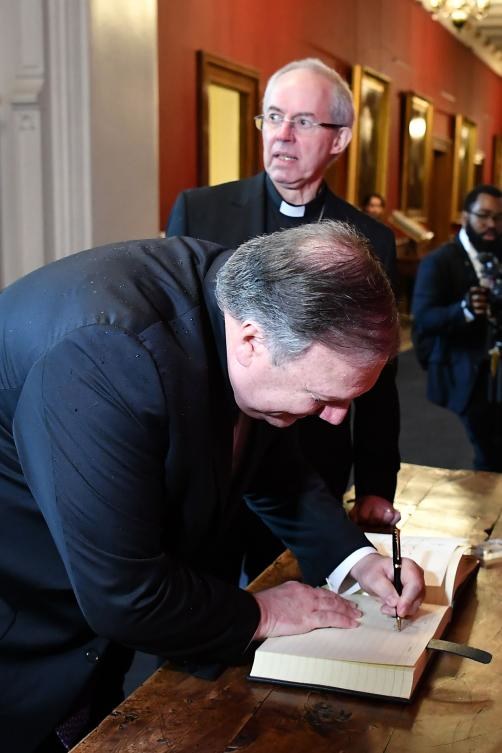
Pompeo met Foreign Secretary Jeremy Hunt and the spiritual leader of the Church of England, Archbishop of Canterbury Justin Welby, to discuss religious freedom and the persecution of Christians, and was due to meet Hunt again later.
As Britain tries to extract itself from the EU after 46 years of membership, a divorce many diplomats say has already made Britain weaker, Pompeo will give a speech on America’s so-called special relationship with the United Kingdom.
Both Brexit and the sometimes unpredictable Trump presidency have strained relations between the world’s preeminent power and its main European ally. Trump is due to make a state visit to Britain in June.
Washington is at odds with London over how much access Huawei Technologies should be given to next-generation communication networks using 5G technology.
Britain will allow Huawei a restricted role in building parts of its 5G network, even though the United States had told allies to exclude Huawei for fear that it could be a vehicle for Chinese spying. Huawei has categorically denied this.
“We know about the risks that the presence of Huawei and their networks present,” a State Department official said ahead of the visit.
“It makes it more difficult then for the United States to be present if equipment is co-located in places where we have American systems as well. It makes partnering more difficult.”
5G, which will offer much faster data speeds and become the foundation stone of many industries and networks, is seen as one of the biggest innovations since the birth of the Internet itself a generation ago.


![]()
![]()
![]()
![]()

Pompeo visits Brexit Britain as Iran reduces nuclear compliance



Pompeo visits Brexit Britain as Iran reduces nuclear compliance
- US secretary of state to meet PM May and Hunt
- Pompeo to address post-Brexit “special relationship”


Latest updates


Recommended


© 2026 SAUDI RESEARCH & PUBLISHING COMPANY, All Rights Reserved And subject to Terms of Use Agreement.