LONDON: The Saudi Real Estate Refinance Co. (SRC) said on Saturday it had agreed to buy SR750 million ($200 million) worth of mortgages from local banks and mortgage financing companies.
The agreements, signed during last week’s Financial Sector Conference in Riyadh, included deals with Banque Saudi Fransi and Saudi British Bank (SABB), SRC said in statements.
The company, a subsidiary of Saudi Arabia’s Public Investment Fund (PIF), aims to inject liquidity into the Saudi housing finance market by buying out mortgages.
“This announcement validates SRC’s purpose within a vibrant housing market, but for it to reach full potential we must ensure that there is improved supply of new homes whilst also making these homes affordable and accessible to more Saudi citizens,” SRC’s CEO Fabrice Susini said of the Banque Saudi Fransi deal.
“This agreement is a visible demonstration of how SRC makes further liquidity being available for the Saudi housing market which will ultimately make every Saudi citizen’s dream of owning a home a reality. That said, the agreement will further increase Banque Saudi Fransi’s ability to offer more (accessible) home buying solutions.”
David Dew, managing director of SABB, said: “This agreement will play a role in the development of the housing sector and the provision of sustainable solutions that will enable home ownership with ease. Housing finance is a central objective of Vision 2030, and with this initiative, SABB will be playing a central role on the development of the sector.”
The announcement comes shortly after SRC successfully completed sukuk, or Islamic bond, issuances of SR750 million, making it the first non-sovereign issuer in Saudi Arabia in 2019.
SRC, which was formed in 2017, aims to refinance 20 percent of Saudi Arabia’s mortgage market, which is forecast to grow to SR500 billion by 2020 and SR800 billion within the next decade.
Susini told Reuters last week that the company aims to issue up to $1.07 billion of long-term sukuk this year, as it prepares to purchase more home loan portfolios.

Saudi real estate firm to buy mortgages worth $200m
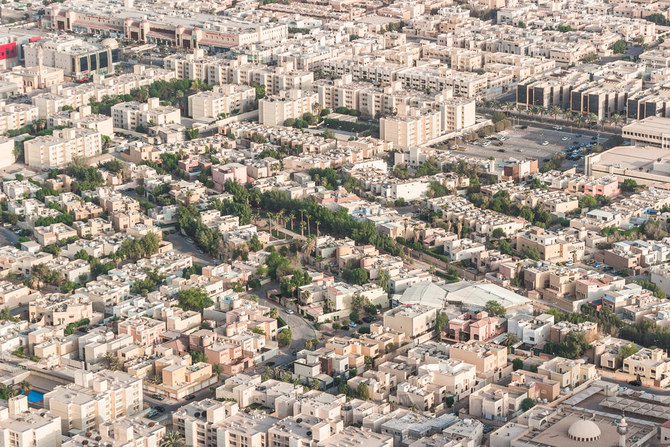
- The agreements included deals with Banque Saudi Fransi and Saudi British Bank (SABB)
- The company aims to inject liquidity into the Saudi housing finance market by buying out mortgages
Lebanese social entrepreneur Omar Itani recognized by Schwab Foundation
- FabricAID co-founder among 21 global recipients recognized for social innovation
DAVOS: Lebanon’s Omar Itani is one of 21 recipients of the Social Entrepreneurs and Innovators of the Year Award by the Schwab Foundation for Social Entrepreneurship.
Itani is the co-founder of social enterprise FabricAID, which aims to “eradicate symptoms of poverty” by collecting and sanitizing secondhand clothing before placing items in stores in “extremely marginalized areas,” he told Arab News on the sidelines of the World Economic Forum in Davos, Switzerland.
With prices ranging from $0.25 to $4, the goal is for people to have a “dignified shopping experience” at affordable prices, he added.
FabricAID operates a network of clothing collection bins across key locations in Lebanon and Jordan, allowing people to donate pre-loved items. The garments are cleaned and sorted before being sold through the organization’s stores, while items that cannot be resold due to damage or heavy wear are repurposed for other uses, including corporate merchandise.
Since its launch, FabricAID has sold more than 1 million items, reached 200,000 beneficiaries and is preparing to expand into the Egyptian market.
Amid uncertainty in the Middle East, Itani advised young entrepreneurs to reframe challenges as opportunities.
“In Lebanon and the Arab world, we complain a lot,” he said. Understandably so, as “there are a lot of issues” in the region, resulting in people feeling frustrated and wanting to move away. But, he added, “a good portion of the challenges” facing the Middle East are “great economic and commercial opportunities.”
Over the past year, social innovators raised a combined $970 million in funding and secured a further $89 million in non-cash contributions, according to the Schwab Foundation’s recent report, “Built to Last: Social Innovation in Transition.”
This is particularly significant in an environment of geopolitical uncertainty and at a time when 82 percent report being affected by shrinking resources, triggering delays in program rollout (70 percent) and disruptions to scaling plans (72 percent).
Francois Bonnici, director of the Schwab Foundation for Social Entrepreneurship and a member of the World Economic Forum’s Executive Committee, said: “The next decade must move the models of social innovation decisively from the margins to the mainstream, transforming not only markets but mindsets.”
Award recipients take part in a structured three-year engagement with the Schwab Foundation, after which they join its global network as lifelong members. The program connects social entrepreneurs with international peers, collaborative initiatives, and capacity-building support aimed at strengthening and scaling their work.


