PESHAWAR: Famed for luxury red-soled stilettos, French shoe designer Christian Louboutin has taken inspiration for a new sandal from Pakistan’s tribal frontier, sparking claims of cultural appropriation along with grins from grizzled Pakistani cobblers.
A post on Louboutin’s Instagram last month announcing the release of the shoe sparked a social media frenzy in Pakistan, with fans praising the latest homage to the country’s rich artisan traditions — and critics rolling their eyes.
The “Imran” — a flamboyant sandal complete with metal studs along with splashes of orange and silver — is inspired by the country’s traditional Peshawari chappal, according to the fashion house.
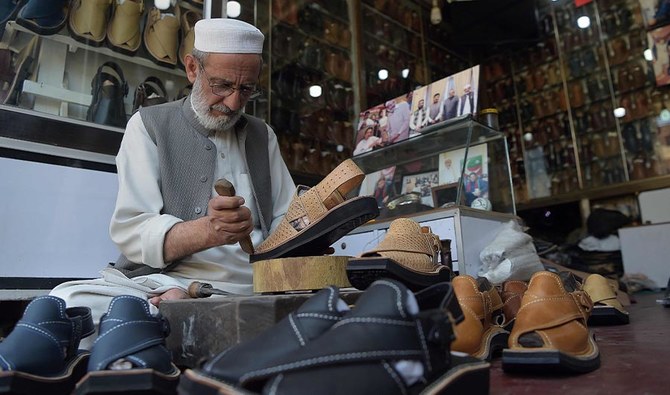
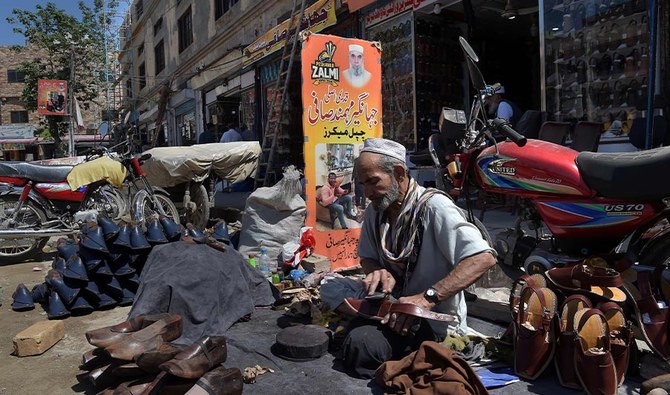
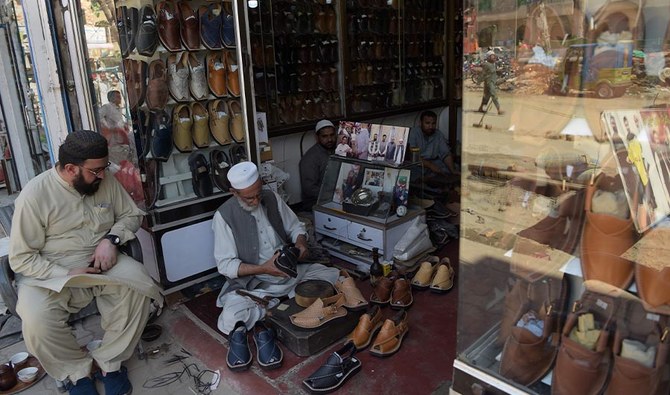
The chappal has long been a staple for ethnic Pashtuns — from ordinary labourers to the country’s political elite — in Pakistan’s northwest.
The sandal is distinguished by its overlapping leather strips that cover the foot and has a small heel with a hardy rubber sole.
Louboutin’s version was named after famed Pakistani contemporary artist and friend of the designer, Imran Qureshi.
While most celebrated the shoe’s debut, others jeered at the thought of paying designer prices — Louboutins often retail for upwards of $500 — for the ubiquitous sandals, which can cost as little as $5.50 in Pakistan.
Some social media users also suggested that the European brand was the latest perpetrator of cultural appropriation.
“Highly recommend asking your friend to rename it though, so that it doesn’t become another culturally appropriated thing,” wrote Instagram user Mehreenfkhan under a post by Qureshi about the shoe.
Louboutin later removed the Instagram announcement, saying the sandal was just the latest creation expressing his “love for embellishments from different cultures” and was sorry some people felt “offended.”
“My designs often pay tributes to artisanship, craftsmanship, traditions or various cultures,” Louboutin said in a statement. “The world and its diversity has always been the core of my work.”
The chappal is no stranger to controversy.
In 2014, British designer Paul Smith released a sandal that looked strikingly similar to the chappal with no initial mention of the Pakistani shoe, sparking fiery protests online and in the press in Pakistan.
Pakistani fashion designer Kamiar Rokni praised Louboutin’s latest creation, saying claims of cultural appropriation were misplaced in this instance.
“When you visit different parts of the world, you do get inspired... and that seeps into your design,” said Rokni.
“There’s nothing wrong with somebody being inspired by the Peshawari chappal,” he explained.
Far from the shoe boutiques of Paris, chappal makers and wearers in Peshawar, the northwestern Pakistani city near the Afghan border, greeted the arrival of the “Imran” with bemusement, pride, and some confused shrugs.
“I’m totally amazed,” said Ghazan Khan — a self-proclaimed chappal fanatic who has bought more than 20 pairs of the sandals in recent years alone.
“People are getting addicted to this kind of chappals, so it’s good,” he added, while suggesting that local designers deserved a cut of the profits from the “Imran.”
“[The chappal] is long-lasting and comfortable,” said resident Abdul Rehman, adding that the sandal’s ventilation helped keep the foot cool in the area’s stifling heat.
“I have been wearing chappals for all of my life and never used any other shoe,” he added.
The shoe’s popularity had been in decline for years, according to chappal makers in Peshawar, as the country’s youth adopted more modern footwear tastes.
The trend was only reversed with the political ascent of former World Cup cricketing captain Imran Khan and his fondness for the shoe, spotlighted as he led mass protests in 2014.
Khan’s adoption of the chappal was part and parcel of a makeover the former cricketer and playboy has embraced since retiring from the sport, taking on a pious image in Pakistan to accompany his crusading populist agenda.
The ploy has largely succeeded, with Khan elected prime minister last year on promises to reign in corruption and cut back on excessive spending, while chappal sales have boomed as the youth seek to imitate the country’s new, stylish leader.
“I made chappals for Imran Khan when he was holding the protests in Islamabad... that’s why it has become famous and people overwhelmingly like them,” explains Chacha Noor Din — the owner of a string of shoe stores in Peshawar — who counts the premier as a loyal customer and named a version of the shoe after him.
And while the chappal’s popularity continues to thrive in Peshawar and throughout the country’s northwest, fans of the traditional sandal are less convinced by Louboutin’s new take.
“I will not wear this shoe because it’s a ladies shoe,” said Riaz-u-Din after looking at a picture of the “Imran” on a phone as he shopped for a pair of chappals.
He insisted: “No one will wear it here in Peshawar.”


Pride and pique as Louboutin takes Pakistan chappal global
Pride and pique as Louboutin takes Pakistan chappal global

- Chappal has long been a staple for ethnic Pashtuns
- Pakistani fashion designer Kamiar Rokni praised Louboutin’s latest creation

Peshawar church attack haunts Christians at Christmas
- The 2013 suicide attack at All Saints Church killed 113 worshippers, leaving lasting scars on survivors
- Prime Minister Shehbaz Sharif vowed to protect religious minorities on Christmas, act against any injustice
PESHAWAR: After passing multiple checkpoints under the watchful eyes of snipers stationed overhead, hundreds of Christians gathered for a Christmas mass in northwest Pakistan 12 years after suicide bombers killed dozens of worshippers.
The impact of metal shards remain etched on a wall next to a memorial bearing the names of those killed at All Saints Church in Peshawar, in the violence-wracked province of Khyber Pakhtunkhwa.
“Even today, when I recall that day 12 years ago, my soul trembles,” Natasha Zulfiqar, a 30-year-old housewife who was wounded in the attack along with her parents, told AFP on Thursday.
Her right wrist still bears the scar.
A militant group claimed responsibility for the attack on September 22, 2013, when 113 people were killed, according to a church toll.
“There was blood everywhere. The church lawn was covered with bodies,” Zulfiqar said.
Christians make up less than two percent of Pakistan’s 240 million people and have long faced discrimination in the conservative Muslim country, often sidelined into low-paying jobs and sometimes the target of blasphemy charges.
Along with other religious minorities, the community has often been targeted by militants over the years.
Today, a wall clock inside All Saints giving the time of the blast as 11:43 am is preserved in its damaged state, its glass shattered.
“The blast was so powerful that its marks are still visible on this wall — and those marks are not only on the wall, but they are also etched into our hearts as well,” said Emmanuel Ghori, a caretaker at the church.
Addressing a Christmas ceremony in the capital Islamabad, Prime Minister Shehbaz Sharif vowed to protect religious minorities.
“I want to make it clear that if any injustice is done to any member of a minority, the law will respond with full force,” he said.
For Azzeka Victor Sadiq, whose father was killed and mother wounded in the blasts, “The intensity of the grief can never truly fade.”
“Whenever I come to the church, the entire incident replays itself before my eyes,” the 38-year-old teacher told AFP.


