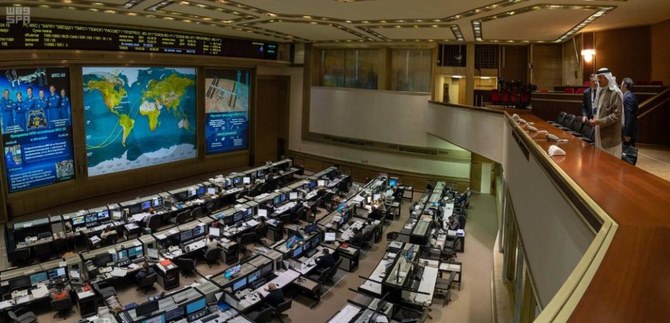
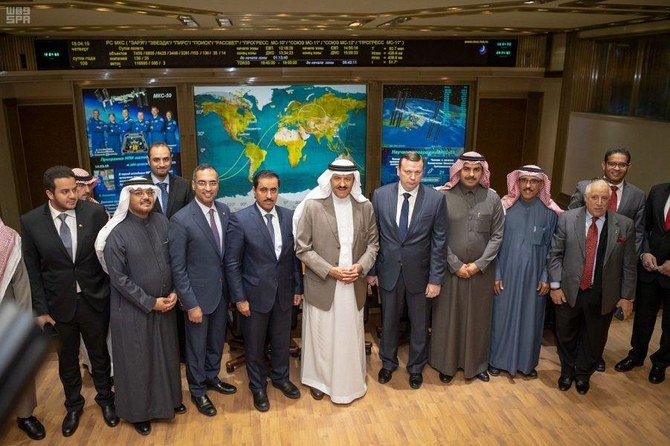
MOSCOW: The chairman of the Saudi Space Commission on Saturday visited the Moscow headquarters of Russia’s mission control center.
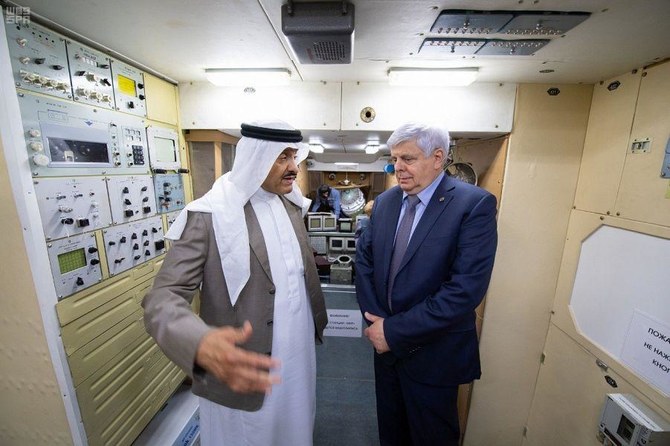
Prince Sultan bin Salman was received by the center’s supervisor, who briefed him on the center’s work and programs, the Saudi Press Agency (SPA) reported.
They discussed establishing scientific and research cooperation in the areas of space and aeronautics, and the International Space Station.
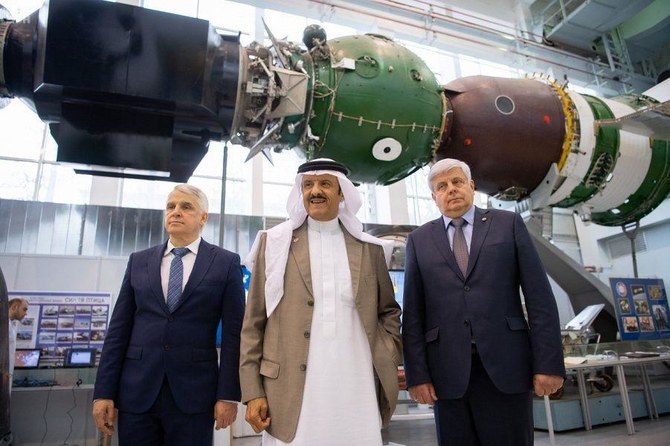
Prince Sultan also visited the General Corporation for Heavy Space Industries, which is responsible for manufacturing spacecraft and developing technology. It produces most parts of the International Space Station.
He said his visit was in line with directives from King Salman to ensure close cooperation with Russia in the space sector and joint investments.
The Saudi Space Commission (SSC) was working at a “rapid pace” to complete an ambitious national strategy, he said, and the Kingdom was one of the region’s first countries to explore the future of space more than 34 years ago.
He added that programs were being prepared in partnership with Russian space institutions and agencies to train Saudi astronauts and to expand in space and satellite industries.
The prince said the commission was keen to invest in training Saudi talent through specialized programs and educational scholarships abroad.
Earlier this week, he visited the headquarters of the Russian space agency Roscosmos for a working session alongside its director-general, Dmitry Olegovich Rogozin.
“Russia considers Saudi Arabia a serious partner, with a great regional and international influence,” SPA reported Rogozin as saying.
Last month, Saudi Arabia and 10 other countries signed the first pan-Arab agreement on coordinating national exploration programs at the Global Space Congress in Abu Dhabi.
The ruler of Dubai, Sheikh Mohammed bin Rashid Al-Maktoum, said that the group’s first project would be a satellite system to be built in the UAE.
The agreement is unprecedented for the nations involved, whose levels of technical expertise vary. The first aim of the agreement will be to bring them all up to an equal level of capability.


![]()
![]()
![]()
![]()

Saudi space chief visits Moscow mission control center
Saudi space chief visits Moscow mission control center
- Prince Sultan bin Salman was received by the center’s supervisor
- He also visited the General Corporation for Heavy Space Industries, which is responsible for manufacturing spacecraft and developing technology


Latest updates


© 2026 SAUDI RESEARCH & PUBLISHING COMPANY, All Rights Reserved And subject to Terms of Use Agreement.