NEW DELHI: More than 200 Indian civil society groups on Sunday accused the ruling party of “fanning hatred and violence” and called for a change in government, days before voters go to the polls in a general election.
The groups, representing 25 Indian states, released a “charge sheet” against Prime Minister Narendra Modi’s Bharatiya Janata Party (BJP). It was written after consulting more than 5,000 representatives from across the political spectrum.
“If it continues this way, India will end up splintered and fractured,” the document warned.
“The structure of the welfare state has been seriously undermined, affecting the dignity and livelihood of crores (tens of millions) of marginalized Indians … with the state setting a new benchmark of surrendering to corporate interests.”
The groups blamed the BJP for ignoring socially and economically marginalized people, and for practicing divisive politics that had created a polarized society.
Modi came to power in 2014 with a thumping win. Since then senior BJP leaders have publicly promoted Hindu supremacy and ultra-nationalism and there has been an increase in violence against religious minorities, especially Muslims, marginalized communities and government critics.
Nikhil Dey, activist and architect of the charge sheet document, said the condemnation was an attempt to get people’s interest in the upcoming election.
“This is not a campaign against any political party but an attempt to reach out to people and tell them to engage in the elections and to not allow diversionary and divisive issues to dominate the elections,” he told Arab News.
“Earlier we used to go silent during elections but now we want to engage people. We will hold meetings in different states and reach out to the people,” said Dey, who played a role in drafting rights-based legislation in a previous government.
The civil society groups organized a meeting and invited representatives from almost all India’s opposition parties, where a call for change through the ballot box was made.
“A new definition of patriotism is being taught to us today,” said Sonia Gandhi, who chairs the opposition United Progressive Alliance (UPA).
“Those rejecting diversity are being labelled as patriots. Discrimination among our own citizens is being justified on the basis of caste, religion and ideology.”
Civil society has had a rough ride under Modi’s government, with more than 14,000 NGOs restricted from receiving foreign funds.
There have also been high-profile arrests of intellectuals after they advocated for the socially marginalized.
Last month Belgian-born economist and activist Jean Dreze was detained by police in the eastern Indian state of Gujarat for holding a meeting demanding the right to food and pensions.
“The detention of Dreze demonstrates how basic civil rights in India have come to be suppressed under the present regime. We want to reach out to the people on these issues,” said Dey.
But the BJP challenged the political credentials of activists.
“Who are these people? Most are these people thrived under the non-BJP dispensation,” BJP national spokesman Sudesh Verma told Arab News.
“This class used to be the one who would corner national awards, scholarships and other government largesses. They are not bothered about the country or they hardly know their country.”
These people had no influence among ordinary people, he continued, and they were “inherently anti-Modi” and would have no impact on the electorate. He accused the activists of being loyal to India’s main opposition party, Congress.
Earlier this month, more than 600 people from the world of theater issued an open letter asking people to vote BJP and its allies out of power, arguing that the idea of India and its constitution were under threat.
Scientists also issued a letter urging Indians “to vote against inequality, intimidation, discrimination and unreason.”
Some Bollywood artists and writers have issued a similar appeal.
“Modi no longer enjoys the wide support that he did in 2014,” Pawan Pratay, a political analyst based in the eastern Indian city of Patna, told Arab News. “There is an undercurrent of anger against him and these protests by different sections of society are reflections of that. No one can take this election for granted.”
India’s election is regarded as the world’s biggest democratic exercise, with about 900 million eligible voters.
Voting will be held in phases ending on May 19. A result is expected to be announced on May 23.


![]()
![]()

BJP under fire for fanning ‘hatred and violence’

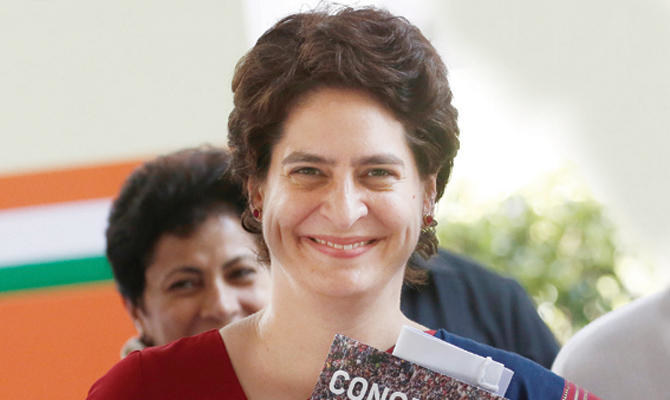
BJP under fire for fanning ‘hatred and violence’
- The groups blamed the BJP for ignoring socially and economically marginalized people, and for practicing divisive politics that had created a polarized society


Latest updates


© 2026 SAUDI RESEARCH & PUBLISHING COMPANY, All Rights Reserved And subject to Terms of Use Agreement.