RIYADH: A smartphone application to measure citizens’ satisfaction with government services was launched on Tuesday by the National Center for Performance Measurement (ADAA).
The Watani application, available for iPhone and Android devices, offers around 80,000 services provided by more than 30,000 government service centers in 1,150 cities and villages throughout Saudi Arabia.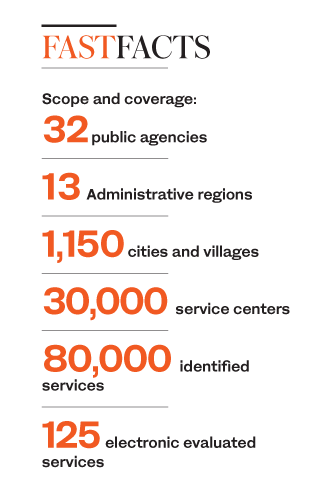
It also gives Saudi citizens, residents and visitors to KSA the ability to access more than 125 electronic services provided by 22 government electronic platforms.
“Towards further transparency and accountability, the Watani application enables beneficiaries by presenting them with a platform to provide performance feedback directly to government entities. The beneficiaries’ evaluation contributes to a system of performance indicators measured by Adaa with the aim to improve the performance of all government entities and services nationally,” said Ibrahim Neyaz, the acting director general of National Center for Performance Measurement “Adaa.”
Watani app services include three tools aimed at supporting decision-makers. A “national dashboard” will be made available to Saudi princes governing districts and to heads of public agencies, to enable them to directly assess the level of satisfaction of citizens.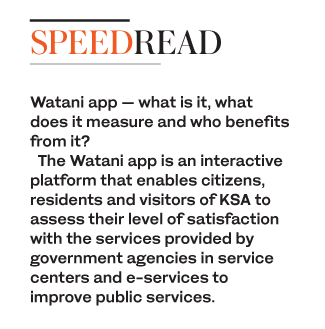
Saudi decision-makers will be provided with periodically updated “electronic reports” that will allow them to identify gaps in the performance of public agencies and to interact directly with beneficiaries. “Satisfaction reports” aimed at receiving data from the Watani application and other measurement tools adopted by ADAA, such as questionaires and focus groups, will be submitted directly to the Saudi prime minister.
Users can download the application to their mobile phones or use it on the Watani website (watani.gov.sa).
ADAA is an independent agency presided over by Saudi Arabia Crown Prince Mohammed bin Salman. It aims to measure the performance of public agencies and work on improving their efficiency.


Smartphone application launched to improve public agencies’ services in Saudi Arabia

Smartphone application launched to improve public agencies’ services in Saudi Arabia
- Users can download the application to their mobile phones or use it on the Watani website (watani.gov.sa)


The founding economy: A blueprint for stability in the First Saudi State
- The establishment of the First Saudi State created a secure environment that facilitated the arrival of caravans, secured vast trade routes, and revived commerce across the Arabian Peninsula
RIYADH: The economy during the founding stage of the First Saudi State served as a fundamental pillar in building the nation, consolidating its influence, and ensuring its stability. This early economic growth was inextricably linked to achieving security, unifying regions, and organizing society—factors that directly stimulated trade, stabilized markets, and enhanced the foundations of daily life in Diriyah and its surrounding areas.
According to Dr. Abdullah Al-Saleh Al-Othaimeen's "Diriyah: Origins and Development during the First Saudi State," published by the King Abdulaziz Foundation for Research and Archives (Darah), the founding economy stands as a historical model reflecting the reciprocal relationship between political stability and early economic prosperity.

The establishment of the First Saudi State created a secure environment that facilitated the arrival of caravans, secured vast trade routes, and revived commerce across the Arabian Peninsula.
Beyond its political and intellectual prominence, Diriyah emerged as a vibrant economic hub. Its active markets attracted merchants and students from across the region, all of whom benefited from the state-provided stability. The local society relied on diverse activities for its livelihood, including trade, agriculture, and livestock breeding, with horses and camels playing crucial roles in transportation, commerce, and securing roads.
The social and administrative organization upon which the state was founded ensured the continuous availability of goods and sustained market stability. Ultimately, the close relationship between public security and economic growth during this founding phase solidified Diriyah's position as a premier political and commercial center in the Arabian Peninsula.


