



ISLAMABAD: As the sun edged closer to the horizon along the banks of Soan River on the outskirts of Islamabad, workers hurried to complete a delicate operation under the supervision of Anas Vahedy, a 51-year-old horticulture expert and environmental activist.
The operation was meant to relocate the five centuries-old banyan trees from the Armed Forces Institute of Cardiology (AFIC) in the twin city of Rawalpindi through cranes and excavators to make way for a new hospital block.
‘Save the Trees,’ a citizen-led volunteer network that rescues mature trees threatened by urban expansion in Pakistan, had identified 35 trees that were about to be cut down due to the Rawalpindi hospital’s expansion.
The volunteer group chose five banyans among these 35 trees for transplantation in Islamabad’s Defense Housing Authority (DHA) area, while the smaller trees were replanted at nearby locations in Rawalpindi during the three-day relocation effort that ended on Friday.
“A building is being built in the [AFIC] hospital. So, for all the trees that were coming to that place, we submitted and documented to the authorities that if we could make an effort to save these trees,” Vahedy told Arab News on Friday.
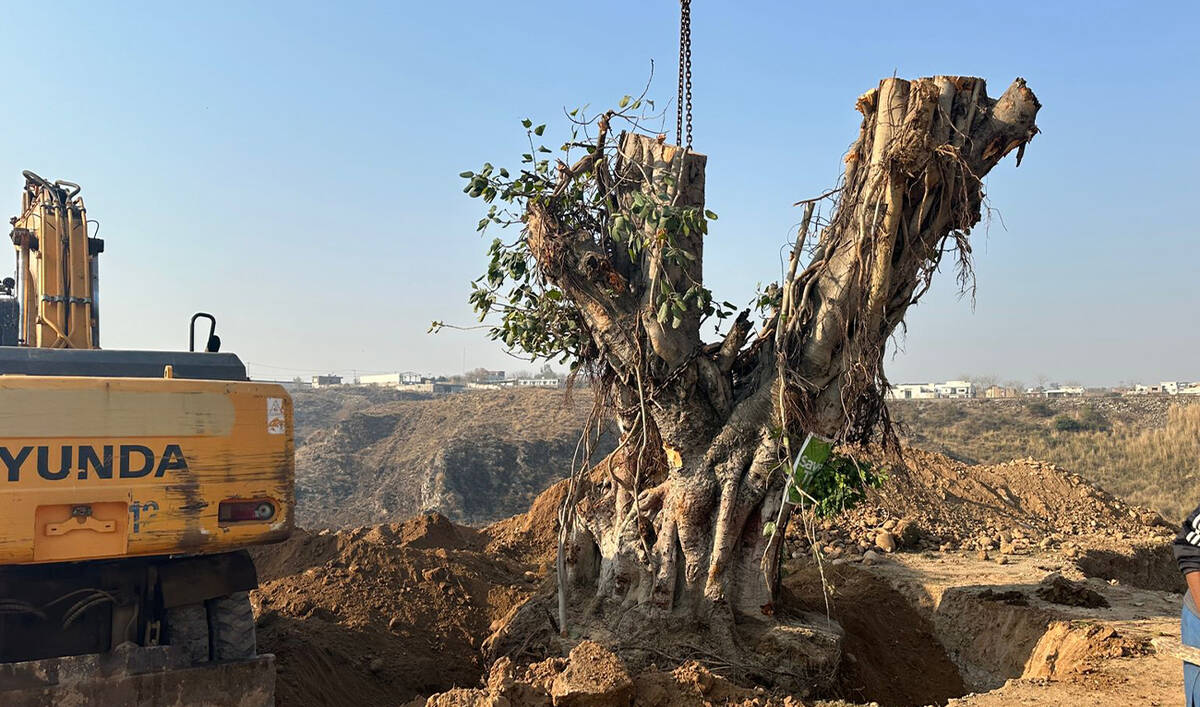
Heavy crane operate on the site of tree replantation in Islamabad, Pakistan, on February 20, 2026. (AN)
The banyan tree, native to the Pothohar region, is considered ecologically significant due to its expansive canopy, deep roots and long lifespan spread across centuries. These trees provide shade, reduce surface temperatures and support diverse bird and animal life in dense urban settings.
But the process of moving such giant trees is labor-intensive and technically demanding.
Workers have to spend one or two days carefully excavating around the root system, removing branches to reduce weight, then using cranes to load the trees onto trucks. Replanting at the destination takes another day, depending on distance and site preparation.
“It will take six months’ time for them [banyans] to sprout new branches and then it will take years and years to grow,” Zahid Mahmood, founder of an agri-products startup who’s also an active part of this group, told Arab News.
Save the Trees took shape of an organization six years ago, when a group of friends relocated a banyan tree on from Rawalpindi’s Murree Road to Islamabad, according to Vahedy.
Since then, it has expanded to multiple cities and regions across the country, including Lahore, Karachi, Azad Kashmir and Gilgit-Baltistan.
While the core team consists of fewer than a dozen members, their volunteer network now includes hundreds of supporters nationwide.
“The trees of this age [group] that you can see in front of us, 100- to 200-year-old and above trees, we have shifted about 350 trees,” Vahedy told Arab News.
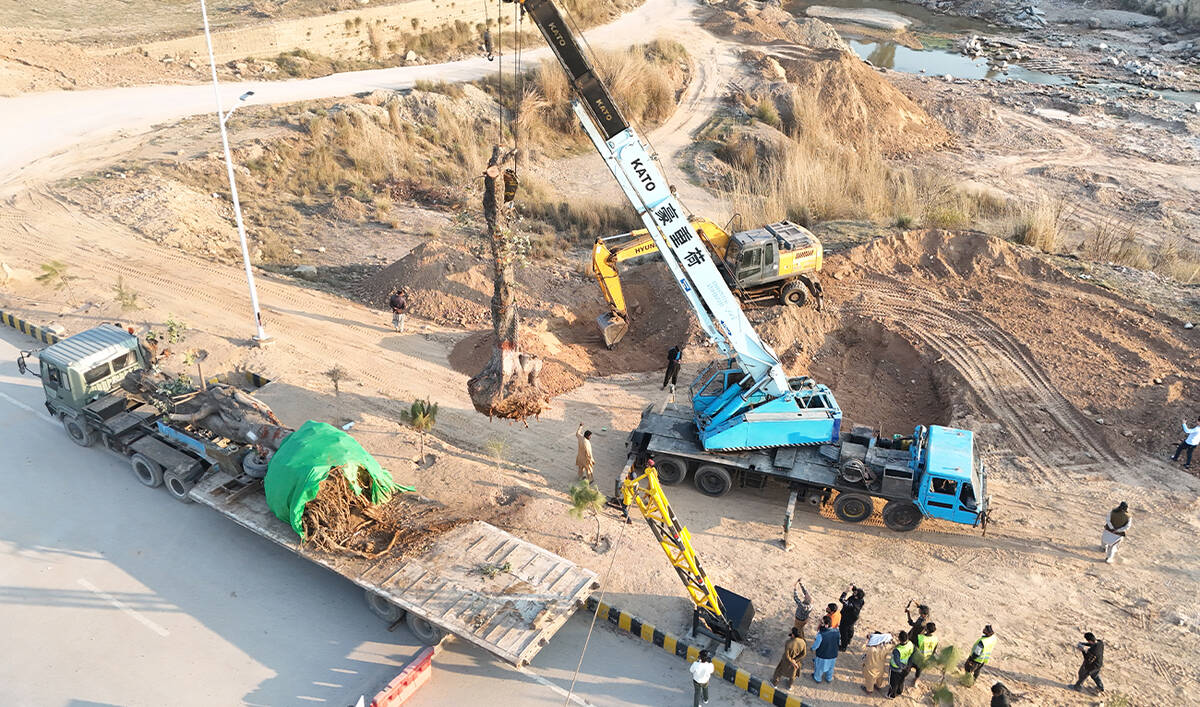
Heavy crane operate on the site of tree replantation in Islamabad, Pakistan, on February 20, 2026. (AN)
In earlier efforts, members pooled personal funds or sought donations from friends, but the volunteer group now tries to secure logistical support directly from public sector departments or private developers involved in construction projects, reducing the overall cost of relocation.
For the latest relocation efforts, the group helped with technical planning and horticulture oversight, while heavy machinery, including excavators, cranes and transport vehicles, was provided by AFIC authorities and DHA management.
“On average if you look at the huge machinery involved, one such project costs over Rs100,000 [$358],” said Zahid Mahmood, a group member.
The activists argue that this cost of relocating trees is justified when weighed against the environmental value of a tree that may have taken decades or centuries to mature.
“The size of this [banyan] tree which we have just moved, it took them more than hundred years to grow to that level so why can’t we understand that this is more value[able] than the normal trees,” Mahmood said.
“It’s heritage, it’s a part of our heritage. It’s a part of our culture.”
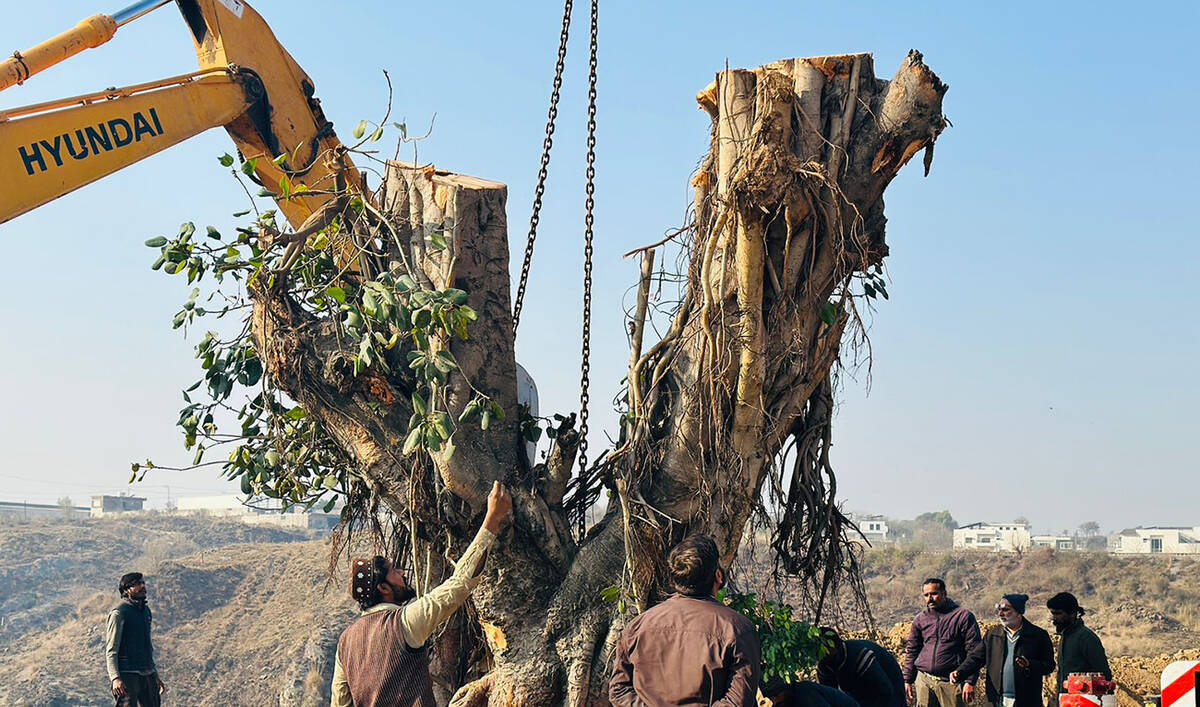
Activists stand at the site of tree replantation on the outskirts of Islamabad, Pakistan, on February 20, 2026. (AN)
In recent months, videos showing fallen trees in the Pakistani capital of Islamabad have circulated widely on social media, drawing criticism from environmental activists who accused authorities of prioritizing urban development over nature’s preservation.
Islamabad lost 14 hectares of tree cover, an area roughly equivalent to 20 football fields, between 2001 and 2024, according to Global Forest Watch.
Officials, however, reject allegations of indiscriminate cutting.
The Capital Development Authority (CDA) recently acknowledged removing around 29,000 paper mulberry trees, citing a court order that identified the species as a major source of pollen allergies. Authorities have also defended road and infrastructure projects, saying there are being carried out in accordance with regulations.
Save the Trees hopes its efforts will influence public policy.
The group has urged authorities to formally allocate funds for tree relocation in future development plans, similar to compensation mechanisms for affected residents.
“There’s a need, there’s an urgency to save our future generations’ atmosphere,” Mahmood said. “These kind of projects [are] actually going to help government understand the need [for such measures].”


