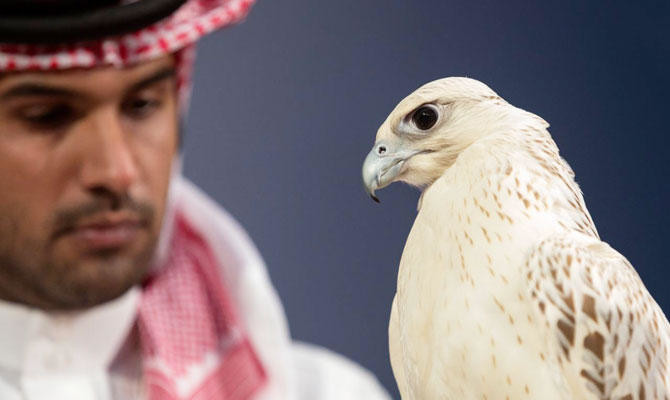
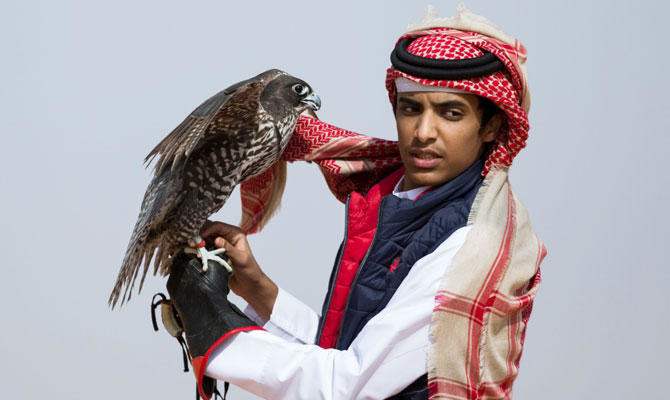
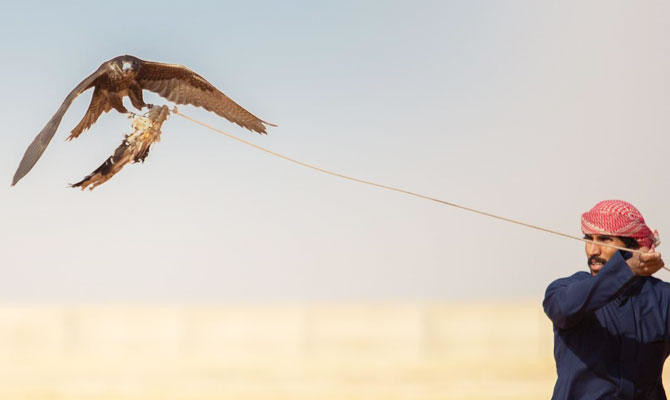
JEDDAH: The prestigious King Abdul Aziz Festival of Falconry on Sunday ended in the town of Malham, near Riyadh.
The event, organized by the Saudi Falcons Club, has attracted thousands of enthusiasts from throughout the Middle East and around the world, with many competing for prizes totaling SR17.6 million ($4.7 million).
As well as falcon races and a beauty contest for the birds of prey, visitors to the festival have been able to enjoy exhibitions, theater entertainment and residential camps.
A heritage museum set up on the festival site used interactive displays to explain the history of falconry and its key place in Saudi culture. Traditional techniques for the training, hunting and breeding of falcons were also highlighted.
Other attractions at the festival, which opened on Jan. 25, included displays of pottery, sculptures, wood engravings, miniature coffee pots and an exhibit on the ancient art of rope making. The industrial history of Arabic calligraphy painting, tanning and leather production also came under the spotlight.
Falcon breeding is an ancient hobby in the Arabian Peninsula, and has spread from Central Asia to Europe. Popular among nobles, falcon breeding played a major role in diplomacy during the Middle Ages. Arab falcon breeding countries adopt similar breeding and training techniques, except for some specific details.

Saudi falconry festival draws to a close
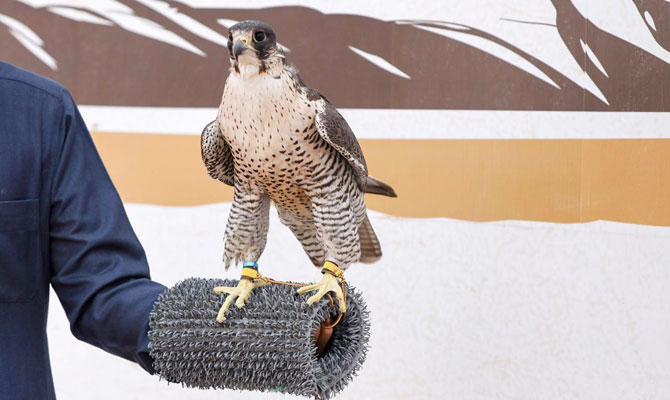
- A heritage museum set up on the festival site used interactive displays to explain the history of falconry and its key place in Saudi culture
Ithra will bring Spain to life for 2-week cultural celebration
- Ithra Cultural Days will unfold across the plaza, museum, theater, lush garden, library, idea lab, cinema, children’s museum, energy exhibit and Ithra tower
DHAHRAN: Visitors to the King Abdulaziz Center for World Culture (Ithra) can enjoy a taste of Spanish culture from Jan. 12-31.
Under the banner “Live Spain,” spaces at Ithra will be transformed to give a glimpse of life in this vibrant European country.
Ithra Cultural Days will unfold across the plaza, museum, theater, lush garden, library, idea lab, cinema, children’s museum, energy exhibit and Ithra tower, with exhibitions dedicated to Spanish photography, fashion and sports. There will also be Spanish cuisine and interactive installations exploring historical and linguistic connections between Arab and Spanish traditions.
There will be live performances across various stages, with a production of “Carmen” among the highlights.
“Cultural exchange is a core part of Ithra’s approach to programming. Celebrating Spain’s culture and history reflects this focus, particularly as this year’s Cultural Days take on a distinctive character by exploring Spain’s cultural heritage,” Noura Alzamil, program manager at Ithra, said.
“Visitors to Ithra will experience an exciting program in every sense, given the scale and variety of events designed to appeal to all tastes and interests.”
Cinema showings will feature Spanish short and feature films, accompanied by post-screening discussions to provide additional cultural context, while talks and sessions in the idea lab and library will explore architecture, literature and creative practice.
Hands-on workshops will invite visitors to engage directly with Spanish crafts and creative traditions, from visual arts and design to food-related practices.
A dedicated program for children and youth will run alongside with storytelling, creative workshops and performances among the attractions. Food and market experiences in Ithra’s public spaces will reflect the important social role played in the country by food.
Ithra Cultural Days present international cultures through immersive, public-facing experiences. This year’s focus on Spain follows the success of last year’s Japan edition, which welcomed more than 200,000 visitors in just two weeks.