Saudi falconry festival draws big crowds

1 / 7
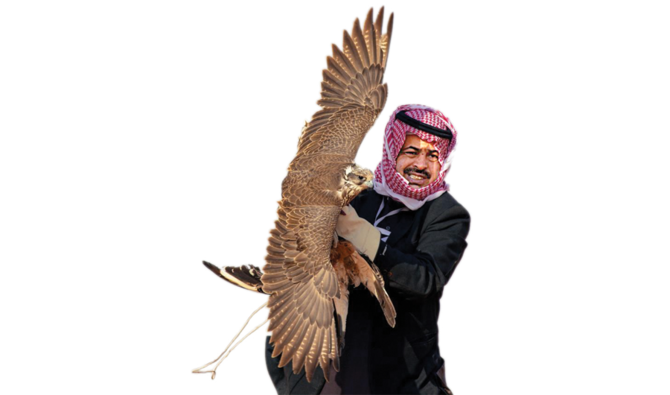
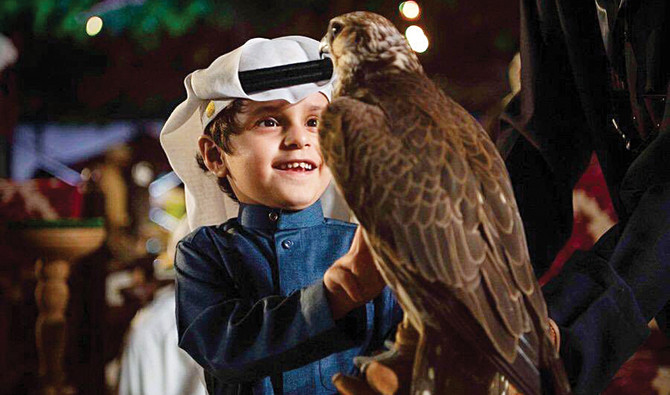
The main attraction during the event will be the performances by Khalid Abdulrahman, a songwriter and poet, and singer Jaber Al-Kasser. An art exhibition will also be organized in the museum. (Photo/Supplied)
2 / 7
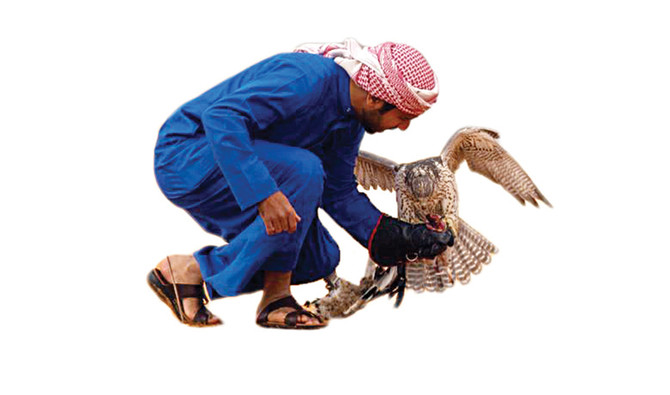
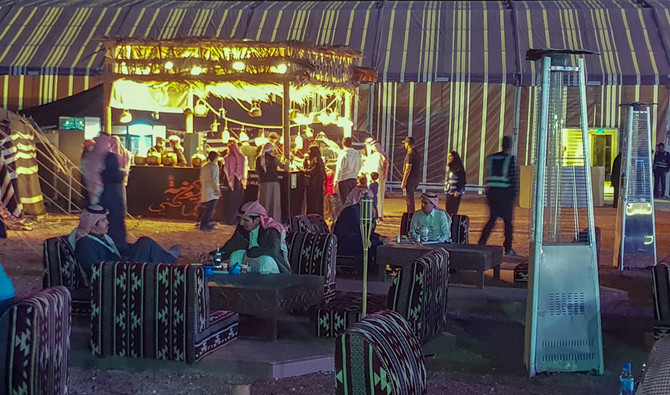
The main attraction during the event will be the performances by Khalid Abdulrahman, a songwriter and poet, and singer Jaber Al-Kasser. An art exhibition will also be organized in the museum. (Photo/Supplied)
3 / 7
The main attraction during the event will be the performances by Khalid Abdulrahman, a songwriter and poet, and singer Jaber Al-Kasser. An art exhibition will also be organized in the museum. (Photo/Supplied)
4 / 7
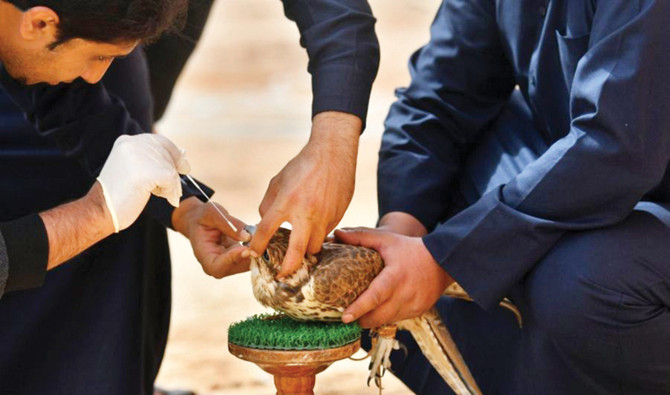
The main attraction during the event will be the performances by Khalid Abdulrahman, a songwriter and poet, and singer Jaber Al-Kasser. An art exhibition will also be organized in the museum. (Photo/Supplied)
5 / 7
The main attraction during the event will be the performances by Khalid Abdulrahman, a songwriter and poet, and singer Jaber Al-Kasser. An art exhibition will also be organized in the museum. (Essam Al-Ghalib)
6 / 7
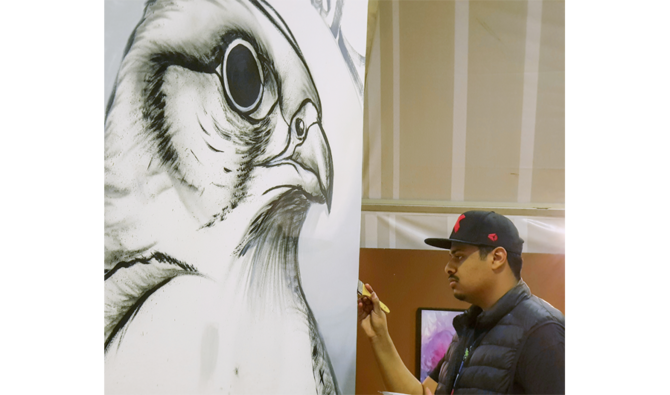
The main attraction during the event will be the performances by Khalid Abdulrahman, a songwriter and poet, and singer Jaber Al-Kasser. An art exhibition will also be organized in the museum. (Essam Al-Ghalib)
7 / 7
The main attraction during the event will be the performances by Khalid Abdulrahman, a songwriter and poet, and singer Jaber Al-Kasser. An art exhibition will also be organized in the museum. (Essam Al-Ghalib)
Updated 31 January 2019
Follow

Saudi falconry festival draws big crowds

  • The King Abdul Aziz Falconry Festival includes a photography contest with up to $27,000 in prize money

RIYADH: A falconry festival outside Riyadh is proving a major drawcard not only for those curious about the majestic birds of prey, but also families who want to keep the Kingdom’s rich hunting heritage alive. 

Hundreds of people have visited the King Abdul Aziz Falconry Festival, organized by the Saudi Falcons Club, since it opened near the town of Malham on Jan. 25. 

Along with attractions including falcon races, falconry training workshops and hunting demonstrations, the festival has a children’s area with rock-climbing walls, obstacle courses and a zipline ride.

Older children and adults can test their skills on archery and pellet-gun shooting ranges.

Among those taking aim was 12-year-old Majid, who challenged his father, Abdulrahman Al-Shehri, 38, an army officer, to a shooting contest.

“The younger generation is losing touch with the know-how that our forefathers relied on to live and survive,” Al-Shehri said.

“I brought Majid here to encourage him to learn about our heritage through falcons, because he loves animals. What I am finding out is that he is amazed by falcons — and that he is a good shot.”

Visitors to the Falcon Museum and Heritage Village on the festival grounds explored the region’s history of falconry hunting and marveled at the size of the birds of prey on display.

The 1,500-seat festival arena offers daily poetry recitals and heritage films, but the main attractions will take place this weekend with performances by Khalid Abdulrahman, a Saudi songwriter and poet, and Saudi singer Jaber Al-Kasser.

Falcon races will be held in the main festival arena and the heritage museum will use interactive displays to explain the history of falconry in the Gulf. A contemporary art exhibition on falconry hunting and breeding through the ages will also be housed in the museum.

This year’s festival includes a photography competition with up to SR100,000 ($27,000) in prize money. Falconers will also compete in Al-Melwah “Da’ao” 400-meter races for a chance to win prizes totalling SR17 million.

Misfer Al-Ghamdi, 15, was unaware of the photography competition, but when told by Arab News about the first-place prize of SR50,000, he pulled out his mobile phone and said to his friends: “Shabab, go take lots of pictures.”

The festival will continue until Feb 3. Entry is free, however those attending music concerts need to buy tickets from www.saudifalconsclub.org.sa. 

Saudi Arabia lies on a major falcon migration route and is one of 11 leading countries listed by UNESCO as home to various falcon species.

The King Abdul Aziz Falconry Festival builds on the success of last month’s Saudi Falcon and Hunting Show, which attracted attention both in the Gulf and internationally. The show was also organized by the Saudi Falcons Club, which was established by King Salman under the direct supervision of Crown Prince Mohammed bin Salman.

Falcon breeding is an ancient hobby in the Arabian Peninsula, and has spread from Central Asia to Europe. Popular among nobles, falcon breeding played a major role in diplomacy during the Middle Ages. Arab falcon-breeding countries adopt similar breeding and training techniques, except for some specific details.

Training falcons that are less than one year old and getting them familiar with their breeders takes up to 40 days; training older ones can take up to a year. Falcons vary in their responsiveness. The peregrine is considered more responsive to training than the lanner, but it is highly susceptible to diseases and has a relatively slow molting process (shedding and renewing feathers). Training falcons requires both modern and traditional methods and equipment, such as binoculars to help locate and follow them, a burqa (leather hood) that covers their head to keep them calm, and a gauntlet (piece of cloth) that is put around the hand.

Falcons are carried on the left hand as it moves less than the right one. They accompany their breeders to become familiar with their voices and able to answer to a specific name. Recently, small drones containing prey in a cage have started being used to train falcons to hunt. Once training is complete, the breeder must be confident that the falcon will always return to them.


Jeddah students get closer look at electric motorsport

Updated 24 January 2026
Follow

Jeddah students get closer look at electric motorsport

  • A PIF-linked initiative highlights technical and engineering careers behind electric racing events

JEDDAH: Students from local and international schools in Jeddah were introduced to STEM-related career pathways in electric motorsport this week, as part of an education program linked to the UIM E1 World Championship held on the Red Sea.

The sessions formed part of Driving Force Presented by the Public Investment Fund, an initiative run by Formula E and its electric racing series partners, to familiarize students aged eight to 18 with science, technology, engineering and mathematics through electric racing and sustainability-focused industries.

The sessions for students formed part of Driving Force Presented by the Public Investment Fund, an initiative run by Formula E and its electric racing series partners. (Supplied)

The programme took place alongside the 2026 E1 Jeddah GP and included workshops, school visits and trackside access designed to show how engineering, data, broadcast technology and event operations function within professional motorsport.

According to organisers, the initiative reached more than 60,000 students globally in 2025, with further expansion planned this year. 

HIGHLIGHTS

• The program took place alongside the 2026 E1 Jeddah GP and included workshops, school visits and trackside access.

• Students learned about E1 races and their technical and environmental dimensions and discussed the engineering and marine aspects of electric boats.

• According to organisers, the initiative reached more than 60,000 students globally in 2025, with further expansion planned this year. 

John Williams, managing director at E1, told Arab News: “The PIF is absolutely vital to everything we do here at the E1. They were crucial initial investment partner since the start of the championship and they continue to support us in a number of ways and more specifically around the Driving Force program.”

The sessions for students formed part of Driving Force Presented by the Public Investment Fund, an initiative run by Formula E and its electric racing series partners. (Supplied)

Elaborating more on the program, he said: “What we are doing is presenting and showing these students the available careers of science, technology, engineering and mathematics, as well as careers in sports, not only pilots but also engineers and mechanics.”

Williams added that the main key to the program was bringing a new generation to the mechanism of sport.

“We are introducing to these exciting new technologies around the race but it could be our technology on the boat or our broadcast products, as well as how to manage the event its self. There are a range of opportunities to show it to the children in addition to enjoying the excitement of the race and meeting the pilots.”

The program’s Jeddah activities began at King Abdulaziz University’s faculty of maritime studies, where students took part in a hands-on workshop focused on STEM careers in the motorsport and sustainability areas conducted by technology experts and famous water pilots such as Dani Clos, Emma Kimilainen and Patricia Pita.

Students learned about E1 races and their technical and environmental dimensions and discussed the engineering and marine aspects of electric boats.

They also enjoyed exclusive behind-the-scenes access at the E1 Jeddah GP, pilot meet-and-greets, and front-row seats to watch the RaceBird boats in action.