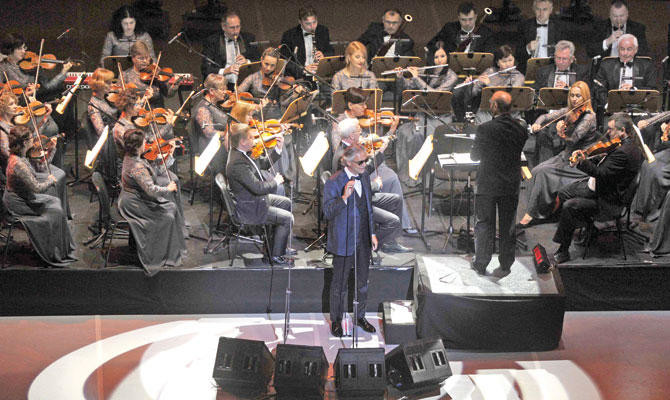
JEDDAH: The Winter at Tantora cultural festival in Saudi Arabia will be extended until Feb. 23 with additional concerts from regional superstars, organizers said Monday.
The event, which started last month in the northern city of Al-Ula, has so far included Italian opera singer Andrea Bocelli and a virtual performance from the late Egyptian entertainer Umm Kulthum.
An official festival tweet said there would also be shows from Iraqi musicians Ilham Al-Madfai and Kazem Al-Saher on Feb. 15.
Bahrain’s Rashed Al-Majid and Iraqi artist Majed Al-Mohandes will perform on Feb. 23, when there will also be a ceremony to honor Kuwait’s Abdul Karim Abdul Qader.
The two-week extension will allow more more arts and tourism events to be held in Al-Ula, the tweet added. The cultural festival is the first event of its kind to be held at the UNESCO World Heritage Site.
Al-Ula has archaeological remains dating back more than 2,000 years, and festival visitors can visit sites that are only open to some ticketholders.

Saudi Arabia’s Tantora winter festival gets extension
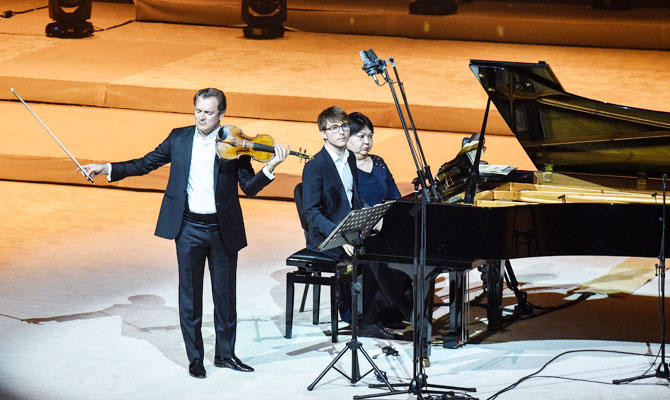
- The two-week extension will allow more more arts and tourism events to be held in Al-Ula
Jeddah conference discusses future of gifted education
JEDDAH: Representatives from more than 40 countries are participating in the 19th Asia-Pacific Conference on Giftedness and Creativity, being held at the University of Business and Technology in Jeddah until Wednesday.
The event brings together global experts, educators, researchers and policymakers to discuss the future of gifted education through more than 350 research papers, panel discussions and workshops.
The conference opened on Sunday under the patronage of Saudi Arabia’s Minister of Education Yousef Al-Benyan, who also oversaw the launch of the world’s first global index for evaluating gifted education systems.
More than 1,000 Saudi and international attendees, including decision-makers, gifted students and education specialists, participated in the opening ceremony.
Abdullah bin Sadiq Dahlan, chairman of the university, said: “Investing in human potential is the most valuable investment any nation can make, and the Kingdom offers a global model for empowering talent and innovation under leadership that views creativity as a key driver of sustainable development.
“Progress is no longer measured by resources alone, but by how effectively countries invest in the minds of their people. The real challenge is not only discovering talent, but sustaining it by creating environments that allow creativity to grow, be tested, and translated into real impact.”
He added that the conference provided a vital platform for dialogue, global collaboration and the exchange of best practices, with the launch of the global gifted education index among its most significant outcomes.
Layla bint Ahmed Jamjoom, general coordinator of the conference, said: “The conference serves as a meeting point for educators and experts from different cultures working to improve how gifted learners are identified, supported and empowered.”
Held under the theme “Towards Progress: Building a Better Future for Gifted Education 2050,” the event explores the role of innovation, AI, and cross-sector partnerships in gifted education.
Jamjoom said: “Giftedness should not be viewed as elitist, but as recognition of diverse abilities, including twice-exceptional learners, through personalized educational pathways. The program features more than 100 speakers, over 200 researchers, and around 800 participants from 40 countries.”
Kyungbin Park, president of the Asia-Pacific Council for Giftedness and Creativity, praised Saudi Arabia’s commitment to human development and highlighted the significance of hosting the conference in Jeddah.
She said: “Jeddah brings together different cultures and ideas, reflecting the intersection of knowledge and innovation in gifted education. As technology continues to shape education, AI and digital learning tools must be used responsibly. The conference includes initiatives such as the Youth Forum, the Talent Hackathon for Educational Innovation, and the Generative AI Youth Summit.”
Sir Edward Byrne, president of King Abdullah University of Science and Technology, described the conference as timely and impactful.
“It’s a brilliant conference to hold in Saudi Arabia. Seventy percent of Saudis are young people, and they are changing not only the country, but the region and the world,” he told Arab News.
“The energy in the country is palpable. The talent is vast, and the government is providing strong structures, improving the school system, and building universities that give young people every opportunity.”
He added that while Saudi students would continue to study abroad, expanding opportunities within the Kingdom were increasingly retaining and attracting talent.
Faisal Al-Mishari, consultant at the King Abdulaziz and His Companions Foundation for Giftedness and Creativity, highlighted Saudi Arabia’s integrated approach to talent development.
“My presentation focused on how Mawhiba contributes to the field of giftedness locally and internationally, and how our work is linked to global efforts,” he said, noting that the foundation invests heavily in scientific initiatives benefiting both Saudi students and international programs.
Al-Mishari explained that the Mawhiba model supported students across all stages of development. “Our approach starts from K-12, extends to university, and continues into the workplace. These stages are not sequential but integrated, with students connected to industry from an early age,” he said.
The opening ceremony also featured a documentary highlighting Saudi Arabia’s achievements in empowering gifted individuals, followed by a segment, “The Fruit of Empowerment,” celebrating Mawhiba students who have received local and international awards.