Lebanese director Pam Nasr discusses her debut film ‘Clams Casino’

A still from the short film 'Clams Casino'. (Supplied)
Updated 09 January 2019
Follow

Lebanese director Pam Nasr discusses her debut film ‘Clams Casino’

DUBAI: “When we see something strange, if we’ve never been exposed to anything like it, we tend to push it away. But I was really interested in this phenomenon. There was so much to discover about it, and I was attracted to the human aspect of why people partake in it and why it’s so popular. Like, why does it exist?”
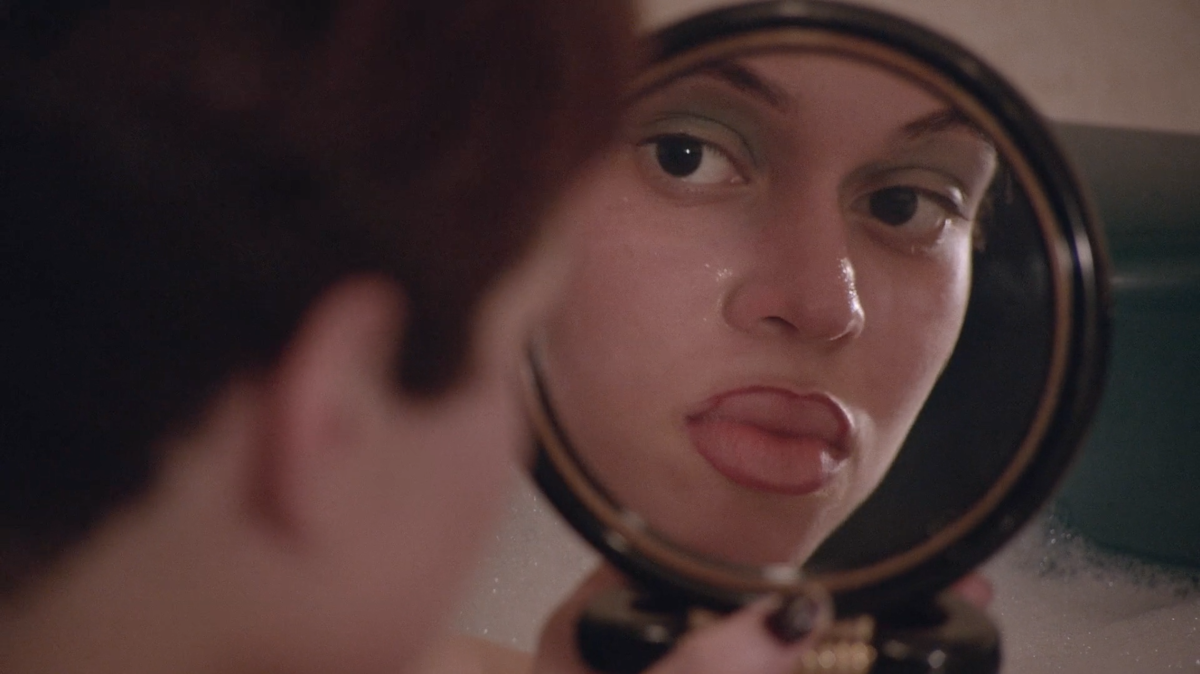


A still from the short film 'Clams Casino'. (Supplied)

Lebanese filmmaker Pam Nasr is talking about mukbang — a craze that began in South Korea and is basically a live stream of someone eating a large amount of food. Nasr’s first film, a short called ‘Clams Casino,’ which premiered in the region in Dubai last month, is based around the phenomenon. A young woman who lives with her mother, with whom she has a difficult relationship, spends hours collecting seafood, cooking it, setting it out beautifully on the table, and dressing up in order to eat it in front of a webcam.
“It stems from loneliness,” Nasr says. “Mukbang is kind of a solution to loneliness, and — at the same time — these performers make a lot of money from eating online.”
While some viewers, she says, are watching for fetishistic reasons, most “watch it because they’re lonely and they want to have someone to eat with.” Nasr recalls, as a child, arriving home from school each day and dining by herself, as the rest of her family had already eaten.
“I asked my family if someone would wait and eat with me,” she says. “In Lebanon, and in many other cultures too, the art of cooking for someone (and eating together) is such a way of delivering your love to them. So I really connected to this when I was studying Mukbang. It was a beautiful learning curve for me. And I hope for many others who watch ‘Clams Casino.’”
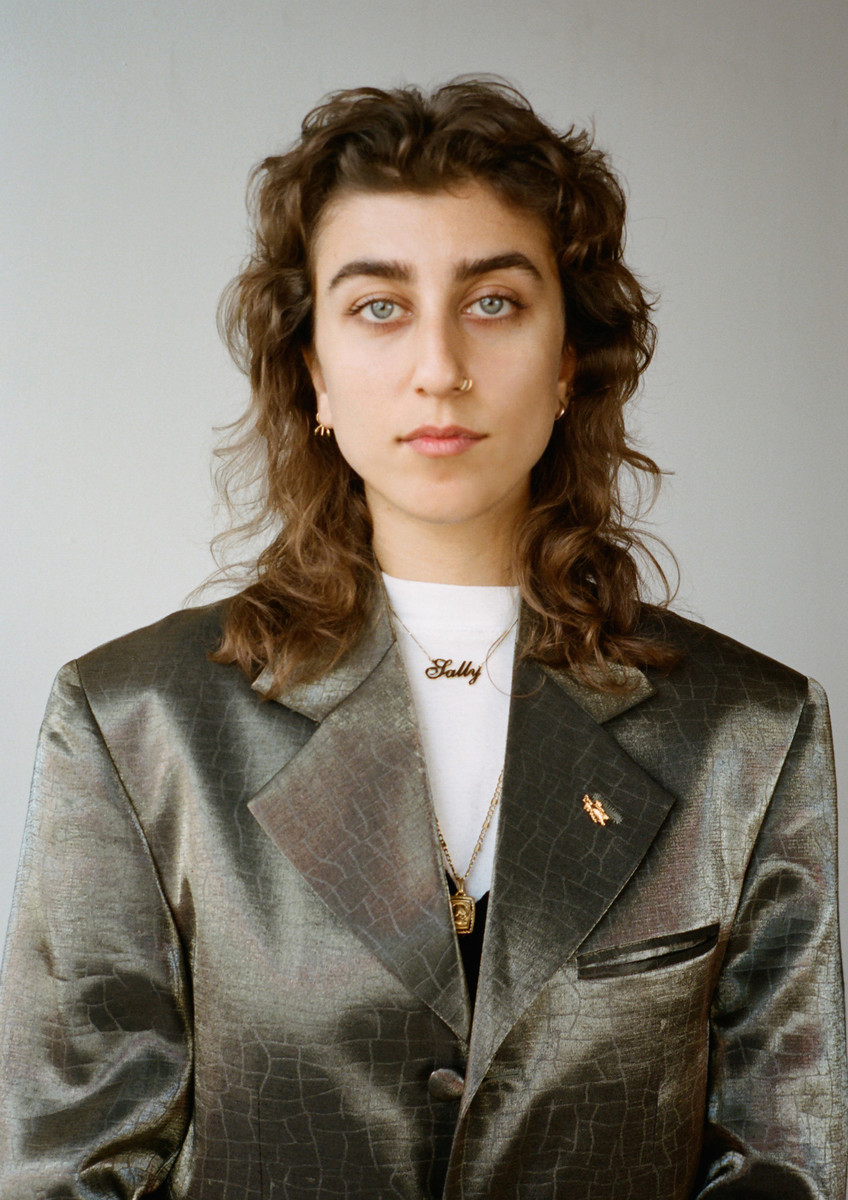


Filmmaker Pam Nasr. (Supplied)

The Q&A session that followed the Dubai screening was the longest she’s had so far (having toured several festivals in America with the movie). “A lot of people really connected to it and understood what I was doing.” In particular, Nasr was moved by an exchange with a young college student who told her that a friend in college had been going through a tough time and was watching a lot of mukbang.
“She was very tearful. She said that after watching my film, she understood her friend a lot more. My heart went out to her,” Nasr says. “There were a lot of intimate moments like that at the screening. It was really beautiful.”


Kawthar Al-Atiyah: ‘My paintings speak first to the body, then to the mind’ 

Updated 19 December 2025
Follow

Kawthar Al-Atiyah: ‘My paintings speak first to the body, then to the mind’ 

  • The Saudi artist discusses her creative process and her responsibility to ‘represent Saudi culture’ 

RIYADH: Contemporary Saudi artist Kawthar Al-Atiyah uses painting, sculpture and immersive material experimentation to create her deeply personal works. And those works focus on one recurring question: What does emotion look like when it becomes physical?  

“My practice begins with the body as a site of memory — its weight, its tension, its quiet shifts,” Al-Atiyah tells Arab News. “Emotion is never abstract to me. It lives in texture, in light, in the way material breathes.”  

This philosophy shapes the immersive surfaces she creates, which often seem suspended between presence and absence. “There is a moment when the body stops being flesh and becomes presence, something felt rather than seen,” she says. “I try to capture that threshold.”  

Al-Atiyah, a graduate of Princess Nourah bint Abdulrahman University, has steadily built an international profile for herself. Her participation in VOLTA Art Fair at Art Basel in Switzerland, MENART Fair in Paris, and exhibitions in the Gulf and Europe have positioned her as a leading Saudi voice in contemporary art.  

Showing abroad has shaped her understanding of how audiences engage with vulnerability. “Across countries and cultures, viewers reacted to my work in ways that revealed their own memories,” she says. “It affirmed my belief that the primary language of human beings is emotion. My paintings speak first to the body, then to the mind.” 

Al-Atiyah says her creative process begins long before paint touches canvas. Instead of sketching, she constructs physical environments made of materials including camel bone, raw cotton, transparent fabrics, and fragments of carpet.  

“When a concept arrives, I build it in real space,” she says. “I sculpt atmosphere, objects, light and emotion before I sculpt paint.  

“I layer color the way the body stores experience,” she continues. “Some layers stay buried, others resurface unexpectedly. I stop only when the internal rhythm feels resolved.”  

This sensitivity to the unseen has drawn attention from international institutions. Forbes Middle East included her among the 100 Most Influential Women in the Arab World in 2024 and selected several of her pieces for exhibition.  

“One of the works was privately owned, yet they insisted on showing it,” she says. “For me, that was a strong sign of trust and recognition. It affirmed my responsibility to represent Saudi culture with honesty and depth.”  

Her recent year-long exhibition at Ithra deepened her understanding of how regional audiences interpret her work.  

'Veil of Light.' (Supplied) 

“In the Gulf, people respond strongly to embodied memory,” she says. “They see themselves in the quiet tensions of the piece, perhaps because we share similar cultural rhythms.”  

A documentary is now in production exploring her process, offering viewers a rare look into the preparatory world that precedes each canvas.  

“People usually see the final work. But the emotional architecture built before the painting is where the story truly begins,” she explains.  

Beyond her own practice, Al-Atiyah is committed to art education through her work with Misk Art Institute. “Teaching is a dialogue,” she says. “I do not focus on technique alone. I teach students to develop intuition, to trust their senses, to translate internal experiences into honest visual language.”  

 'Jamalensan.' (Supplied) 

She believes that artists should be emotionally aware as well as technically skilled. “I want them to connect deeply with themselves so that what they create resonates beyond personal expression and becomes part of a cultural conversation,” she explains.  

In Saudi Arabia’s rapidly growing art scene, Al-Atiyah sees her role as both storyteller and facilitator.  

“Art is not decoration, it is a language,” she says. “If my work helps someone remember something they have forgotten or feel something they have buried, then I have done what I set out to do.”