


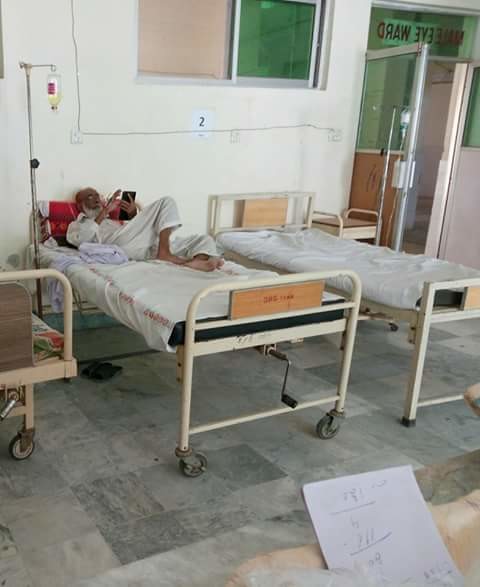
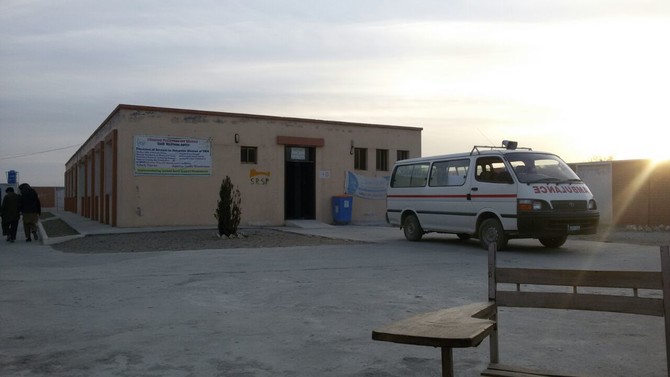
PESHAWAR: Acknowledging the fact that the health sector in the tribal areas is in shambles and needs an overhaul, Khyber Pakhtunkhwa’s (KP) top official said on Monday that a multidimensional strategy is in place and will be implemented in January next year.
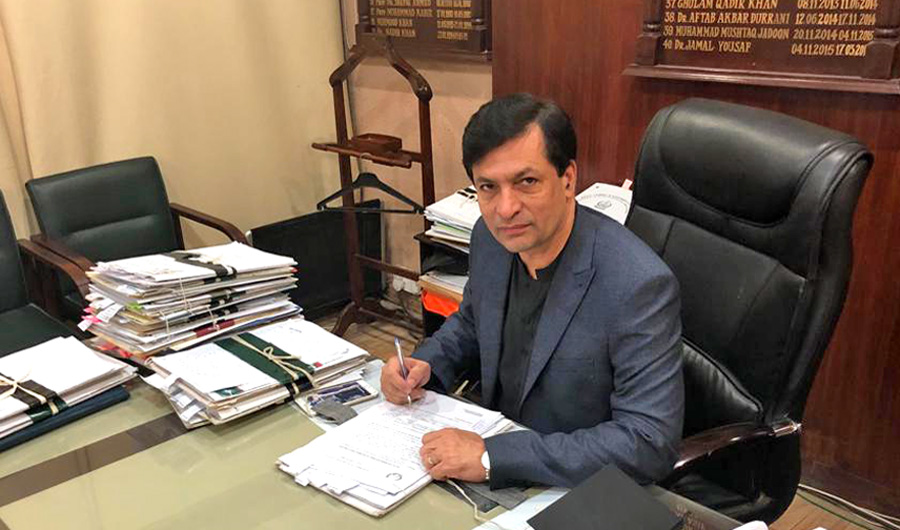
In an exclusive interview with Arab News, KP Health Secretary Farooq Jamil said that the Health Directorate of the erstwhile Federally Administered Tribal Areas (FATA) has been brought under his jurisdiction after the merger with
“One specialist doctor for 30,875 persons, one medical officer or senior medical officer for 8,790 people, one woman medical officer or senior woman medical officer for 89,316 persons and one bed for 2,281 persons,” Jamil said.
A number of health and educational institutions got partially or fully damaged due to the several military operations that were conducted in the tribal areas to flush out militants from the volatile region, bordering Afghanistan. Jamil said that reconstruction of the entire infrastructure is underway in the tribal belt with a special focus on rebuilding hospitals and health facilities as per the special directives of Prime Minister Imran Khan.
Back in 2009, the Pakistani military launched an anti-Taliban offensive, triggering a mass exodus of local families. The ensuing crackdown resulted in the infrastructure of most of the tribal areas’ — specifically, the education and health sectors — getting seriously damaged.
The extent of the damage can be gauged from the facts and figures shared by Insaf Doctors Forum (IDF) set up by the Pakistan Tehreek-e-Insaf (PTI) party.
Dr. Nabi Afridi, president of IDF for the southern region and tribal districts, told Arab News that the region presents a dismal picture in terms of the availability of health facilities. “One doctor is available for 7,670 people, one hospital bed for 2,179 populations, infant mortality rate is 87 deaths per 1,000 live births of both sexes, the maternal mortality rate is 600 per 100,000 live births,” Dr. Afridi said.
He added that the health care facilities are in deplorable conditions because the available facilities were misused by some residents of the area. “Some influential people who have offered land for building health facilities in tribal areas have turned them into their Hujras or guest houses,” he rued.
However, Jamil said that after the repatriation of the tribal families to their hometowns, a number of hospitals have been built in each district, including the Headquarters Hospitals, basic health units, and rural health centers.
Muhammad Ismail, a tribal elder from the South Waziristan tribal region said that the region housed poor health facilities because the previous governments failed to build a single medical college or teaching hospital in the past 70 years. “FATA has just been merged with KP and the process has five years’ timeframe to be completed. The issues pending since the last 70 years cannot be tackled within a few weeks or months but the health sector is getting attention now,” he added.
Following FATA’s merger with KP, Jamil said that the health care system of the tribal region would now function fully as the health directorate now came under the provincial health department. “We’re going to replicate the established KP health system in tribal areas from this January, such as expanding the Insaf Health Card or Sehat Insaf Card facilities to the newly-merged areas bordering Afghanistan,” he added.
“We have a special focus to strengthen the sector and I’m sure we will achieve the target,” he said, adding that the holder of the Sehat Insaf Card would enjoy medical treatment at every government hospital, even as challenges continue to persist such as hiring new medical staff and equipping hospitals with advanced medical facilities. Another focus of the PM Khan’s government is to promote maternal and child health care, with a special focus on building hospitals specifically for the purpose.
Sikander Hayat Mehsud, another elder from the tribal areas, said that the people of his region and elsewhere still have to move patients – in need of major surgeries or treatment — to main hospitals in Peshawar or Multan, which are the two nearest cities to the region. “As the region is ravaged by a decade of war, the government must now swing into action to build health facilities here, because most of them cannot afford to shift their patients to other cities,” he said.
Jamil said that there are three levels of health services such as primary, secondary and tertiary which his administration hopes to build on. “In the next five years, the constitutionally-mandated tenure of the PTI government, we will be able to extend all the three levels of health services to tribal regions,” he said.
Dr. Afridi blamed the previous FATA Secretariat — which oversaw different departments in tribal areas before its merger with KP — for the dilapidated condition of the health sector there. “Imagine, the government miserably failed to build medical colleges or any big hospital here since the country’s independence,” he said.
Earlier, he said, the Frontier Crimes Regulation --- a colonial-era system in FATA --- coupled by bureaucratic red tape were the main hurdles in promoting the health facilities there.
Jamil, on his part, said that he has directed the concerned authorities to collect the data of doctors and other medical staff to streamline the entire health system in the tribal region.


