

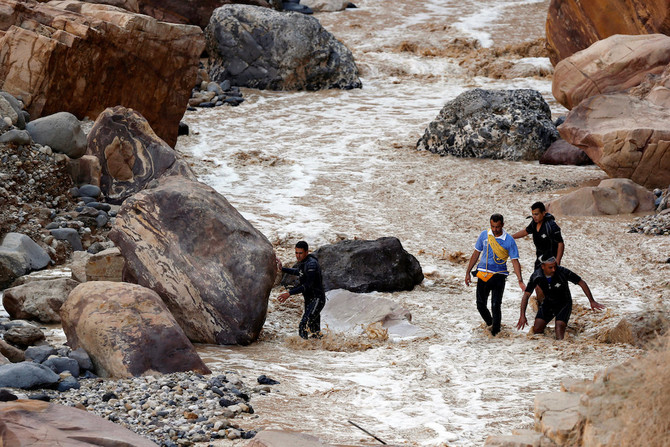

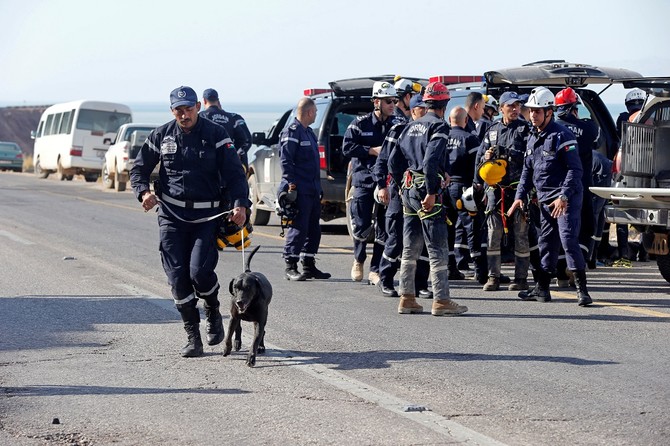


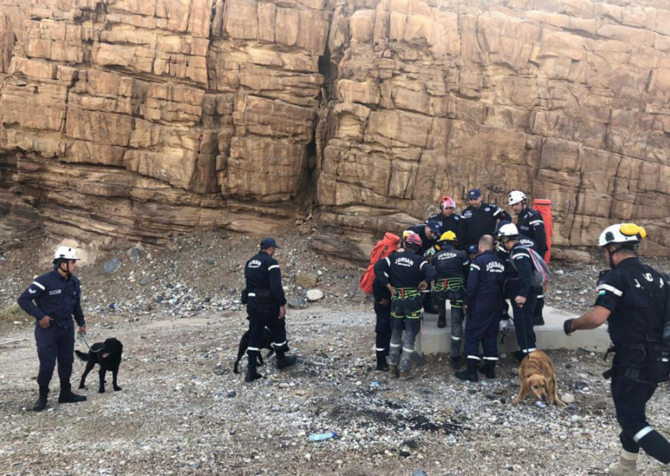


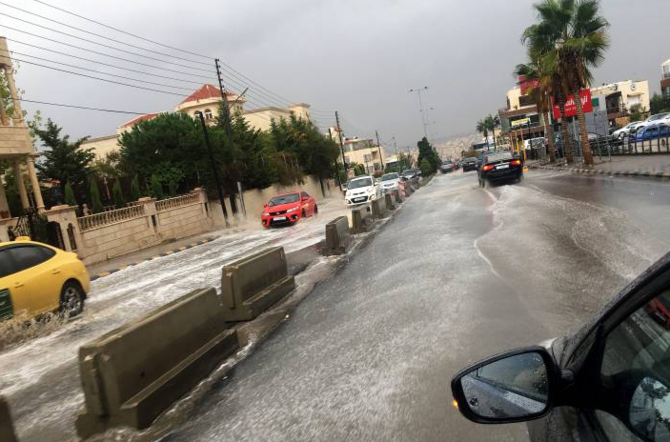


AMMAN: Rescuers combed the shores of Jordan’s Dead Sea resort area early on Friday to find survivors after rain storms unleashed flash floods that killed at least 21 people, most of them school children on a school outing.
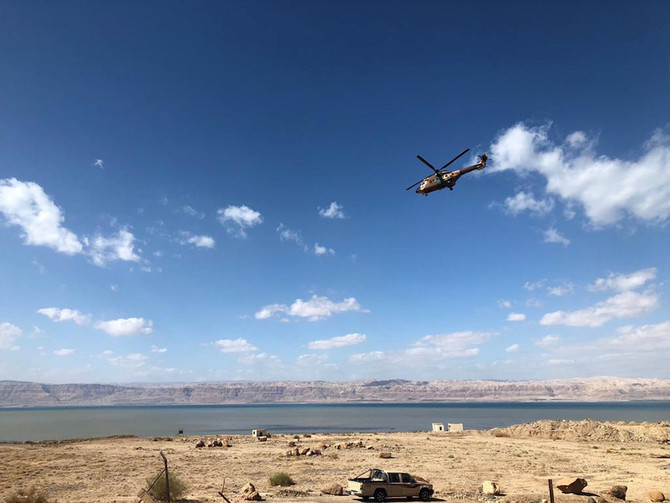
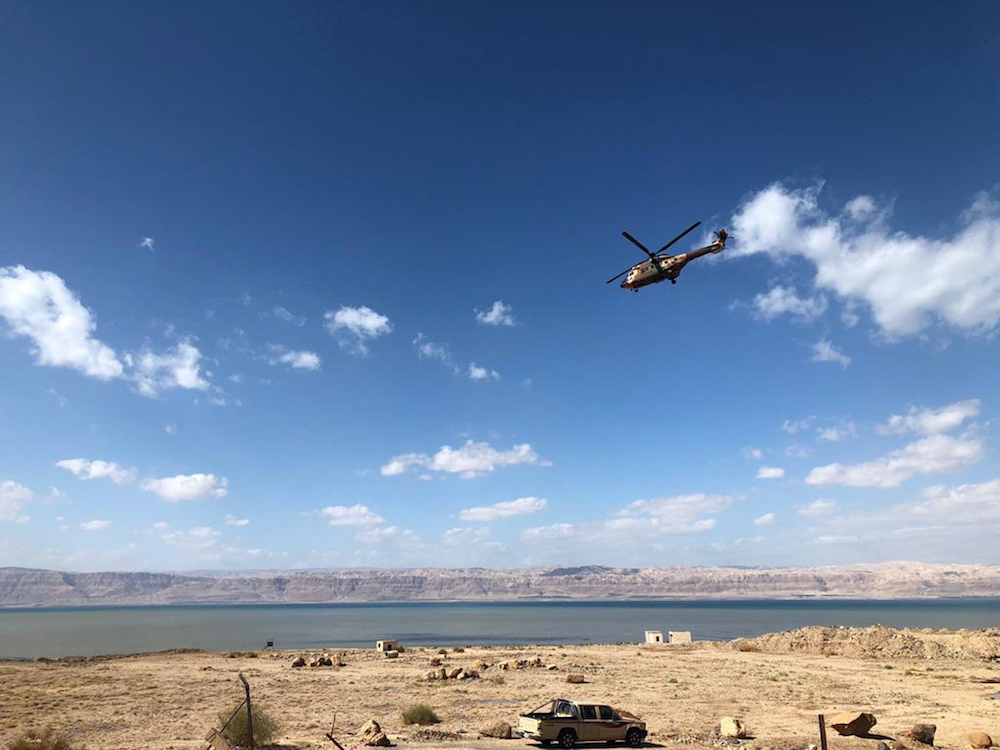
Thirty seven people were rescued in a major operation involving helicopters and army and divers searching for survivors of the floods which swept through valleys to the shores of the area, the lowest point on earth, civil defense sources said.
Police chief Brig. Gen. Farid Al-Sharaa told state television the torrential rains swept away a bus carrying 44 children and teachers who were on a school trip picnicking in the popular destination.
The national flag was lowered to half-mast in mourning as public opinion and politicians began raising questions in local media outlets about the preparedness of national emergencies services to cope with such a disaster.
Jordan’s King Abdullah II said Friday that the extent of his grief and pain cannot be matched except by the anger that he feels towards everyone who was negligent during the flash floods.
King Abdullah II also offered his condolences to Iraq’s leaders after it emerged that two female students of Iraqi nationality were amongst the victims of the flash floods that swept Jordan on Thursday.
Prime Minister Omar Razzaz said it appeared the school had broken regulations by going ahead with the trip which had been banned in the Dead Sea area because of bad weather.
Jordan’s King Abdullah II presided a National Policies Council meeting to discuss the repercussions of the disaster caused by flash floods that took place on Thursday.

An unknown number of people were still missing, hospital sources said.
Jordan’s ministry of health announced Friday that all patients who had been admitted to Shounah hospital with injuries following rain storms in the country have been released after receiving treatment.
The Jordanian ministry of tourism said that none of those missing after the flash floods in the country are foreign tourists.
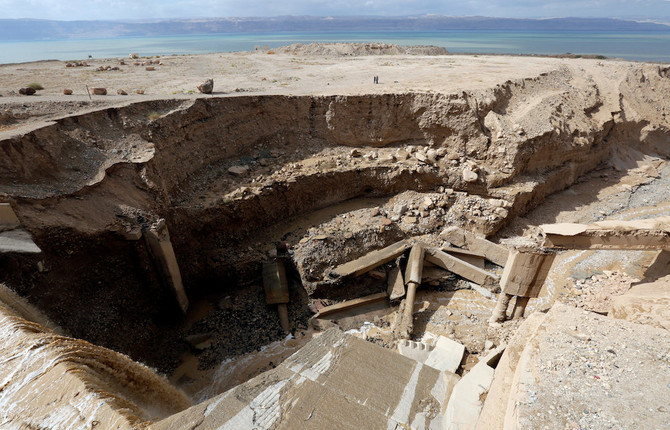
A bridge on one of the cliffs of the Dead Sea had collapsed under the force of the rains, the first such after the end of the summer season.
Families of victims were searching the rugged area after search teams suspended operations overnight for a few hours, a witness said.
18 people killed in #Jordan due to heavy floods as a result of a rain storm. The 18 were school students who were in a school trip in the dead sea area when floods surprised them pic.twitter.com/nIkv6LOWOB
— Saif Bitar (@BitarSaif) October 25, 2018
Many of those killed were children under 14. Families picnicking in the popular destination were also among the dead and injured.
Hundreds of families and relatives converged on Southern Shounah hospital on Thursday, a few kilometers from the resort area. Relatives sobbed and searched for details about the missing children.
A doctor in the hospital emergency room said the “bodies kept on coming.” “Ambulances were coming and leaving, dropping dead people and dropping injured people of different ages. By 7 p.m., we had 10 bodies and 11 injured people,” he said.
#VIDEO: A clip reportedly showing the dramatic rescue of a child during the #JordanFloods on Thursday has gone viral on social media. #Jordan
More on the story here: https://t.co/BNAVKzG75d pic.twitter.com/TkxJ0ui1W1
— Arab News (@arabnews) October 25, 2018
#VIDEO: According to the #IDF, the Special Forces Search & Rescue Units are currently assisting #Jordan in rescuing a bus full of children swept away in a flood on the Jordanian side of the #DeadSea pic.twitter.com/a5TAru4Chw
— Phillip Harbor (@PhillipHarbor) October 25, 2018
Saudi Arabia’s King Salman and Crown Prince Mohammed sent a telegram of condolence to King Abdullah, while Dubai's Ruler Sheikh Mohammed bin Rashid Al-Maktoum also sent a telegram of condolence.
Bahrain’s King Hamad bin Isa Al Khalifa also called King Abdullah II on Friday in order to offer his condolences.
#UPDATE: #SaudiArabia's King Salman and Crown Prince Mohammed bin Salman send their condolences to #Jordan's King Abdullah II following floods that swept through the country #JordanFloodshttps://t.co/lZoEIqwnH5 pic.twitter.com/dbJsFr9Qcz
— Arab News (@arabnews) October 25, 2018
"The students were on a school trip and it appears that a mudslide along the road swept their bus away," the official added.
Israel's military said it was helping with the operation, sending helicopters as well as search and rescue soldiers.
"Currently assisting Jordan in rescuing a bus full of children swept away in a flood on the Jordanian side of the Dead Sea," it wrote on Twitter.
We are currently assisting #Jordan in rescuing a bus full of children swept away in a flood on the Jordanian side of the Dead Sea. IAF helicopters full of IDF search & rescue soldiers have been deployed. pic.twitter.com/6MWXzMt2a2
— Israel Defense Forces (@IDFSpokesperson) October 25, 2018
PM Razzaz rushed to the scene, overseeing part of the rescue operation and visiting the wounded at an area hospital.
As the death toll continued to rise Thursday evening, Jordan's King Abdullah II announced that he canceled a visit to Bahrain, which had been scheduled for Friday.The Jordanian government will open an investigation and hold those responsible for the incident accountable, Minister of State for Media Affairs Jumana Ghunaimat said. “It is clear that there is a violation; the school that organized the trip did not abide by public safety regulations which stipulate that students must not swim and must be kept away from waterways,” she said.
The school, Victoria College in Amman, had approval for a trip to Al-Azraq, an eco-tourism destination in Jordan’s eastern desert, not to the Dead Sea, Ghunaimat said.
The Dead Sea, the lowest point on the earth, is surrounded by steep valley slopes that frequently witness flash floods and landslides.“Everyone who is proved to have committed a violation and did not do their part will be held to account.”
An angry crowd of students’ families and other relatives surrounded the school premises in Talaa Al Ali in Amman, demanding that the school be held accountable for the tragedy.


