- Around 28,000 troops of army and Rangers will guard the polling stations as more than 9.2 million voters cast votes
- Political analysts say PTI enjoys an edge in current by-polls
ISLAMABAD: Polling for 11 National Assembly and 24 provincial assembly seats has kicked off across the country and will continue till 5 p.m. without any break, setting up a major contest between candidates of two rival political parties — Pakistan Tehreek-e-Insaf (PTI) and Pakistan Muslim League-Nawaz (PML-N).
According to the Election Commission of Pakistan (ECP), more than 9.2 million registered voters will use their right to vote.
A total of 7,489 polling stations have been set up and more than 28,000 Pakistan army and Rangers troops deployed to deal with any trouble.
A total of 372 candidates are contesting the 35 seats; the 11 National Assembly seats comprise nine in Punjab and one each in Sindh and Khyber Pakhtunkhwa.
The 24 provincial assembly slots include 11 provincial assembly seats in Punjab, nine in Khyber Pakhtunkhwa (KP) and two each in Sindh and Balochistan provinces respectively.
The PTI, along with its allies, enjoys a majority in the National Assembly with 176 politicians against the opposition parties including the PML-N, Pakistan People’s Party (PPP) and others which hold 154 seats in a 342-member House.
Political analysts say it is important for the PTI to win at least seven National Assembly seats out of the 12 in the by-elections to maintain its comfortable majority in the House. They say the ruling party’s dependence on its coalition partners, especially Muttahida Qaumi Movement-Pakistan (MQM-P), will end to implement its reforms agenda as promised to voters.
Out of 12 vacant seats in the National Assembly, elections are being held on 11 seats and a by-election on a seat vacated by President Dr. Arif Alvi will be held on Oct. 21. Of the remaining 10 seats, seven were won by the PTI and two by its coalition partner, the PML-Q. Only one of the seats previously belonged to the PML-N.
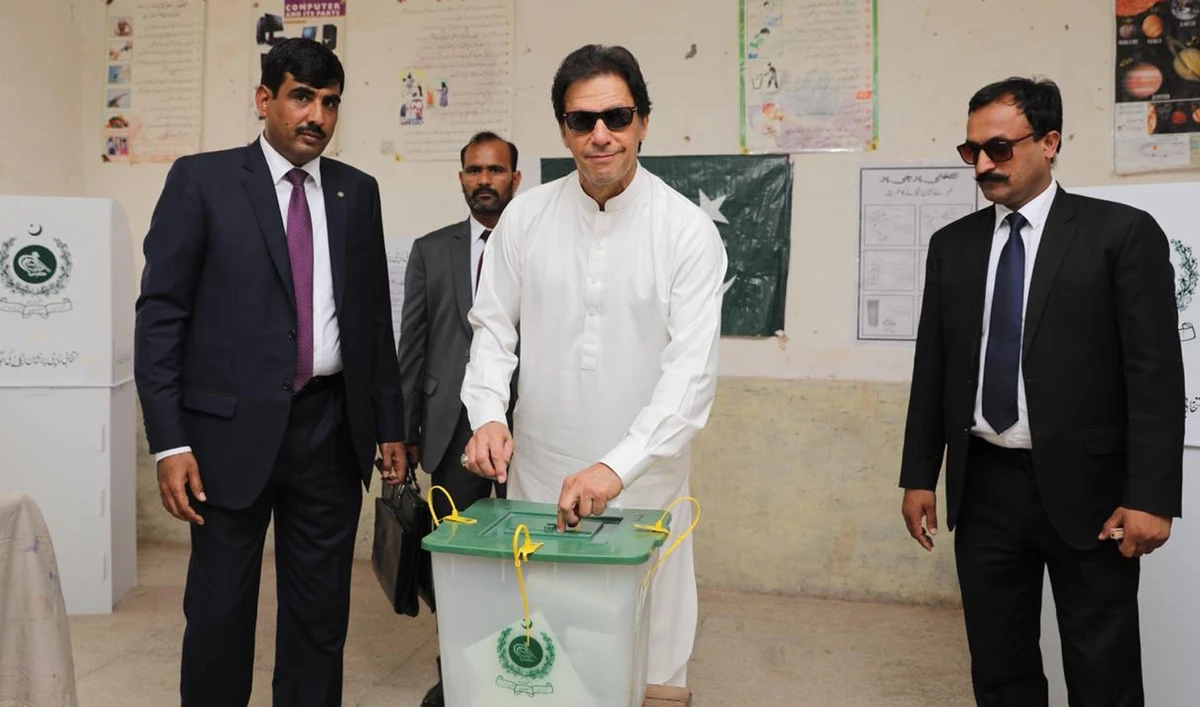
Of the six seats won by the PTI but which are now up for grabs, four were won by Prime Minister Imran Khan alone, and one each by Tahir Sadiq and Ghulam Sarwar. Both PML-Q seats were won by Chaudhry Pervez Elahi, who relinquished them to become Speaker of the Punjab Assembly.
The PML-N seat was won by Hamza Shehbaz Sharif, who relinquished it to keep his seat in the Punjab Assembly. He is currently the opposition leader in that house.
In an effort to give the PTI-led incumbent government a difficult time, the PPP and PML-N earlier this month announced that they would field joint candidates in the by-elections. But later, no party withdrew its candidates.
“We are going to win nine seats in the National Assembly out of 11 in the by-elections,” Federal Information Minister Fawad Chaudhry told Arab News. “PTI will retain not only its six relinquished seats but also win three more seats in the National Assembly along with its allies, especially the PML-Q.”
On the other hand, the PML-N may struggle to win at least three National Assembly seats -– two in Lahore and one in Faisalabad. The PML-N leader and ex-premier Shahid Khaqan Abbasi is standing against the PTI’s Ghulam Mohiuddin Dewan, a relatively unknown candidate, and former Railways Minister Khawaja Saad Rafique against the PTI’s business tycoon Humayun Akhtar Khan.
“We are giving a tough time to the PTI and hopefully will win a majority of the seats, provided no rigging takes place,” the PML-N’s secretary information Senator Mushahidullah Khan told Arab News.
Likewise, both the PTI and PML-N are doing their best to win maximum seats in the Punjab Assembly, where the PTI enjoys a small majority. A total of 11 seats of Punjab Assembly are up for grabs in the by-elections.
The PTI along with its ally, the PML-Q, enjoys the support of 186 lawmakers against the opposition’s 170 members, while two members are independent in the House.
Tahir Malik, an academic and political analyst, said that the ruling PTI would continue to have a majority in both the National and Punjab Assemblies along with its coalition partners irrespective of the by-polls’ results.
“The opposition parties can give a tough time to the PTI only in two cases — if all its coalition partners in the center and Punjab quit its support or a major dissident group emerges within it,” he told Arab News.
Malik said the PTI was expected to win a majority in the National Assembly and provincial assemblies’ seats in the by-polls as people generally tend to vote for the candidates of the ruling party.
“The PTI is currently in a strong position in the center, Punjab and Khyber Pakhtunkhwa provinces and faces no challenge,” he said. “It may face fissures within the party and lose public support after two to three years in the government.”