

Pakistani man breaks Kung Fu world record

1 / 6
(Photos by Irfan Mehsud)
2 / 6
(Photos by Irfan Mehsud)
3 / 6
(Photos by Irfan Mehsud)
4 / 6
(Photos by Irfan Mehsud)
5 / 6
(Photos by Irfan Mehsud)
6 / 6
(Photos by Irfan Mehsud)
Updated 29 August 2018
Follow

Pakistani man breaks Kung Fu world record

  • Taliban, poverty, lack of facilities no bar for 28-year-old Mehsud
  • During its previous term, the PTI-led government had built several sport stadiums in major districts in Khyber Pakhtunkhwa

DERA ISMAIL KHAN: Everybody was Kung Fu fighting, but Mehsud was fast as lightning. 

Enough reason for the Guinness World Records (GWR) and the Pakistan Book of Records (PBR) to confer him with two top awards. 

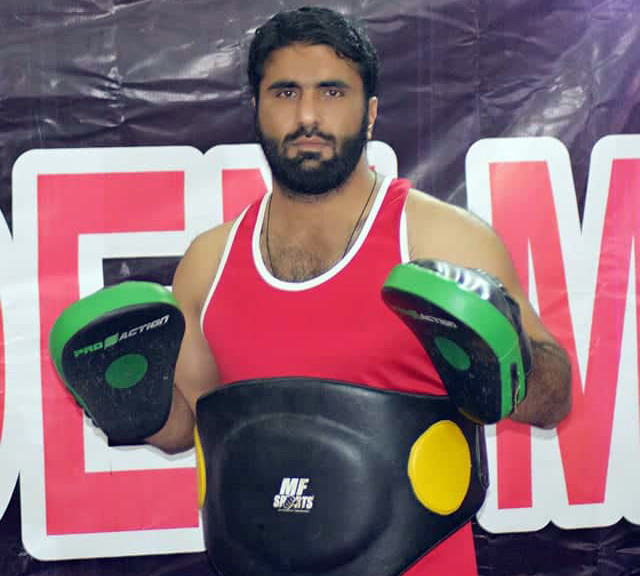
At a time when Pakistan was in the grip of militancy and extremist violence, Muhammad Irfan Mehsud, 28, went on to win laurels for the country -- once in October 2016 and the second time in July this year -- after the GWR recognized him for breaking 16 world records. The PBR followed through by awarding him the Pride of Pakistan title on February 11.

An MPhil student from Gomal University in Dera Ismail Khan, Mehsud stands tall at 5ft 8in and is the second son in a family of nine. 

The family belongs to Ladha, a scenic town nestled in the war-torn region of South Waziristan, close to the porous Pakistan-Afghan border.

In 2009, soon after the military launched an offensive to clear the area of militants, Mehsud, along with his family, had to leave his hometown and move to Dera Ismail Khan, another district in South Waziristan. 

In an interview with Arab News, Mehsud credits Hollywood actor Jackie Chan for being his inspiration to excel in the sport.

“I don’t have a proper training camp but his [Jackie Chan’s] charismatic skills keep me going,” he said. 

His day begins at sunrise where he exercises and trains for three hours. However, unlike other athletes who rely on a special diet for strength and prowess, Mehsud says he has to make do with whatever is cooked at home due to an extremely low family income and inflated cost of groceries. 

Najam Ullah, Kung Fu general secretary of Khyber Pakhtunkhwa and a senior player, says Mehsud was able to achieve the world records due to his unstoppable dedication and hard work, adding that he hopes the young Pakistani can continue to bring more laurels to the country.

“I am really proud that we have a player of international stature [like Mehsud] who bolstered the image of Pakistan among the comity of nations. I appreciate his ceaseless efforts to achieve world records because he hails from an underdeveloped and militancy-hit region,” he said. 

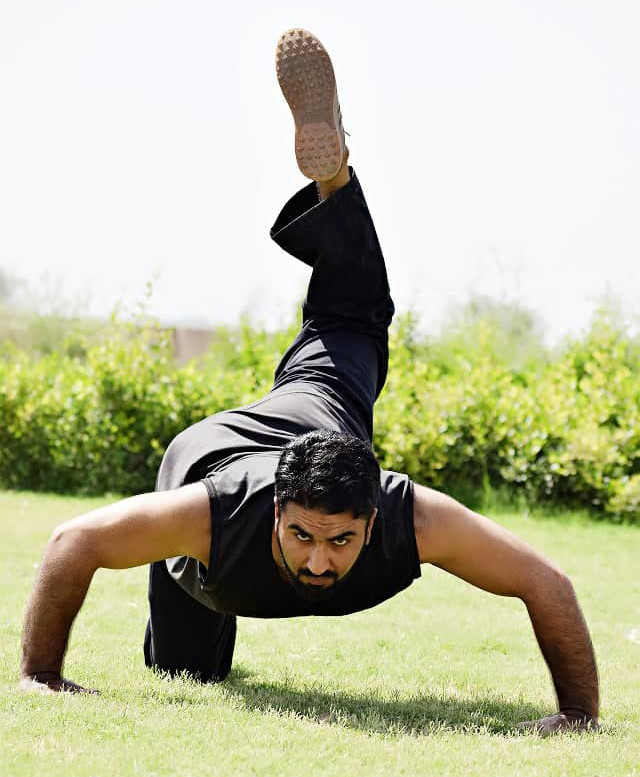
Some of the records that the GWR has recognized Mehsud for include: 87 full contact knee strikes in one minute using one leg, breaking the previous record of 79 strikes; 26 knuckle pushups (carrying a 40-lb pack) in one minute, breaking the previous record of 22 pushups and 21 pushups (with one leg raised and carrying an 80-lb pack) in one minute, breaking a record of 17 set earlier. He secured all these feats between July 2016 and April 2018. 

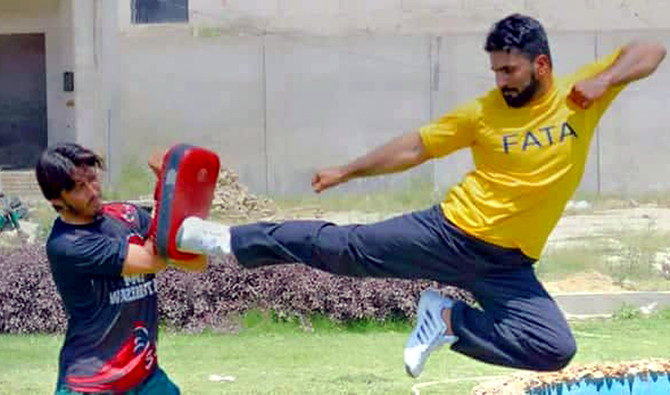
“I broke the record of an Indian Kung Fu player N. Narayanan who managed 52 side jumps in 30 seconds while I performed 56 in the same period of time,” Mehsood said. A fact cemented by the GWR which highlights Mehsud’s achievements on its official website.

He also broke the record of another Pakistani player, Amin Ahmad Bodla, from the Punjab province. Bodla held the record of 79 strikes in one minute while Mehsud achieved 87 strikes in the same period of time. 

Mehsud -- who has been credited for introducing Wushu Kung Fu to the region -- is now looking at the upkeep of the first Kung Fu Club in South Waziristan, after gauging the popularity of the sport in the area. More than two dozen players are being trained in the sport at the premises.

“We run the club under a shabby roof and with temporary arrangements, without any help from the government. We have 22 fresh players in the club, where there is an acute need of proper kits, uniforms and other equipment,” Mehsud said. 

Despite financial constraints and the absence of a proper sports facility, Mehsud says he is hopeful the provincial sports minister can encourage local talent by building a martial arts academy in the near future. 

During its previous term, the PTI-led government had built several sport stadiums in major districts in Khyber Pakhtunkhwa. However, the volatile tribal region, known as the Federally Administered Tribal Areas – now a part of the Khyber Pakhtunkhwa province -- bore the brunt of extremism resulting from the Taliban’s rule, triggering a mass exodus of local families to other areas of the country. The displaced families have now been repatriated to their hometowns after the military gained ground. 

That however didn’t stop the local talent, like Mehsud, from realizing their dream. He says he now aspires to represent the country at an international level and train other players in the sport, so that one day Pakistan, too, can achieve global recognition. “I exercise at a rented facility in Dera Ismail Khan and train young boys there, too. I hope the government will extend its support to promote the sport. Kung Fu can help in projecting a softer image of the country and show another side of Pakistan,” he said. 

Najam Ullah concurs. “The country’s tribal region has unprecedented talent and the government should provide security and sports facilities to the younger generation to tap into that.”


Pakistani economists flag debt sustainability risks as foreign loans surge in FY26

Updated 5 sec ago
Follow

Pakistani economists flag debt sustainability risks as foreign loans surge in FY26

  • Pakistan received $2.98 billion from bilateral, global lenders from July to November this year, official data shows
  • Economists urge government to take structural reforms to boost exports, cut energy costs, ensure rupee stability

KARACHI: Pakistani economists on Wednesday warned the government against debt sustainability risks as the country’s foreign loan receipts surged to nearly $3 billion in the first five months of the current fiscal year, data from the economic affairs ministry showed. 

Pakistan received 16 percent more financing, which is $2.98 billion, from bilateral and multilateral lenders during the July to November period of the current fiscal year compared to last year, the economic affairs’ ministry data showed. 

Pakistan, as per the data, seeks to raise $19.8 billion in loans this year through June, which include $16.7 billion non-project and $3.11 billion project loans from multilateral lenders such as the Asian Development Bank (ADB), Asian Infrastructure Investment Bank (AIIB), Islamic Development Bank (IsDB), European Union (EU), European Investment Bank (EIB), UNICEF and others. 

Pakistan’s bilateral lenders include the countries of China, Saudi Arabia, Kuwait, Oman, the US, Denmark, France, Germany, Italy, Japan and South Korea

“As long as you are utilizing the loan for economic recovery and growth, it is understood,” Sana Tawfik, head of research at the Karachi-based brokerage firm Arif Habib Limited, told Arab News.

“But in the long term, it is not sustainable to rely only on loans. Foreign reserves should be built on FDI [foreign direct investment] and not on loans,” she added. 

Pakistan’s finance adviser Khurram Schehzad and finance ministry spokesperson Qamar Sarwar Abbasi did not respond to requests for comment.

Cash-strapped Pakistan came close to a sovereign default in 2023 before a last-gasp financial bailout by the International Monetary Fund (IMF) averted the risk. 

While Pakistan has lowered inflation and registered other economic gains, the country’s $15.9 billion foreign reserves mostly come from the IMF in budgetary support and bank deposits from countries such as Saudi Arabia and China.

The cash-strapped country will seek $13.5 billion in budgetary support, $700 million in short-term loans from the IsDB, $1.44 billion as program loans, $1 billion worth of oil on deferred payments and $3.11 billion as project loans by June, the data said. 

Prime Minister Shehbaz Sharif’s government also plans to raise $400 million through issuing international bonds, $3.1 billion in loans from foreign commercial banks, $410 million from the IMF, $609 million through Naya Pakistan Certificates (NPCs) and $5 billion as time deposits from Saudi Arabia, and $4 billion as safe deposit from China.

“Long-term solution is not to take loans and this only adds up to the existing external account,” Tawfik said. 

She, however, appreciated the government’s ability to reduce its current account deficit in recent months. The economist noted that Pakistan, in the short run, could manage its current account deficit if it remains in the $1.5 billion range throughout the year.

She urged the government to focus on increasing exports, noting its debt servicing requirement was $25.8 billion this year.

Tawfik called for long-term reforms such as reducing the cost of doing business, cutting energy costs, clearing Pakistan’s longstanding power sector debt and keeping the rupee stable to attract increased remittances from Pakistanis working abroad.

“In the long run, we must focus on increasing Pakistan’s exports, remittances, and FDI,” the economist said. “FDI is the most important.”

‘OBVIOUSLY A RISK FACTOR’

However, neither are Pakistan’s exports on the rise nor is FDI. Pakistan’s current account deficit widened by 37 percent to $16 billion from July to November this year. This was due to a 6.4 percent decline in exports to $12.8 billion and a 13 percent hike in imports to $28 billion, data from the Pakistan Bureau of Statistics (PBS) showed. 

FDI dropped by more than 25 percent to $927 million during the same period and has never surged beyond $3 billion in nearly 20 years, data from Pakistan’s central bank shows. 

“Our debt sustainability will be questioned at any point if we, going forward, are not able to match these debt flows or counter these debt flows with growth and remittances and exports,” Muhammad Saad Ali, head of research at Lucky Investments Ltd, told Arab News. 

He noted that debt sustainability is “obviously a risk factor” as Pakistan has not increased its FDI nor exports during the period when its foreign debt has increased.

However, he said that there was a positive side to the 16 percent rise in foreign debt receipts as well, adding that recent macroeconomic improvements have enabled Islamabad to borrow more from global lenders. 

But the risks remain. 

“You (government) are increasing your debt and your debt sustainability will come into question again if global factors or global environment turn south,” he warned.