

Houthis ‘putting pressure’ on UN aid organizations in Yemen

1 / 6
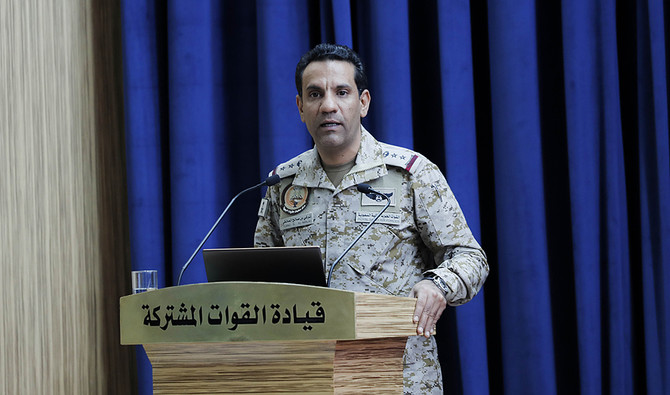
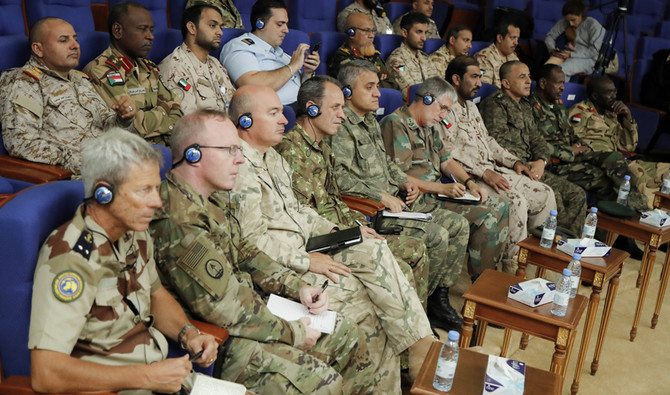
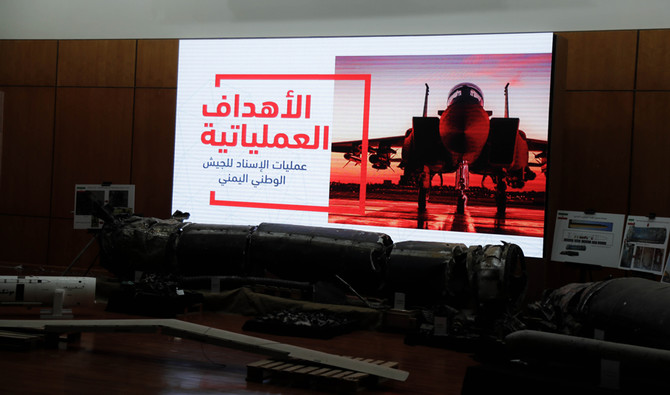
The Arab coalition fighting in Yemen accused the UN of “biased” reports on air strikes that allegedly killed 26 children in rebel-held parts of the country. (AN Photo/Basheer Saleh)
2 / 6
The Arab coalition fighting in Yemen accused the UN of “biased” reports on air strikes that allegedly killed 26 children in rebel-held parts of the country. (AN Photo/Basheer Saleh)
3 / 6
The Arab coalition fighting in Yemen accused the UN of “biased” reports on air strikes that allegedly killed 26 children in rebel-held parts of the country. (AN Photo/Basheer Saleh)
4 / 6
The Arab coalition fighting in Yemen accused the UN of “biased” reports on air strikes that allegedly killed 26 children in rebel-held parts of the country. (AN Photo/Basheer Saleh)
5 / 6
The Arab coalition fighting in Yemen accused the UN of “biased” reports on air strikes that allegedly killed 26 children in rebel-held parts of the country. (AN Photo/Basheer Saleh)
6 / 6
The Arab coalition fighting in Yemen accused the UN of “biased” reports on air strikes that allegedly killed 26 children in rebel-held parts of the country. (AN Photo/Basheer Saleh)
Updated 27 August 2018
Follow

Houthis ‘putting pressure’ on UN aid organizations in Yemen

  • Al-Maliki urges UN bodies not to remain silent over Houthi violations
  • Saudi air defenses shoot down another missile fired toward Jazan

JEDDAH: The Arab coalition on Monday accused the Houthi militia of putting “pressures” on UN humanitarian organizations operating in Yemen.
Spokesman Col Turki Al-Maliki called on them not to remain silent on abuses committed by the the Iran-backed militants.
“We call on UN organizations in Yemen to be neutral and not tolerate violations,” he said, at e news conference in Riyadh.
The coalition is fighting in support of forces loyal to the internationally recognized government against the Houthis, which seized the capital Sanaa in 2014.
The UN, which has several of its aid agencies operating in the country, has called peace talks for next month.
But Al-Maliki said the coalition was surprised by some of the statements made by UN officials, who he said have taken wrong stances based on “false allegations.”
He referred to an attack on a fish market and hospital in Hodeidah earlier this month, which the coalition said was carried out by the Houthis. At least 55 civilians were killed and 170 injured.
Al-Maliki also said the UN failed to respond to accusations that the Houthis had seized control of warehouses used by an international aid organization. 
He said Yemen’s humanitarian ports are operating at full capacity and that air, land and sea permits are granted continuously, especially to aid relief vessels.
The Houthis have fired eight ballistic missiles toward Saudi Arabia in recent days, five of which were during the Hajj pilgrimage. 

On Monday, another ballistic missile was launched by the Houthis from Saada province in Yemen toward Jazan, in Saudi Arabia. The Royal Saudi Air Defense managed to intercept the missile and no injuries were reported, Al Maliki said. 

Al-Maliki said the Houthis are using prisons to train militants and schools and hospitals for military purposes.
“We continue to neutralize ballistic missile launchpads belonging to the militias,” Al-Maliki said. 
Last week the coalition destroyed a SAM-6 air defense system operated by the Houthi militias in Sanaa.
He also said the Yemeni national army has made a major advance in the province of Al-Bayda.


Iraq executes a former senior officer under Saddam for the 1980 killing of a Shiite cleric

Updated 56 min 33 sec ago
Follow

Iraq executes a former senior officer under Saddam for the 1980 killing of a Shiite cleric

  • Al-Sadr was a leading critic of Saddam’s secular Baathist government whose dissent intensified after the 1979 Islamic Revolution in Iran
  • The cleric’s execution in 1980 became a symbol of oppression under Saddam

BAGHDAD: Iraq announced on Monday that a high-level security officer during the rule of Saddam Hussein has been hanged for his involvement in the 1980 killing of a prominent Shiite cleric.
The National Security Service said that Saadoun Sabri Al-Qaisi, who held the rank of major general under Saddam and was arrested last year, was convicted of “grave crimes against humanity,” including the killing of prominent Iraqi Shiite cleric Mohammed Baqir Al-Sadr, members of the Al-Hakim family, and other civilians.
The agency did not say when Al-Qaisi was executed.
Al-Sadr was a leading critic of Iraq’s secular Baathist government and Saddam, his opposition intensifying following the 1979 Islamic Revolution in Iran, which heightened Saddam’s fears of a Shiite-led uprising in Iraq.
In 1980, as the government moved against Shiite activists, Al-Sadr and his sister Bint Al-Huda — a religious scholar and activist who spoke out against government oppression — were arrested. Reports indicate they were tortured before being executed by hanging on April 8, 1980.
The execution sparked widespread outrage at the time and remains a symbol of repression under Saddam’s rule. Saddam was from Iraq’s Sunni minority.
Since the 2003 US-led invasion of Iraq, authorities have pursued former officials accused of crimes against humanity and abuses against political and religious opponents. Iraq has faced criticism from human rights groups over its application of the death penalty.