


LONDON: Amsterdam is a city famed for its embrace of liberal hedonism. But scratch beneath the surface of its red-light district and coffee-shop culture, and the capital of The Netherlands can be an enthralling destination for halal travellers.
The vast majority of Amsterdammers are non-religious. This means, intriguingly, that the city’s largest religious group is in fact Muslims, and as a result Amsterdam is surprisingly welcoming for Muslim travellers seeking a European city getaway.
Three of the largest immigrant communities in Amsterdam hail from Morocco, Turkey and Indonesia. This has given rise to a delightful Dutch-Muslim culture that enhances this iconic city’s reputation for picture-postcard canals, classic dutch architecture, fascinating museums and art galleries, all framed by a mass of bicycles, narrowboats and trams. In fact, those willing to step off the beaten track will discover Amsterdam harbors some serious hidden Muslim travel gems.
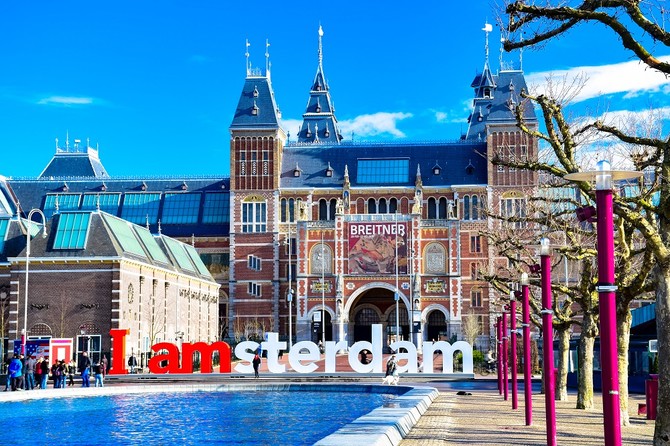
The stunning Rijksmuseum, for example, is home to an intriguing 16th-century artifact from the Dutch Revolt, when Calvinist Holland fought for independence from the Catholic Spanish Empire. This ‘Geuzenpenning’ is a medal of the revolution’s naval forces, designed as a half-moon with the inscription ‘Liver Turcx dan Paus’ (Rather Turkish than Papist), revealing the admiration the Dutch had for the Muslim Ottoman (Turkish) empire that helped them during the revolution. In fact, some reports say that when Dutch revolutionaries breached a siege in Leiden they entered carrying Ottoman flags, and at another, in Sluis, Maurice of Orange freed 1,400 Muslim slaves held captive by the Catholics.
The medal is indicative of a longstanding Dutch interest in Islam, which has seen the religion and Arabic taught at Leiden University since 1586 and the Holy Qur’an first translated into Dutch in the 1600s. The medal will be part of the “80 Years War” exhibit later this year.
The Rijksmuseum is also home to a stunning collection of paintings by the Flemish-French artist Jean Baptiste Vanmour depicting life in the 18th-century Ottoman courts. Room 1.3 hosts a series of detailed imperial scenes, views across Istanbul and individual figures of Grand Viziers, Dervishes and many more.
Amsterdam’s Ottoman influence is most clearly seen at the Westermoskee Ayasofya camii (Western Mosque Aya Sofya). Everything about this monumental mosque in Amsterdam-West screams classical Ottoman. This stunning piece of architecture of historic imperial proportions — its 1,700 capacity is the largest in the Netherlands — aims to replicate the mosques built by masters like the great Ottoman architect Mimar Sinan. Designed by the French-Jewish couple, Marc and Nada Breitman, it sits picturesquely on the banks of the Schinkel Canal. The Westermoskee boasts a 42-meter-high minaret, a 25-meter-high central dome and nine smaller domes that create a stunning colonnade over the main entrance. It is a dreamy, regal mirage of a place you feel you’ve seen scattered all over former Ottoman lands.
For a more up-to-date taste of Amsterdam’s embrace of Islamic culture, head to Kinkerstraat, just a few minutes walk from the Westermoskee. As local Amsterdam-West resident Lara Mazurski explained, it’s “the coolest place, where all the local Mipsters hang out.”
“It’s just buzzing in the evenings when the young Muslim boys and girls go to the gourmet food joints and hang out in the sheesha bars, especially during Ramadan. We love living around here,” Mazurski told me.
Kinkerstraat is a short tram ride out of central Amsterdam. It’s home to some of the coolest halal hangouts around, including the renowned Monopoly Burger and the Hookah Lounge, which is open late serving flavored hubbly-bubbly pipes and mocktails.
But Amsterdam’s phenomenal mix of Muslim migrants means that, even away from these hotspots, the city is blessed with diverse Halal cuisine and numerous places of worship, including the Fatih Mosque — housed in a stunning 17th-century Jesuit Church, where you pray in a Gothic nave that belongs, well ... in a church. A surreal experience, much like a visit to the hedonistic yet halal Dutch capital.


