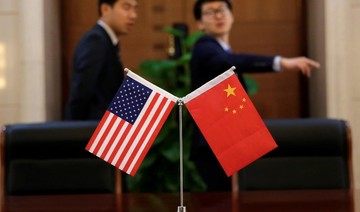
WASHINGTON: US President Donald Trump on Friday said he was ready to impose tariffs on all $500 billion of imported goods from China, threatening to escalate a clash over trade policy that has unnerved financial markets.
“We’re down a tremendous amount,” Trump said in an interview about trade imbalances with China on CNBC television broadcast on Friday. “I’m ready to go to 500.”
His comments worried investors already grappling with the impact of a strengthening US dollar on corporate results, and key stock indexes on Wall Street dropped at the open on Friday.
The US dollar fell against major currencies on Friday on Trumps threat to impose more import tariffs and his repetition of complaints about rising interest rates and the strength of the US dollar.
The dollar index, a measure of its value against a basket of six major currencies, was on track to post its largest one-day loss in three weeks. Against the yen, the dollar was on pace for its worst daily fall in two months.
A top Federal Reserve official, meanwhile, warned the trade war could hurt the US economy.
Around $505 billion of Chinese goods were imported to the US in 2017, leading to a trade deficit of nearly $376 billion, US government data shows. Chinese imports from the US totaled $205 billion in the first five months of 2018, with the deficit reaching $152 billion.
Trump is taking a more aggressive, protectionist posture on trade than his recent predecessors, sparking retaliatory measures from other countries. Earlier this month, the United States imposed tariffs on $34 billion of Chinese imports. China promptly levied taxes on the same value of US products.
When asked about the stock market possibly falling if the United States imposes duties on such a large amount of goods, Trump told CNBC: “If it does, it does. Look, I’m not doing this for politics.”
Still, new tariffs could help Trump’s Republican party going into November’s congressional elections. More than 70 percent of Republican and Republican-leaning US adults believe increased tariffs between the United States and its trading partners will be good for the country, according to a Pew Research Center survey released late Thursday.
However, most economists warn that the imposition of import tariffs could disrupt global manufacturing supply chains, raise input costs and raise prices for consumers, leading to slower economic growth.
After the interview, Trump reiterated criticism of the Federal Reserve’s planned interest-rate hikes, posting on Twitter that the tightening policy would diminish any US trade advantage and exacerbate losses from “BAD trade deals.”
St. Louis Federal Reserve Bank James Bullard said on Friday the Fed would remain unaffected by Trump’s comments on monetary policy and expressed concerns about rising tariffs.
“The escalating trade war, if it goes badly, could be a risk for the US economy,” Bullard said, adding he understands the policy’s objective. “But it could be that all we end up with is a lot of tariffs globally and a lot of other types of protectionism globally.”


![]()

Trump threatens tariffs on all $505 billion of Chinese imports
Trump threatens tariffs on all $505 billion of Chinese imports
- Trump says he is willing to hit all Chinese goods imported to the US with tariffs if necessary
- China accuses the US of starting the ‘largest trade war in economic history’

Latest updates





© 2026 SAUDI RESEARCH & PUBLISHING COMPANY, All Rights Reserved And subject to Terms of Use Agreement.