JARABLUS, Syria: When Hikmat’s mother managed to sneak back into their home city of Aleppo, now controlled by government forces, she found a single word spray-painted in red on their house: “Confiscated.” Same with the family store and another house. Their farm, south of the city, is probably lost to them as well, in territory recently recaptured by Syrian forces.
This is the new reality for displaced Syrians who supported the armed opposition challenging President Bashar Assad or who lived in areas once held by the opposition. Now driven elsewhere, they face the prospect that they may never be able to return.
Around half of Syria’s pre-war population of 23 million has been uprooted — the overwhelming majority of them Sunni Muslims, who were among the first to rise against the government in 2011. Nearly 6 million fled abroad, while 6.6 million are displaced within Syria.
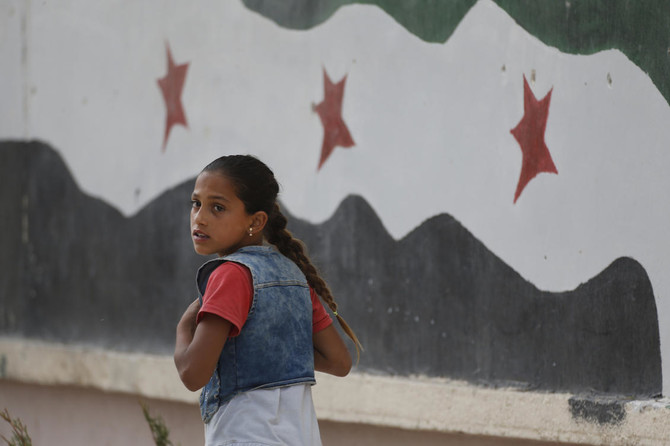
Roughly a third of the displaced are crammed into areas that remain outside government hands in northern Syria: rebel-held Idlib province and a neighboring Turkish-controlled enclave. Thrown together from different parts of the country, they have to adjust to a strange new hybrid society where former city dweller and former village farmer, uneducated and educated, liberal and conservative now live side by side in tent camps or rented homes, with different accents, cuisines and customs.
They all share the realization that this may be their future.
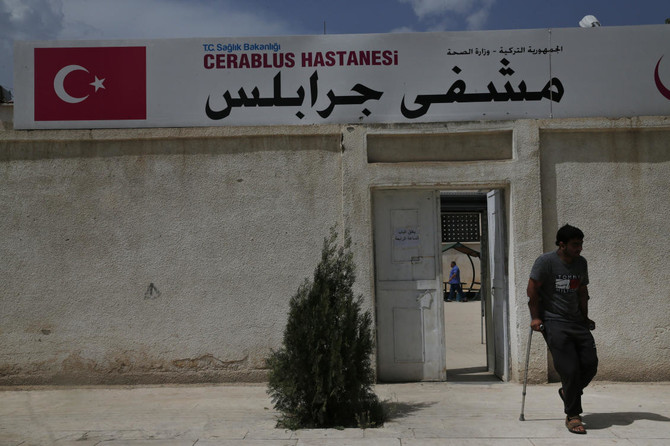
“I see this as a long-term thing. It is not a year or two and we will return. No!” Hikmat said, speaking recently in Jarablus, a Turkish-administered town in northern Syria. “All (our properties) are gone.”
He spoke on condition he be identified only by his first name to protect his family, because some relatives can still access government-held areas.
As the government regains control of opposition areas further south, the number of displaced constantly grows. UN officials say 2018 has seen the largest wave of displacement since the war began in 2011. The government has called on those who left homes to return, but the military victories are often followed by revenge attacks and unilateral confiscation of properties by government militias.
Separately, a new property law, known as Law 10, allows the government to expropriate properties it deems abandoned in areas zoned for development. Expropriations under the law haven’t begun, but already the government has zoned off recaptured suburbs of Damascus for redevelopment, meaning many homes would be vulnerable because residents are gone, mostly to the north.
That has triggered accusations the law is part of a design to socially engineer a new Syria, a charge the government denies.
“This law is not about dispossessing anyone,” Assad said in an interview in May with the Greek newspaper Kathimerini. He said opponents were trying “to create a new narrative about the Syrian government in order to rekindle the fire of public opinion in the West against the Syrian government.”
Broad outlines of demographic shift are clear.
The government now holds just over 60 percent of Syria’s territory, and there are still Sunnis in those areas, though there are no firm figures how many. But the Sunni population has been greatly reduced in the heartland of Syria — the Mediterranean coast and the belt of the most prosperous, cosmopolitan urban areas, running from Aleppo in the north down to Damascus. In the process, the government reinforced its support base, traditionally among minorities who depend on Assad.
Hikmat, who was once a radiologist, said he believed his house in Aleppo was seized by government supporters known as “shabiha” in revenge because, in 2012, when his part of the city broke away from the government, opposition fighters defeated the local shabiha militia and confiscated its commander’s property.
Since fleeing Aleppo in 2016 as government forces retook rebel-held sections of the city, Hikmat has had to move twice more before ending up in Jarablus. Some displaced have had to move as many as two dozen times, getting further from their homes.
Now Hikmat is dealing with life in the territory he and other displaced refer to as the “rural north,” almost as if it’s a new province.
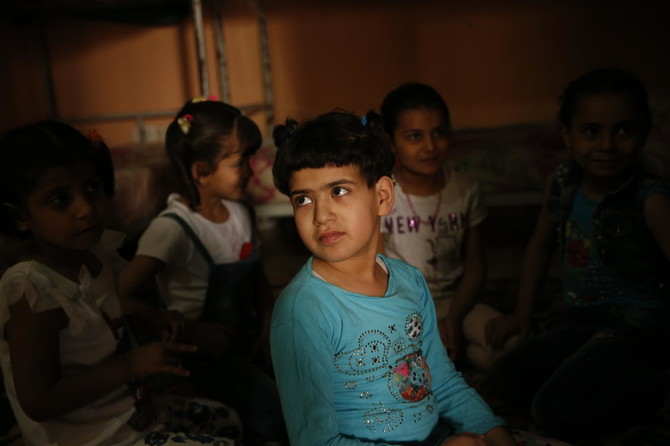
He lamented the loss of cosmopolitan Aleppo. His clinic was in one of the city’s posh neighborhoods, his boss was an Armenian, his colleagues Christians. In Jarablus, he runs an orphanage for children from Aleppo, and he worries that here they are forgetting city life.
The kids are losing their distinct Aleppo accent, their last link to their home, he said. Aleppo is known as Syria’s food capital because of its elaborate dishes, and the food habits in their new home were a shock to some of the children. Some of them laughed at a teacher — himself displaced from eastern Syria — for eating a traditional plate of rice and meat with his fingers.
Omar Aroub, who was evacuated more than 14 months ago from his home in the city of Homs, still can’t find a job. Homs was once the heart of the uprising against Assad but is now almost empty of its Sunni population.
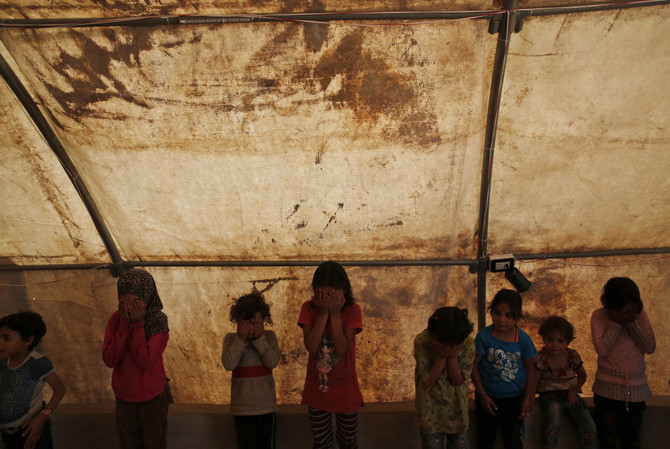
The 20-year-old Aroub lives in a tent camp in Jarablus with hundreds of others displaced from his Homs neighborhood of Al-Waer. Theirs was the last district of the city to fall after years of bombardment and siege that wreaked destruction and pushed residents to near starvation.
He said the only work in Jarablus was to join one of the Turkish-backed armed groups. A neighbor who joined makes $90 a month and has begun building a house.
“Everyone is now building houses because they realized they’re going to be here for a while,” Aroub said.
Newly displaced Umm Khaled can’t fathom what life has come to. She arrived in April in Al-Bab, another Turkish-administered town, escaping the government capture of Ghouta, a once relatively prosperous agricultural region on Damascus’ outskirts.
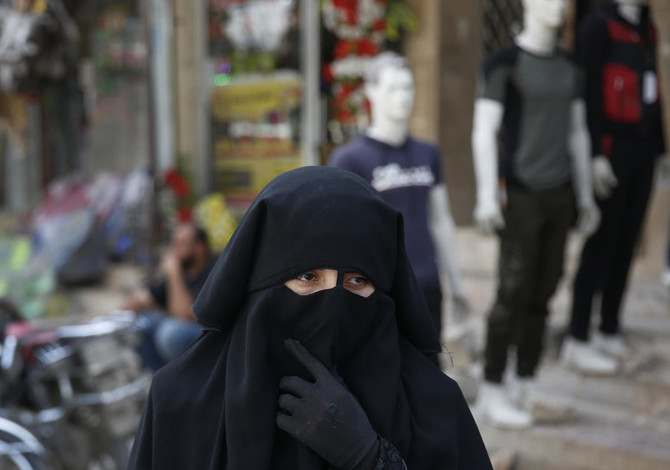
She finds it unbearable being crammed into a tent camp with few services and hundreds of others. People from her hometown of Douma, in Ghouta, are more conservative and the men keep heavy watch over the women, she said. She covers her face with a veil and wears gloves.
“This life is not for us,” she said. “We Doumanis are difficult. Our men are difficult. ... There will be problems between the different people because of different mentalities.”
Abdulkafi Alhamdo, a 33-year-old English teacher, has run into cultural differences after fleeing from Aleppo to Idlib, the last remaining opposition stronghold. People there regularly drop by each other’s homes, while Aleppans are more private, he said, so his new neighbors were flustered.
“They say why are they not visiting us? Are they upset?” he said.
His Aleppo accent also stood out, bringing jokes from his students.
All that was fine, but he said he was hurt when Idlib locals accused him of failing to defend Aleppo and questioned his sacrifices in one-upmanship over who paid a higher price for the cause.
When Alhamdo and his colleagues decided to commemorate their expulsion from Aleppo, locals asked them not to, fearing a gathering could draw government airstrikes.
The experience, he said, has made him more compassionate for newcomers as thousands more continue to roll in, mostly Sunnis, impoverished and staunchly anti-government.
Coming here “is easier than going to the regime hell,” he said. “Demographic change ... is the worst thing that happened in Syria, much worse than the destruction.”


![]()
![]()
![]()
![]()
![]()
![]()
![]()
![]()

Syria’s uprooted adapt to coexisting on the margins


Syria’s uprooted adapt to coexisting on the margins
- Around half of Syria’s pre-war population of 23 million has been uprooted
- As the government regains control of opposition areas further south, the number of displaced constantly grows


Latest updates




© 2026 SAUDI RESEARCH & PUBLISHING COMPANY, All Rights Reserved And subject to Terms of Use Agreement.