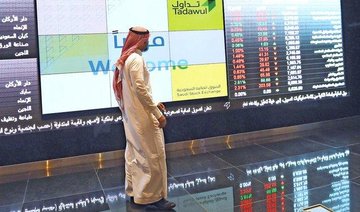
LONDON: Saudi Arabian equites are poised to attract up to $40 billion worth of foreign inflows, following a landmark decision by index provider MSCI to include the Kingdom’s stocks in its widely tracked Emerging Markets index.
"MSCI will include the MSCI Saudi Arabia Index in the MSCI Emerging Markets Index, representing on a pro forma basis a weight of approximately 2.6% of the index with 32 securities, following a two-step inclusion process," the MSCI said in a statement late on Wednesday night Riyadh time.
“Saudi Arabia’s inclusion in MSCI’s EM Index is a milestone achievement and will likely bring with it significant levels of foreign investment,” Salah Shamma, head of investment for MENA at Franklin Templeton Emerging Markets Equity, told Arab News.
“It is a recognition of the progress Saudi Arabia has made in implementing its ambitious capital markets transformation agenda. The halo effect of such a move will be felt across the stock exchanges of the entire Gulf Cooperation Council (GCC).”
Market authorities in Saudi Arabia have introduced a series of reforms in the past 18 months to bring local capital markets more in line with international norms, including lower restrictions on international investors, and the introduction of short-selling and T+2 settlement cycles.
Such reforms prompted index provider FTSE Russell to upgrade the Kingdom to emerging market status in March, opening the country’s stocks up to billions worth of passive and active inflows from foreign investors.
MSCI’s Emerging Market index is tracked by about $2 trillion in active and global funds. The inclusion of Saudi stocks in the index, alongside FTSE Russell’s upgrade, is forecast to attract as much as $45 billion of foreign inflows from passive and active investors, according to estimates from Egyptian investment bank EFG Hermes.
The upgrade announcement was widely expected by the region’s investment community, following a similar emerging markets upgrade announcement by fellow index provider FTSE Russell in March.
“MSCI index inclusion will be a historic milestone for the Saudi market as it will allow for sticky institutional money to make an entry in 2019 which will help deepen the market,” said John Sfakianakis, director of economic research at the Gulf Research Center in Riyadh.