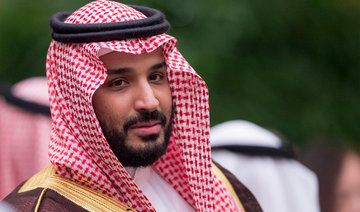
DUBAI: The Saudi stock market index on Wednesday jumped by 5.5 percent to an 18-month high, following news that King Salman has placed his 31-year-old son next in line to the throne.
The Tadawul index, the largest in the Middle East, was also boosted by news that some benefits for civil servants were being restored, as well as an announcement that the Tadawul had been added to a watchlist for an upgrade to “emerging market” status.
The Tadawul All-Share Index (TASI) stood at 7,334.87 at its close on Wednesday, with 159 stock prices having risen and only 12 falling.
In a series of royal decrees issued Wednesday, it emerged that Prince Mohammed bin Salman had been appointed as the country’s crown prince, replacing Prince Mohammed bin Naif.
Crown Prince Mohammed bin Salman, who also serves as defense minister and oversees a vast economic portfolio, had previously been second in line to the throne.
It was also announced that all allowances, bonuses and financial benefits would be restored for civil servants and military personnel.
In another move that boosted the market, it emerged earlier on Wednesday that global stock benchmark provider MSCI had added the Tadawul to a watchlist for potential inclusion as an “emerging market.” That is something closely followed by fund managers and could mean a lot more foreign investment coming into the Kingdom.
The MSCI upgrade could take effect as early as next year, financiers said, in a boost to the forthcoming sale of shares in Saudi Aramco, the flagship oil company that could be valued at $2 trillion.
Emerging market status would be regarded as giving the green light to international investors to buy stocks on the Riyadh exchange. It would also be regarded as a nod of approval for the Kingdom’s ambitious plans to diversify its economy away from oil dependency, known as the Vision 2030 plan.
Financial analysts welcomed the potential upgrade to emerging market status, saying it would increase Saudi Arabia's attractiveness to foreign investors.
Deutsche Bank estimated that some $43 billion of foreign funds would flow into the Kingdom under the new status. “The key beneficiaries will be large capitalized companies that currently have a low level of foreign ownership,” the bank said.
Capital Economics, the London consultancy, also welcomed the MSCI move as positive for the country, but warned that full inclusion needs to come quickly to get the maximum economic benefit.
Analyst Jason Tuvey said: “If it is delayed to September 2019, Saudi Arabia will have to rely on other sources of financing to fund its current account shortfall, including fresh dollar bond sales and/or a further drawdown of its FX reserves.”
George Elhedery, chief executive officer of HSBC in the Middle East, told Bloomberg the upgrade to the Kingdom’s stock markets was a positive development for the county’s financial status. “It puts Saudi Arabia in good stead to achieve its Vision 2030. Passive inflows into Saudi equities could draw approximately $9 billion. This has the potential to rise even further if active funds increase their allocations,” he said.
Passive investors are those that include a country’s stocks in their overall portfolios. Active investors pick individual stocks for inclusion.
The MSCI move follows a long process of modernization of the Kingdom’s investment infrastructure, opening it up to international investors and accelerating the process of share dealing and settlement.
MSCI said: “Following the introduction of these major enhancements to the accessibility of the Saudi Arabian equity market, MSCI will be consulting with international institutional investors to gather informed feedback on their practical experience of accessing the Saudi equity markets and in particular on the effectiveness of the recently implemented enhancements.”
While many countries remain two to three years on the watch list prior to index inclusion, Saudi Arabia expects the process to happen sooner, according to Mohammed El-Kuwaiz, Saudi Arabia’s Capital Market Authority vice-chairman.
“Given the pace and the magnitude of capital-markets reforms that have been made in Saudi Arabia and the commitment that has indicated, the duration that we will be on the watch list will hopefully be shorter,” he said in a television interview.
Inclusion in MSCI’s developing-country indexes would “put Saudi Arabia in the top 10 emerging markets, even excluding Aramco,” according to Mohammed Al-Hajj, and equities analyst at investment bank EFG Hermes in Dubai.
He estimated that adding passive inflows alone would be equivalent to two-and-a-half to three current active holdings by foreigners in the Saudi market. “It would finally place Middle East, North Africa on the map as an important subset of emerging markets.”
Saudi Arabia allowed money managers outside the Gulf to own local shares directly only two years ago. Since then, authorities have relaxed the guidelines even more, yet total foreign ownership has stalled at about 5 percent.
As crude oil prices declined this year, the Tadawul index has dropped, lagging behind an average of its peers as measured by the MSCI Emerging Markets Index, which increased 17 percent through June 19.
The addition to the watch list should result in “substantially improved valuations, liquidity and foreign inflows to the country’s market,” according to Jaap Meijer and Michael Malkoun, analysts in Dubai at Arqaam Capital Ltd. They estimate Saudi Arabia would have a weighting of 2.2 percent in that emerging markets index, excluding Aramco.
The 173 stocks traded on the Tadawul have a value of SR1.65 trillion, according to the market’s website.
- With AP