LONDON: Saudi companies should boost efforts to align their corporate governance and investor relations functions with international standards ahead of a possible upgrade by emerging markets index provider MSCI.
Foreign investors have been net buyers of Saudi shares on a weekly basis for all but two weeks so far this year, attracted by the Kingdom’s economic privatization program, capital market reforms, and the upcoming listing of shares in Saudi Aramco.
In the face of such interest, Saudi corporates need to be proactive in bringing their corporate governance and investor relations functions up to the international standards demanded by fund managers, according to Andrew Tarbuck, chairman of the Middle East Investor Relations Association.
“In terms of the depth of penetration of investor relations and corporate transparency, Saudi Arabia could be higher on the spectrum,” Tarbuck told Arab News.
“Some of the bigger names are very good in their approach, but there are too many public companies that have not embraced fully the concept of investor relations and need encouragement to participate.”
Market authorities in the country have introduced a series of reforms in the past 18 months to attract foreign investors, including lower restrictions on international investors, and the introduction of short-selling and T+2 settlement cycles.
Such reforms prompted index provider FTSE Russell to upgrade the Kingdom to emerging market status in March, opening the country’s stocks up to billions worth of passive and active inflows from foreign investors.
FTSE’s move — together with a widely-anticipated emerging market upgrade by fellow index provider MSCI next month — is expected to result in up to $46 billion worth of inflows, according to forecasts from investment bank EFG-Hermes.
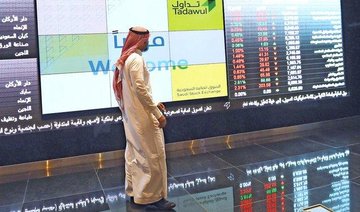
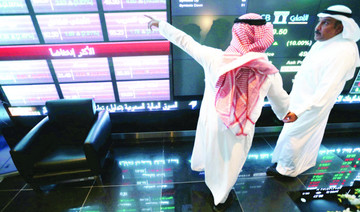
The Tadawul — Saudi Arabia’s stock exchange — has already risen 11 percent so far this year.
While many of the blue-chip names listed on the exchange have been proactive in putting strong governance and IR practices in place, Tarbuck said that many of the Kingdom’s listed firms required further encouragement and education to convince them of the benefits of such an approach.
“Public companies whose shares are slightly less liquid, or who perhaps have a large family shareholding tranche and a smaller free float, are less willing to spend time and money and effort on investor relations when there’s not a full enough understanding of the benefits such an approach brings,” he said.
Greater transparency from management, and the appointment of independent board members, are of particular interest to those investors considering investments in Saudi equities, according to Ross Teverson, head of strategy, emerging markets equities at Jupiter Asset Management.
“Further improvements in transparency and alignment of interests between management and shareholders (for example, through greater use of long-term equity-based incentive schemes) will certainly help to raise foreign investor interest and confidence in the Saudi market,” he told Arab News.
“Board composition will be another area of focus and companies with a higher proportion of well-qualified independent directors, who are willing to meet with investors, will benefit.”
High governance and transparency standards are a key component of Saudi Arabia’s Vision 2030 economic transformation program, which calls for the adoption of “leading international standards and administrative practices, helping us reach the highest levels of transparency and governance in all sectors.”
The message is already being taken seriously, said Tarbuck, with authorities already taking action to put such standards in place.
“The successful privatization and listing of Aramco and other state entities is likely to require material foreign investment, and it would be reasonable for international institutions to expect that good governance and transparency. are at least maintained, if not enhanced, on an ongoing basis.”
Saudi Arabia’s Capital Market Authority last year announced a series of regulations on corporate governance — which came into effect last April — extending the rights of shareholders, boards and stakeholders and requiring greater corporate transparency.
These regulations were complemented by recent amendments to Saudi Arabia’s companies law, focusing on enhancing the protection of minority shareholders and the further development of corporate governance matters, including new provisions on conflicts of interests relating to joint stock companies.
“International investors recognize that new corporate governance regulations form the Capital Market Authority and the revised companies law significantly improve the corporate governance standards and transparency of listed Saudi corporates,” said Teverson.
“Of course, there is always more that can be done to boost confidence in a market, but importantly for Saudi Arabia, the direction of travel is being viewed positively.”
After MEIRA establisheding a Saudi chapter last year, the Institute of Finance (a department of the Saudi Arabian Monetary Agency) assisted by the MEIRA Saudi Chapter, earlier this month ran a pilot training course on investor relations and corporate governance.
“They’re taking the subject very seriously from an institutional level,” said Tarbuck.