

How the de-radicalization center gave former militant a new life

1 / 10
The De-Radicalization Center at Bara, in the Khyber tribal district. (Photo courtesy of the center)
2 / 10
The De-Radicalization Center at Bara, in the Khyber tribal district. (Photo courtesy of the center)
3 / 10
Trainees at the center do some exercises. (Photo courtesy of the center)
4 / 10
Trainees during take part in their routine daily activities at the center. (Photo courtesy of the center)
5 / 10
Trainees during take part in their routine daily activities at the center. (Photo courtesy of the center)
6 / 10
Trainees during take part in their routine daily activities at the center. (Photo courtesy of the center)
7 / 10
Trainees during take part in their routine daily activities at the center. (Photo courtesy of the center)
8 / 10
Inspector General Frontier Corps (North) Maj. Gen. Muhammad Waseem Ashraf distributes kits containing useful items to former trainees after the successful completion of the program at the De-Radicalization Center. (Photo courtesy of the center)
9 / 10
Inspector General Frontier Corps (North) Maj. Gen. Muhammad Waseem Ashraf distributes kits containing useful items to former trainees after the successful completion of the program at the De-Radicalization Center. (Photo courtesy of the center)
10 / 10
The trainees and officials at the ceremony marking the completion of the de-radicalization course. (Photo courtesy of the center)
Updated 15 June 2018
Follow

How the de-radicalization center gave former militant a new life

  • The De-Radicalization Center in Bara, in the Khyber tribal district, this week celebrated the completion of reintegration training courses by another 81 former militants
  • The facility is based on a Saudi model that was developed after the Iraq war

PESHAWAR: Qaiser Khan remembers his tough life as a member of Tehreek-i-Taliban Pakistan (TTP) in Darra Adamkhel. He narrowly escaped death when Pakistani air force fighter jets bombarded Taliban hideouts in the Tirah valley, a remote area close to the Pakistan-Afghanistan border.
“I spent three years in the forested mountains of Tirah valley in Khyber Agency bordering Afghanistan, from 2011 to 2014,” said the 32 year old. “It was a very hard life. The fighter jets used to bombard the Tirah valley and I saw death up close.”
Khan recalls that he would cross the border into Afghanistan to buy supplies because it was not possible to reach markets in Pakistan.
“We used to spend at least three hours crossing into Afghanistan through a mountainous route and we would spend another several hours reaching Jalalabad to get the things we needed, and then come back through the same route,” he said.
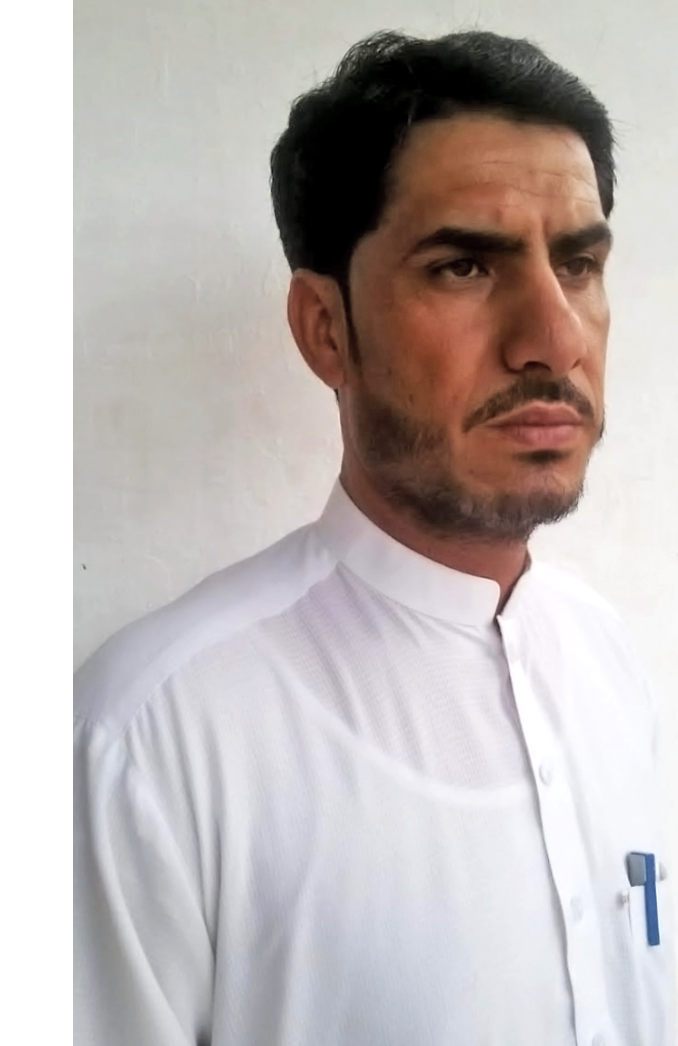


                                Qaiser Khan


He also shared the story of how he got entangled with the Taliban.
“In Darra, the Taliban had much influence and they used to entice us that we should join their ‘jihad’ against the United States and also against Pakistan,” said Khan. “I also was attracted by their slogans since the environment in Darra Adamkhel was quite conducive to militancy and the Taliban were quite influential. They used to lure people through their interpretation of Islamic teachings.”
Khan surrendered to the security forces in December 2015, when the government announced an amnesty, and he was brought to the De-Radicalization Center (DRC) of the Frontier Corps in the Bara subdivision of Khyber district. He has spent 29 months preparing for his reintegration into society.
“At the center, we were acquainted with the definition of Jihad, which means struggle,” he said “Jihad cannot be declared by a mullah but it can be declared by the government of a Muslim country. At the center, we realized that fighting our own Muslim countrymen is not Jihad.”
On June 13, the DRC held a ceremony marking the graduation of the latest 81 trainees to complete the de-radicalization program.
Inspector General of the Frontier Corps (North) Maj. Gen. Muhammad Waseem Ashraf distributed kits containing useful items to the participants to help them get started in their return to normal lives.
Frontier Corps spokesman Major Asad said that in addition to the latest group, another 689 people have been reintegrated into society through the DRC’s Sabaoon-2 project. Sabaoon is a Pashto word for the dawn.
Asad said that the center was based on model for de-radicalization developed by Saudi Arabia in 2003 to counter extremist ideology during the second Iraq War. Pakistan began using the same model after the Swat operation in 2008.
DRC Supervisor Captain Naik Amal said that the minimum duration of the course is six months. The timescale for the reintegration of trainees into society is based on their performance.
“Each participant of the de-radicalization course is tested by a psychologist, a religious teacher, a vocational instructor and social worker every three months and then a board decides the level of the trainees and whether or not to free a trainee from the center for reintegration into society,” he added.
Amal said some trainees reintegrate much earlier than others, depending on the results of the tests and the individual’s mental state.
“Some trainees can be reintegrated in nine months; some may take more than two years,” he explained.
Job-training courses at the center include carpet making, auto mechanics, computer skills, mobile phone repair, electrics, driving and tailoring. Khan took the computing courses and said he plans to launch a computer academy in Darra Adamkhel, his hometown.


Pakistan passes Virtual Assets Act 2026, empowers regulator to combat money laundering

Updated 5 sec ago
Follow

Pakistan passes Virtual Assets Act 2026, empowers regulator to combat money laundering

  • Legislation introduces licensing for virtual asset service providers, market surveillance mechanisms
  • Pakistan is one of the world’s top cryptocurrency markets, with millions actively using virtual assets

KARACHI: Pakistan’s parliament on Friday passed the Virtual Assets Act 2026, granting the Pakistan Virtual Assets Regulatory Authority (PVARA) powers to combat money laundering, militant financing and other illicit activities, the regulator said.

The legislation introduces regulatory provisions including mandatory licensing for virtual asset service providers, market surveillance mechanisms, anti-money laundering and counter-terrorism financing compliance, and coordination with Pakistani financial regulators including the State Bank of Pakistan and the Securities and Exchange Commission of Pakistan.

Pakistan has in recent months stepped up efforts to draft rules for regulating the fast-expanding market for digital coins and tokens, requiring virtual asset service providers to secure government approval. Islamabad’s move to embrace digital currency marks a significant policy shift as it had banned cryptocurrency in 2018, citing financial risks.

“A year ago, Pakistan’s digital asset landscape was defined by uncertainty and grey areas. Today, we have the country’s first Act of Parliament establishing a regulatory body for virtual assets, building on the Presidential Ordinance introduced in 2025,” PVARA Chairman Bilal bin Saqib said in a post on X.

“With NOCs [no objection certificates] already issued and banking rails being developed in coordination with the State Bank of Pakistan, we are now moving toward a comprehensive licensing framework aligned with global AML [anti-money laundering] and financial integrity standards.”

Meanwhile, PVARA said the framework aims to boost transparency, protect investors, and ensure a stable, trustworthy virtual asset market while supporting responsible fintech innovation.

“The legislation also equips the Authority with powers to address money laundering, terrorist financing, and other illicit activities associated with virtual assets, bringing Pakistan’s regulatory approach in line with international standards,” it added.

Pakistan ranks among the world’s largest cryptocurrency markets by adoption, with millions of citizens actively engaged in virtual assets.

In February, Dr. Afnanullah Khan, a Pakistani senator from the ruling party, had said major crypto coins such as Bitcoin, Ethereum and XRP will soon be traded in Pakistan through crypto exchanges.

Pakistan earlier launched a “regulatory sandbox” for firms to trial crypto services under PVARA’s supervision before full approval.

In January, Pakistan signed a memorandum of understanding with a World Liberty Financial-linked firm, tied to US President Donald Trump’s family, to explore a dollar-backed stablecoin for cross-border payments.